I looked at data recently from US-based founders who post on LinkedIn multiple times a week. Only about 5% of them comment on other people's posts more than 10 times in a week.
Everyone's posting. Almost nobody's commenting with intention. And that gap is exactly where pipeline hides.
The default LinkedIn behavior of scrolling and reacting to whatever appears in your feed is not a strategy. It's consumption. The shift happens when you treat every comment as targeted micro-content with a clear audience, a clear goal, and a reason you're showing up on that specific post.
There's also a fifth I'd add: your competitors' followers. I comment on competitor CEO posts regularly. Not to pitch. To show up with a different angle on a shared problem. It takes some nerve, but it puts you in front of exactly the right people.
I've seen A/B test data from a 1,000-prospect campaign split across CEOs, agency owners, and sales leaders. One group got comments on their posts before outreach. The other got cold messages with no prior engagement.
The warmed-up group saw 2x to 3x higher reply rates. In some campaigns, up to 20% of prospects sent the first DM before any outreach sequence started.
The workflow is dead simple. Comment on their posts for a week or two. Be a person. Send a blank connection request. Wait. Then start your LinkedIn outreach sequence.
One thing that surprised me: a seller targeting hospital executives hesitated to comment on boring posts like hiring announcements. Then he tried it. When he cold-called those executives later, they brought up his comments on the phone. People remember when you show up for them, even if the post feels small.
Keep your style light and friendly here. You're not performing for an audience. You only need one person to notice.
This one's for deals sitting in your CRM that aren't dead but aren't moving. The 'not now' prospects. Users who signed up six months ago and ghosted. Churned customers you'd love to win back.
Stay top of mind by engaging with their content consistently. The challenge is friction. If you don't have a system, you'll open LinkedIn, scroll past their posts, get distracted, and move on. You need a tool, a spreadsheet, or calendar reminders that keep the list in front of you daily.
A lot of decision-makers lurk on LinkedIn. They don't post. They react to other people's content. Track the posts they interact with. If your target CTO consistently likes the CMO's posts, commenting on the CMO's content puts you in the CTO's feed. It's indirect, and it doubles as a multi-threading tactic across the buying committee.
This is the strategy everyone defaults to. Find big creators, comment, ride their reach. It works, but a huge chunk of the audience on large influencer posts is other people doing the exact same thing. A circle of people who will never buy from each other.
The shift: go niche, go longer. Instead of tracking 15 mega-influencers, build a list of 100-200 micro-influencers with 10-30 comments per post. Less competition. Higher quality audience. More relevant followers.
Skip posts where you don't have a real take. Nobody clicks your profile because you said 'Great post, I agree.' Leave an actual opinion from your experience. Controversy is underrated here. The comment that disagrees thoughtfully often gets pinned at the top.
One detail most people miss: your LinkedIn headline gets truncated to about 45 characters on mobile. My headline says 'I help you bring home more bacon.' Short. Punchy. When someone sees that under a comment, it drives profile clicks, which drives Salesforge signups. Think of it this way: the comment is the hook. The headline is the bridge. Your profile is the landing page.
This is less about targeting people and more about targeting conversations. I follow posts about LinkedIn outbound, social selling, cold email deliverability. Topics where my perspective is relevant. There might be 10 posts per day on social selling alone. Each one is a chance to drop my take in slightly different contexts.
It's like posting multiple times per day, except you're doing it in other people's comment sections where an audience already exists.
Two outcomes. First, your network sees your comments in their feed without you writing a standalone post. Second, the people creating and engaging with topic-relevant content might be your ICP. You can route those engagers into outbound. Find them in Leadsforge, enrich the data, and push them into a Salesforge sequence. A comment thread just became a pipeline source.
Engagement pods get a bad reputation for a reason. The same people commenting on the same posts every day becomes obvious fast. LinkedIn's algorithm notices closed loops and stops rewarding them.
If you're going to do mutual support, keep these rules:
Rotate your list frequently. Static pods become echo chambers. Rotation keeps engagement looking organic.
Keep members relevant. People in your support circle should be in or adjacent to your ICP. That way, mutual support doubles as warm engagement with potential prospects.
Use it sparingly. I tap into support groups maybe once every two weeks. Not daily. Daily use kills comment quality and your credibility.
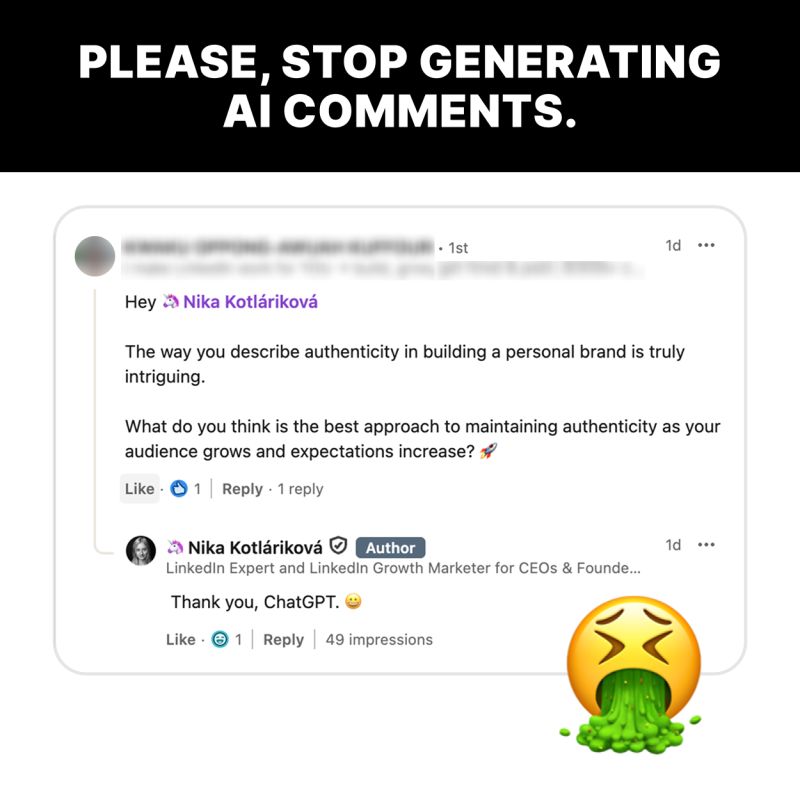
I see AI-generated comments on my posts constantly. Same vague positivity, same weird structure, zero value. It doesn't help those accounts. It actively hurts them.
AI can draft your comments. I use drafts as starting points all the time. But the comments that go out untouched are obvious and people are already fatigued by it.
What works is to understand the post author's goal. Know who you're writing for. Add something non-obvious. A personal story, a contrarian take. Make it look human. All lowercase, casual tone, maybe a small imperfection. Edit about half of what AI gives you. The time investment is minimal and the quality difference is massive.
Comments, posts, and DMs aren't three separate activities. They compound. When someone replies to your comment, LinkedIn's algorithm pushes your posts into their feed. Same with DM replies. So you can send a non-pitch DM, get a reply, and your content starts doing the selling.
This is why I keep outreach sequences as long as possible but effort per lead as low as possible. Stay in the prospect's orbit for months. The window where they're ready to buy follows their timeline, not yours.
A couple of weeks is a solid baseline. For longer sales cycles, waiting up to a month works in your favor. Some prospects will DM you first if you comment consistently on their posts.
Niche creators almost always win. Big influencer posts attract people chasing impressions, not your ICP. Smaller creators with 10-30 comments have more relevant audiences and your comment actually gets seen.
For active accounts, up to 100 per day on other people's posts. If you're starting out, 10-20 strategic comments per day gives you a noticeable edge as long as they're intentional.
Short-term, yes. Daily use, no. The same people commenting on the same posts becomes obvious. Keep it infrequent and make sure pod members are in or near your ICP.
As a draft, absolutely. Untouched AI comments are obvious and hurt your credibility. Use AI to get 60% there, then rewrite in your voice with your actual take.
.png)