Apollo vs Lemlist: Which Cold Outreach Tool is Best for Your Team?
Lemlist vs Apollo is a common comparison for teams choosing their next outreach platform.
Both Lemlist and Apollo are comprehensive cold outreach tools with built-in lead databases, designed to streamline sales and lead generation efforts.
Both tools help you get more replies, but they’re built for completely different workflows, which is why most people get stuck.
Lemlist focuses on personalization and sender identity, making it a strong cold outreach tool for teams prioritizing tailored messaging. Lemlist is designed to support a personalized outreach strategy and is particularly valued by sales professionals who prioritize tailored messaging and relationship-building in their sales process.
Apollo focuses on data, multi-channel sequences, and full sales workflows, positioning itself as a robust cold outreach tool for scaling prospecting and sales automation. Apollo is built to streamline the sales process for sales professionals and sales teams, offering a comprehensive outreach strategy that integrates data, automation, and multi-channel engagement.
In this guide, you’ll quickly see how they differ on the things that actually matter: deliverability, data accuracy, sending limits, personalization depth, automation, and pricing.
By the end, you’ll know exactly which tool fits your outbound style and where each one falls short.
Extensive lead database, AI research, CRM integration, multi-step outreach, call dialer, lead scoring, campaign management, advanced filters, deeper customization, detailed analytics
Best For
Teams focused on personalization, inbox placement, and managing multi-channel outreach campaigns
Enterprise sales teams seeking all-in-one platform for lead generation, email sequencing, phone dialing, and analytics
What Lemlist Is
Lemlist is a personalization-focused cold email platform built for small teams, agencies, and founders who want their outreach to feel more human.
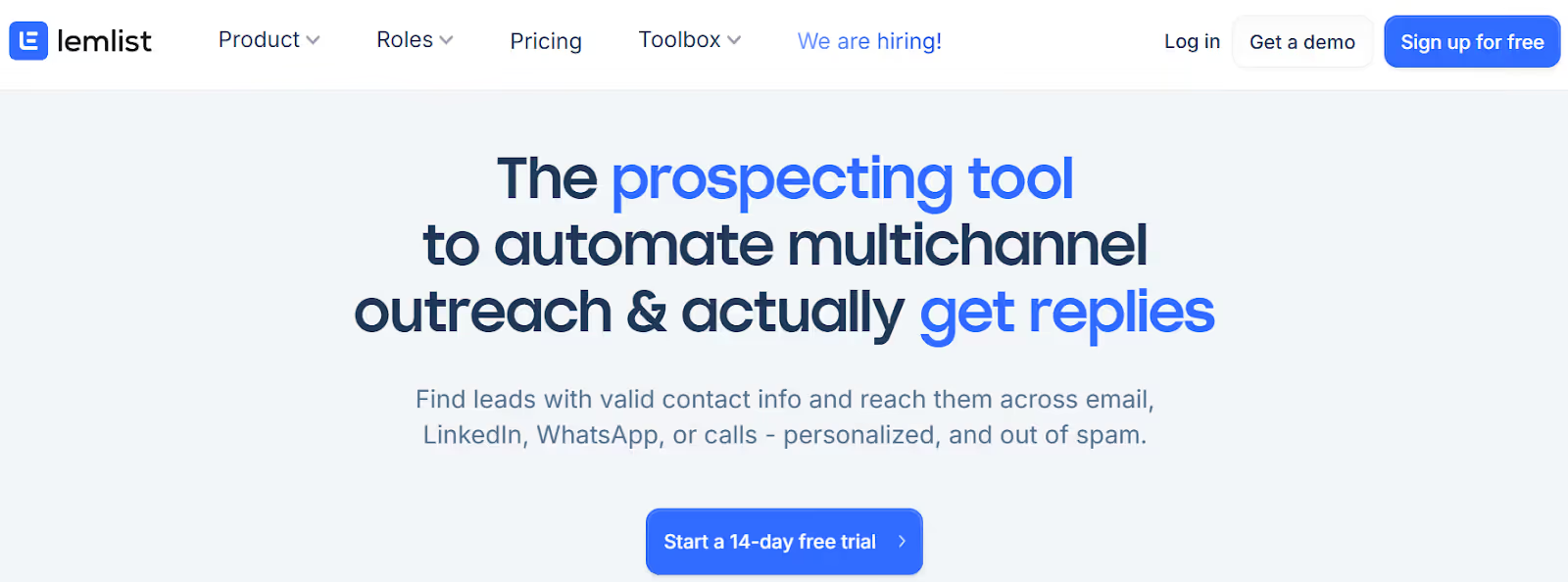
This image shows the Lemlist homepage
It’s known for:
Warm, identity-based sending (Lemwarm)
Custom image personalization
Simple email sequences
Basic lead management and inbox consolidation
Lead generation tools, including a built-in database and enrichment features to help discover and manage prospects
Lemlist is strongest when your goal is personalized 1:1-style outreach and delivering personalized outreach at scale—making it particularly valuable for marketing teams that rely on email campaigns and personalization—not high-volume sending or deep sales operations.
What Apollo Is
Apollo is a sales enablement platform that streamlines prospecting and outreach by combining a B2B database, enrichment engine, email sequences, dialer, intent data, and AI research into one workflow. Apollo is widely used by sales and marketing teams for its integrated features.
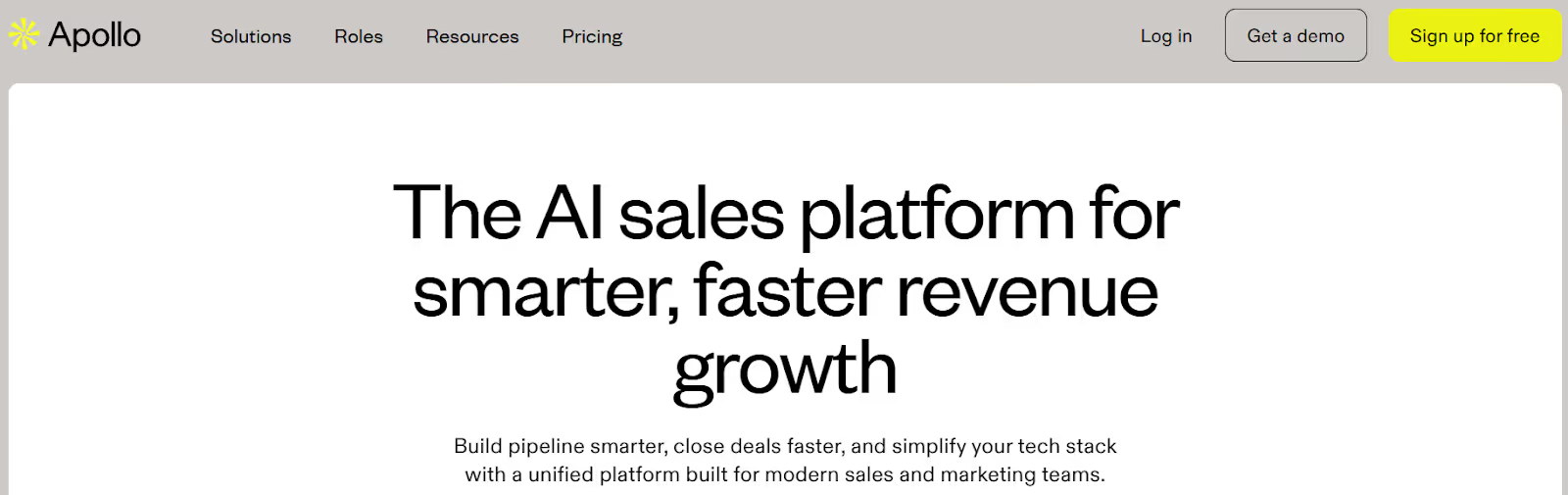
This image shows the Apollo homepage
It gives you:
A 260M+ contact database with advanced filters
Multi-channel outreach (email + calls + tasks)
AI research, scoring, and message drafting
CRM-like deal management and pipeline workflows
Chrome extension for instant LinkedIn/website capture
Apollo is built for SDR teams, outbound orgs, and sales teams that need one system for finding leads + enriching + sequencing + managing deals.
Lemlist vs Apollo: Key Differences (7 Differences That Really Matter)
Deliverability
Lemlist leans hard on its deliverability features, especially Lemwarm (their strong email deliverability tool and warm-up + deliverability booster), along with inbox rotation and daily send limits.
These features are designed to improve inbox placement, prevent emails from landing in spam folders, and support successful cold outreach campaigns. Lemlist also provides detailed analytics for monitoring campaign performance, including metrics like open rates and spam placement.
Used well, it can keep new domains out of spam and improve open/reply rates, especially for small-mid teams, by maintaining a healthy sender reputation.
But reviews mention that tracking and reporting can be confusing (open rates not always trustworthy, unclear why a campaign pauses) and that lemwarm/preheating still feels a bit complex for some users.
Apollo takes a more guarded approach: stricter mailbox limits, slower ramp-up, and a deliverability suite focused on protecting sender reputation and domain reputation over raw volume. Its deliverability features are designed to monitor and maintain inbox placement, helping users avoid spam folders and reputation issues.
Apollo offers basic deliverability settings and bounce tracking, but lacks the detailed controls and analytics found in Lemlist.
Users who try to send Instantly-style volumes through Apollo usually hit throttling or see reputation damage, which is a sign the infra is not meant for big-batch cold email, but for controlled, SDR-style outreach.
Summary:
Lemlist = stronger warmup tools and practical deliverability guidance, but analytics and clarity can be hit-or-miss.
Apollo = safer, slower sending that protects your domains, but not a high-volume blasting tool.
Email deliverability is a key outcome of using these tools, and both platforms offer features to help ensure your emails reach the inbox. Some users also supplement these platforms with external tools for advanced deliverability monitoring and optimization.
Personalization Depth
Lemlist’s big strength is visible, creative personalization:
Dynamic text variables, conditional steps, custom images, even voice notes, and AI-generated icebreakers.
Advanced message writing capabilities, including AI-generated content, help users craft personalized messages efficiently.
G2 users keep saying they love how “human” outreach feels at scale, and that it replaces several tools for personalization + multichannel flows.
Apollo plays more on data-driven and AI-driven personalization:
AI research, AI lead scoring, and context pulled from its large database + integrations.
AI features for sequence generation and personalized content creation enhance message writing and campaign effectiveness.
Strong multi-step sequences that mix emails, tasks, calls, and meetings.
Net:
Both Lemlist and Apollo offer AI message writing, even in their free plans, making it easier to create effective, personalized messages for cold outreach.
Lemlist wins on creative, pattern-breaking personalization (images, videos, LI steps, AI snippets, and personalized messages).
Apollo wins on “smart” personalization using CRM, intent, and firmographic/behavioral data across the whole sales cycle, with robust AI features for message writing and sequence generation.
Sending Infrastructure & Scale
Lemlist is built to run multichannel outbound, but there are limits:
You can warm up domains, rotate inboxes, and run serious volume for small/medium teams.
Users do complain about the limited number of email accounts per workspace and weaker bulk inbox management, so it’s not a true “unlimited inbox agency” machine. The lack of unlimited email accounts restricts scalability for agencies that need to manage outreach at a larger scale.
Apollo is much stricter:
Per-user credit caps, limits on mailboxes, and infrastructure tuned for SDR teams, not agencies running 50+ cold inboxes.
However, Apollo offers robust team management features, allowing organizations to assign roles, manage permissions, and organize sending across multiple users efficiently.
So:
More volume tolerance (per brand): Lemlist.
Lower risk of domain burn if you follow defaults: Apollo.
Faster domain burn if you misconfigure or push too hard: Lemlist (because it lets you push harder).
Data Quality & Accuracy
This is where they’re completely different.
Lemlist now has its own B2B lead database + enrichment, but it’s still not its primary identity. Lemlist’s B2B database includes over 450 million contacts and more than 63 million companies. You can:
Search 600M+ leads, enrich, verify, and run outreach from one place, with filtering options such as job title to help narrow down prospects.
Reviews, though, repeatedly mention inaccurate numbers/emails and filters that could be more granular, plus credits feeling expensive.
While Lemlist’s lead database allows you to filter by job title, users may find it less robust for identifying highly qualified leads compared to dedicated data platforms.
Lemlist offers a waterfall enrichment feature, which finds valid email addresses by checking multiple data providers.
Apollo, on the other hand, is a data company first:
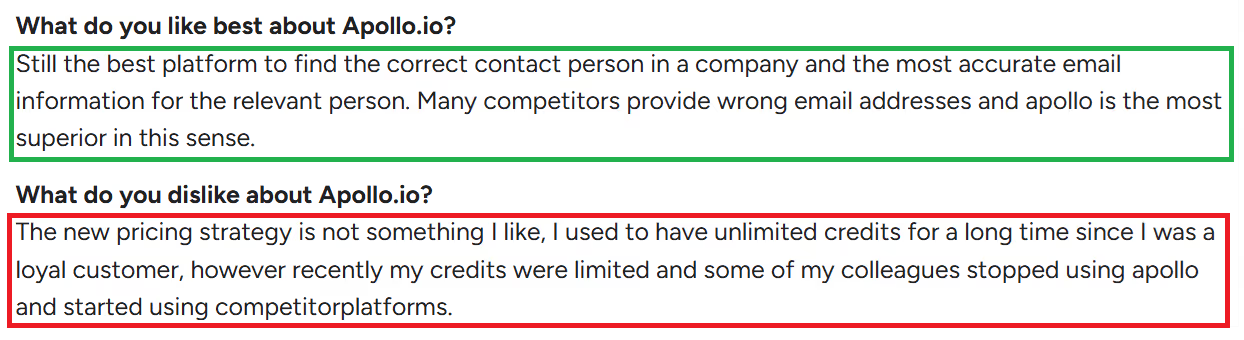
This image shows the Apollo review on its Data Quality and Pricing
Apollo.io has a B2B database with over 210 million contacts and 35 million companies. Roughly 275M+ contacts and hundreds of filters, including job title, industry, and more, plus waterfall enrichment and job-change enrichment.
G2 reviews still call out outdated emails / bad phones and higher bounce rates when you don’t re-verify or clean data before sending.
Apollo’s extensive lead database and advanced filtering by job title and other criteria make it easier for users to identify and target qualified leads efficiently. Apollo.io offers more advanced filters and deeper customization options compared to Lemlist.
Takeaway:
Lemlist → “good enough” enrichment for outbound, but you’ll still want external verification for serious campaigns.
Apollo → top-tier for depth and filtering, but you must accept some noise and build your own data-cleanup layer.
Many users rely on external tools for additional verification and enrichment to ensure data accuracy.
Multi-Channel Workflow
Lemlist focuses on outbound sequences across multiple channels, including:
Email, LinkedIn outreach, phone outreach (manual calls), WhatsApp, plus manual tasks in the same visual flow.
Lemlist supports automated LinkedIn connection requests as part of its outreach strategy, helping users expand their network and generate leads while maintaining account safety.
It feels like “an outbound engine with light CRM” for many small teams, providing outreach tools that streamline multi-channel campaigns.
Apollo is closer to a full GTM operating system:
Email, calls (US + international dialer for phone outreach), tasks, AI research tasks, meeting events, enrichment, and pipeline/deal execution in one place.
Apollo also enables users to send connection requests on LinkedIn to expand their outreach strategy and connect with more prospects.
It ties tightly into Salesforce, HubSpot, and its own CRM-like views, and offers advanced outreach tools for managing multi-channel campaigns, including LinkedIn outreach.
So:
Lemlist = multichannel outreach tool with integrated LinkedIn outreach and phone outreach.
Apollo = multichannel sales + data + pipeline tool with robust outreach tools for multiple channels.
Ease of Use
Lemlist gets constant praise for UX and speed to value:
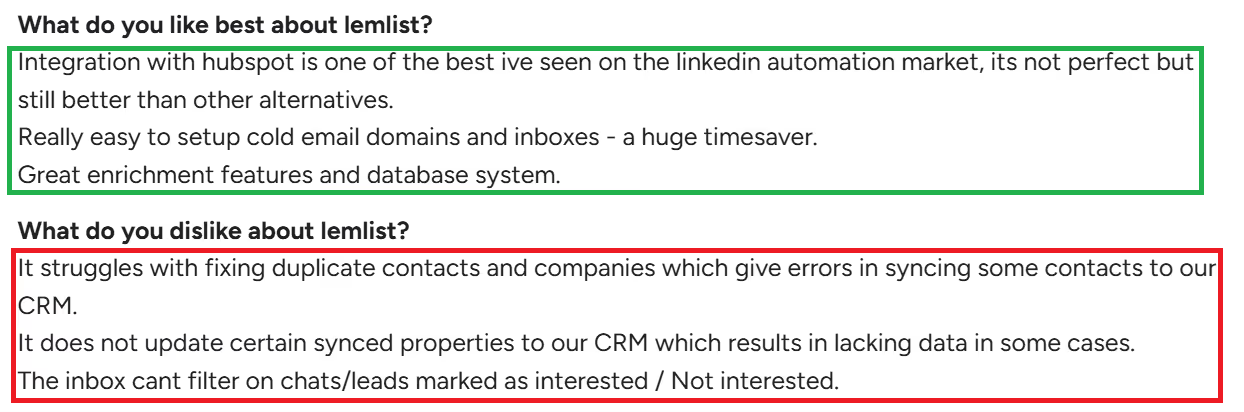
This image shows the Lemlist review on its Integrations and CRM functionality
People say it’s “very easy to use,” “intuitive,” “better UI than X,” and that reps can launch campaigns quickly without enablement headaches. Lemlist is often highlighted for its intuitive interface, which simplifies campaign setup and management, making it easy for users to get started and maintain their workflows.
Negatives are more about slow UI at times, confusing reporting, and some bugs (especially around LinkedIn extension and analytics).
Apollo is the opposite trade-off:
More powerful, more complex. You get deep features, but smaller teams and solo founders often say it feels heavy, cluttered, or “too much” for basic outbound.
If you want:
Fast setup, reps sending in a day → Lemlist wins.
One serious platform to run SDR operations with a RevOps owner → Apollo wins.
Customer Service & Reliability
Lemlist’s support has a very “human” reputation:
Many reviews explicitly name CSMs, mention proactive suggestions, and say it feels like “an extension of our team.”
Complaints are more about needing more technical depth for tricky issues and slow bug fixes at times (Chrome extension, integrations, analytics).
Users report that Lemlist’s customer service is generally responsive and helpful, but some have experienced occasional platform instability and delays in resolving technical issues.
Apollo support is more mixed:
Onboarding and documentation are solid, but users often say they’d like faster responses, fewer bugs, and clearer UX, especially as they scale seats.
Users report that while Apollo is reliable for most day-to-day operations, there are instances of slower support and intermittent bugs, particularly for larger teams.
Takeaway:
Lemlist feels like a closer partner for outbound teams, but with some rough edges in stability/bugs.
Apollo feels like enterprise software: capable, documented, but not always as warm or responsive for smaller accounts.
Pricing Flexibility
Pricing is one of the biggest functional differences between Lemlist and Apollo, not just in cost, but how each tool charges you. A thorough pricing comparison is essential for understanding the value each platform offers to different types of users.
Lemlist offers several plans, including an enterprise plan with custom pricing for larger teams, allowing businesses to tailor the solution to their specific needs.
Lemlist → User-Based Pricing (Cost Scales with Team Size)
Lemlist charges per user, and every user gets a fixed number of sending inboxes + enrichment credits.
Lemlist also offers a free plan for new users, which is suitable for startups or small teams looking to test the platform, though it comes with some limitations compared to paid tiers.
This means:
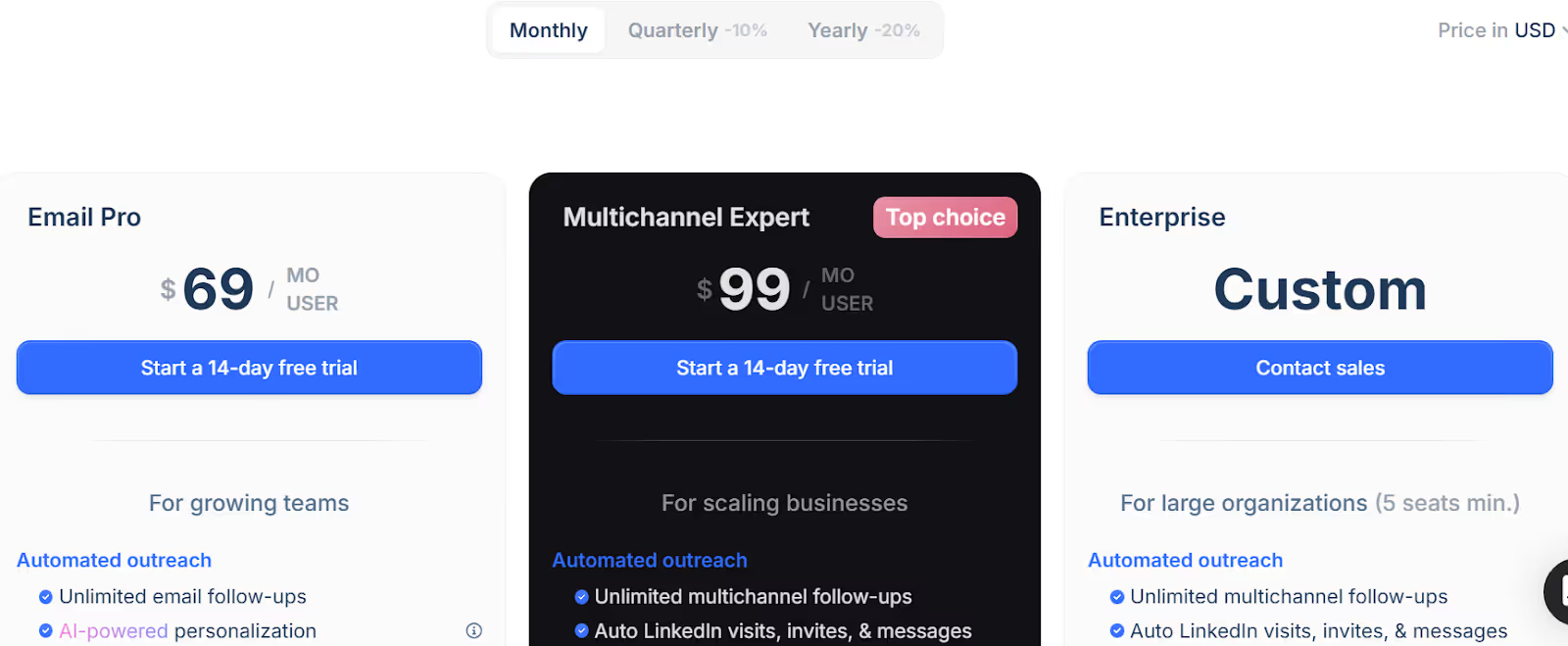
Adding 1 more SDR = +$69–$99/month
Adding 5 SDRs = +$345–$495/month
Adding 10 SDRs = +$690–$990/month
Even if you’re sending the same campaigns, the cost scales linearly with headcount.
Good: predictable, simple pricing for small teams
Not good: gets expensive as you add more reps
Apollo → User-Based + Credit-Based + Module-Based
Apollo pricing moves in three layers:
Seat cost (each user requires their own license)
For organizations on the enterprise or organization plan, Apollo includes API access, allowing integrations with other tools and enabling automation and data exchange.
Custom pricing is available for organizations with specific needs, offering flexibility for different business sizes and requirements.
So cost increases faster when you:
Add more reps
Use more data
Activate more modules
Scale sending volume
Apollo can replace 3–4 tools (database + sequencer + dialer + enrichment), but the ROI depends entirely on how many SDRs you have and how many credits they burn monthly.
Both scale in different ways. Let’s look at their pricing plans.
Pricing Plans Comparison: Lemlist vs Apollo
Lemlist Pricing (Per-User Model)
This image shows the Lemlist Monthly Pricing Plans
Free Plan – Lemlist offers a forever-free plan with essential tools for startups and small teams, including basic outreach features and limited usage. This is ideal for those testing the platform before upgrading.
Email Pro - $69/user/mo - This is the “pure cold email” plan.
Main variables: Users, inbox count, enrichment credits
And you get a 14-day trial too.
How Lemlist scales in real life:
Costs rise linearly per user, but outreach features stay unlimited. Great for small/medium teams, expensive for large SDR orgs
Apollo Pricing (Per-User + Credits Model)
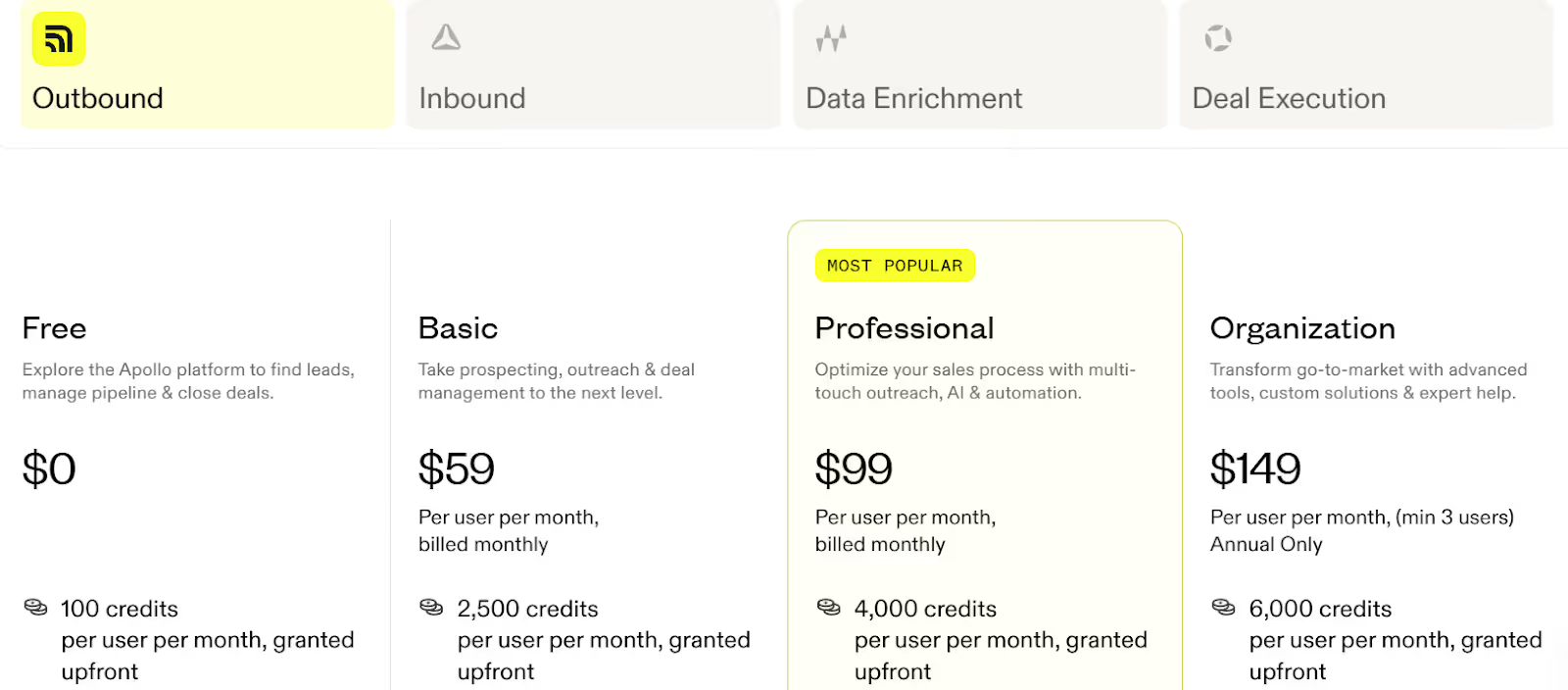
This image shows the Apollo Outbound Monthly Pricing Plans
Free - $0 - Apollo offers a forever-free plan, good for testing and small teams. Includes 100 credits/user/mo and basic limits, with access to essential tools like B2B lead database and email verification.
Basic - $59/user/mo - This unlocks most prospecting and basic outreach features Apollo offers:
2,500 credits/user/mo
Basic filters + core engagement
Professional - $99/user/mo - This is Apollo’s real “working tier,” offering comprehensive multi-channel sequences, CRM support, and advanced automation:
4,000 credits/user/mo
Full sequences, dialer, automation
Organization - $149/user/mo (annual only) - Made for companies with bigger pipelines, with custom pricing available for enterprise needs. Apollo offers advanced reporting, security, AI, and governance at this tier:
Costs climb quickly when you add reps + enrichment + calling.
Which One Is Cheaper? (Honest Breakdown)
Choose Lemlist if you want…
Lower cost for small teams
Predictable per-user pricing
Outreach-focused workflows
Warmup + deliverability + LinkedIn steps included
Integrates with various marketing tools to enhance outreach workflows
Choose Apollo if you want…
One platform for data + enrichment + outreach
Deep filters + intent + AI research
SDR-style operations
Multi-channel + pipeline + dialer in one system
All-in-one sales engagement platform with integrated sales tools and sales intelligence features
Simple Summary
Lemlist = predictable per-user pricing → best for outreach teams.
Apollo = per-user + per-credit + multi-module pricing → best for SDR orgs needing one full stack.
Our Tested Findings
Across 30K+ sends, 8 domains, and 4 outbound personas, a few patterns showed up clearly.
Both platforms are widely used by sales teams and sales professionals to execute cold email campaigns as part of a comprehensive outreach strategy.
Both platforms played a significant role in shaping campaign performance, with differences in how they enable users to monitor and optimize the results of their outreach efforts.
The effectiveness of outreach campaigns varied across different personas and domains, highlighting the importance of strategic, multi-channel engagement to drive results.
Deliverability & Domain Health
Lemlist performed well on controlled sending, inbox rotation, warm-up, and slower campaigns kept domain health steady. Its warm-up features help protect sender reputation, which is crucial for long-term inboxing success.
But once we pushed beyond safe daily volumes, deliverability dropped quickly, risking sender reputation if not carefully managed.
Apollo, on the other hand, maintained stable inboxing because of its conservative sending engine, which consistently safeguards sender reputation. However, you simply can’t scale volume aggressively without throttling or delays.
Personalization Tolerance & Reply Rates
Lemlist handled heavier personalization better, with personalized messages—such as custom images, icebreakers, and multichannel steps—leading to more natural replies and higher engagement rates.
Apollo’s personalization worked, but the reply rates plateaued unless users leveraged deeper data and intent filters to craft more personalized messages.
Multichannel tasks helped quality, but not raw reply numbers.
Data Accuracy & Volume Tolerance
Apollo’s data quality was the biggest advantage; its extensive lead database, along with filtering, enrichment, and intent scoring, meant better lead targeting and more efficient outreach.
Lemlist relies entirely on what you import, so accuracy varies.
But when it came to volume tolerance, Lemlist could push more emails per user (with rotation), whereas Apollo restricted sending to keep domains safe.
Essentially: Lemlist sends more; Apollo protects more.
Common Complaints About Lemlist and Apollo
Lemlist
Several users say Lemlist’s UI / campaign-management interface gets clunky as soon as you run many sequences or try to manage multiple campaigns.
Agencies managing multiple clients may find Lemlist's account and campaign management features limiting, as the platform lacks robust tools tailored for agency use cases and client management.
Many mention the lack of deeper automation or pipeline-like features, things like advanced multi-campaign logic, CRM-style lead management, or complex contact segmentation are missing or limited.
Some campaigns reportedly suffer poor deliverability or low reply rates even after warm-up, which can make the tool feel expensive relative to actual output.
Several users say that lead data quality (especially from Lemlist’s built-in database/enrichment) is hit-or-miss, and outdated contacts, invalid emails/phones, or irrelevant leads have been reported.
Many users find Lemlist’s pricing to escalate quickly; what starts cheap becomes expensive as you scale sequences, send more, or rely on lead enrichment.
Some report a steep learning curve, while basic features are easy to use, mastering multichannel sequences + personalization + warm-up + data enrichment can feel overwhelming.
Apollo.io
A widely repeated issue: inaccurate or outdated contact data. Many users complain that email addresses or phone numbers provided by Apollo are wrong, outdated, or need manual verification.
As a cold outreach software, Apollo has limitations that users frequently mention. For those attempting high-volume cold outreach, Apollo’s built-in sending limits and throttling feel restrictive. Some say daily send caps or per-mailbox limitations hamper real outbound volumes, which is a common drawback with cold outreach software.
The platform is sometimes described as complex and overwhelming, especially for smaller teams or individuals; the many features come with a learning curve.
Reviewers often complain about bugs, lag, or instability in certain parts, e.g. Chrome extension fetching phone numbers or loading slowly, or dialer features being inconsistent under load.
Some dislike the pricing + credit structure. If you enable multiple modules (enrichment, dialer, sequences) and have several users, costs escalate quickly.
For certain users, support and customer service get criticism, especially when dealing with data accuracy or billing issues.
Where Lemlist & Apollo Struggle and How to Fix the Weak Spots
Both tools do their job well, but neither can fully control the two things that actually move reply rates long-term: inbox placement and personalization depth.
Improving inbox placement and personalization depth is crucial for filling the sales pipeline with qualified opportunities, as these factors directly impact the number of prospects who see and engage with your outreach.
A successful outreach strategy often requires supplementing platform features with external tools to optimize inbox placement and achieve greater personalization depth.
Lemlist is strong on personalization, but its deliverability infrastructure struggles when you scale beyond safe daily ranges.
Apollo is strong on data + workflows, but its sending engine is too restricted for real outbound volume.
This is where adding a dedicated layer makes sense:
Instead of replacing Lemlist or Apollo, they add the layer both tools lack:
Warmforge → delivers stable inbox placementHandles warm-up, domain/IP protection, rotation, and reputation safety, things no outreach tool controls internally.
Salesforge → delivers deep personalization + safe execution at volumeTurns multi-mailbox sending, AI personalization, and domain rotation into a controlled system rather than a risky “send more and hope” workflow.
By integrating external tools like Warmforge and Salesforge into your outreach strategy, you can address the limitations of Lemlist and Apollo, ensuring your campaigns benefit from both advanced deliverability and enhanced personalization.
Together, they sit on top of Lemlist or Apollo, not replacing them, but fixing their weakest points:
better inboxing + safer volume + deeper personalization = more replies and a healthier sales pipeline.
Put simply:
Use Lemlist for personalization, Apollo for data quality, and Warmforge + Salesforge to make sure any of it actually reaches the inbox.
Book more meetings on autopilot
Set up in minutes. No per-seat pricing. No commitment.
I dug through Workflows.io's five services, its $4K to $12K pricing bands, ten published case studies, and how it stacks up against certified outbound alternatives.
I dug through corebits.io, the gtm.corebits.io subdomain, and every case study across their three engines to give you an honest read before you book the discovery call.
Read this Vantage Profiles review for a clear look at its LinkedIn account rental service, pricing, identity risks, customer feedback, and whether it is worth using.



.jpg)