Getting clients from LinkedIn is not a content trick, a connection-request quota game, or a reason to blast every founder in your second-degree network.
The channel works when you treat it like outbound. Define the account. Find the right buyer. Wait for a real signal. Send a short message. Follow up in a controlled sequence. Move serious conversations into email or a call before the thread dies.
That order matters because LinkedIn has two hard constraints people ignore: trust and timing.
So the answer is not “send more connection requests.”
Ahead, I’ll show you how the answer which is to build a LinkedIn client acquisition system that protects your account, prioritizes buying signals, and uses LinkedIn as one touch in a larger pipeline flow.

LinkedIn client acquisition system
LinkedIn is the trust and timing channel, not a place to run 17-step spam sequences against people who never showed intent.
Pick one expensive problem, make your profile prove you understand it, warm the account through useful posts and comments, then send short DMs with real context.
Most LinkedIn outreach fails before the first DM.
The profile is vague, the offer is broad, the post history gives no proof, and the message asks for a call before the buyer has any reason to care.
The obvious failure triggers are easy to spot:
LinkedIn has its own trust layer.
It says invitation restrictions can happen when you send many invitations in a short period, when too many are ignored or marked as spam, or when LinkedIn suspects prohibited automation.
It also says repeated suspensions for automated activity can become permanent. Read that as an operating rule: relevance protects pipeline and account health.
That's what Clark Barron warned: tools pushing LinkedIn data without consent are one LinkedIn investigation away from being shut down.

Alt Text: Clark Barron
This gives you what Max Murphy frames as the upside: fewer spam DMs, fewer obvious AI comments, and more useful human connections.
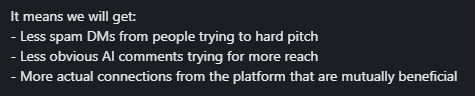
Alt Text: Max Murphy
That is the backdrop here: win clients without making the account look like a mass-action machine.
Message quality matters too. LinkedIn’s harmful-message detection can route likely harmful content from unknown senders to spam, and reported conversations can lead to additional action.
A good LinkedIn client acquisition system starts with restraint.
You do not need every founder, every SaaS company, every agency, or every HR leader. You need a group of buyers who have the same painful trigger and would recognize themselves in your profile in 10 seconds.
Use this worksheet before you touch your profile or DM copy:
Field
Fill it in
Buyer
The exact role, company type, and maturity stage
Trigger
The event that makes the problem urgent now
Pain
The business cost if they ignore it
Proof
The result, case study, process, or example you can show
Offer
The specific outcome you help them reach
Next step
The smallest useful action after a positive reply
Bad ICP: “B2B companies that need more clients.”
Good ICP: “Founder-led B2B SaaS teams at $1M-$5M ARR that hired SDRs before fixing deliverability and now need pipeline coverage without burning domains.”
Bad ICP: “Agencies that want more leads.”
Good ICP: “SEO agencies selling retainers above $3K/month that rely on referrals and need 10 qualified founder conversations per month.”
Bad ICP: “Recruiters.”
Good ICP: “Recruiting agencies placing GTM roles for Series A SaaS companies that need warmer founder relationships before job openings are public.”
As Jamie Brindle says, aim for specificity; it makes the rest easier.

Alt Text: Jamie Brindle
Your profile gets sharper. Your posts stop sounding generic. Your comments land in better conversations. Your DMs stop feeling like a script.
Your LinkedIn profile is not there to document your career. It is there to reduce doubt for a specific buyer.
Prospects should understand what you do, who you help, and why they should trust you when they land on your profile.
Before you send a single DM, check the conversion basics:
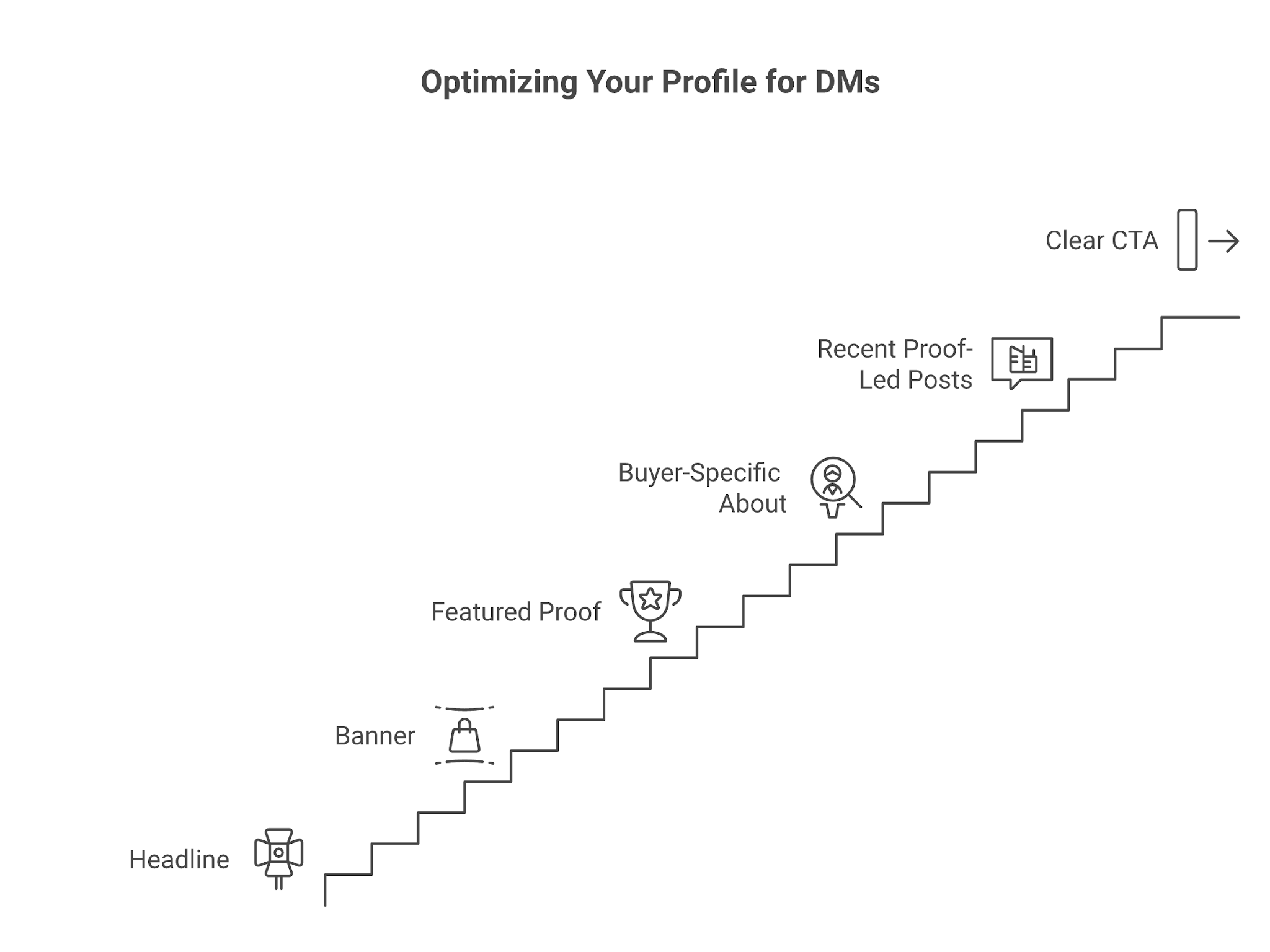
LinkedIn Profile Conversion Checklist
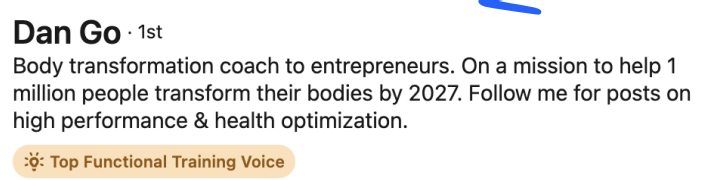
Alt Text: Tagline
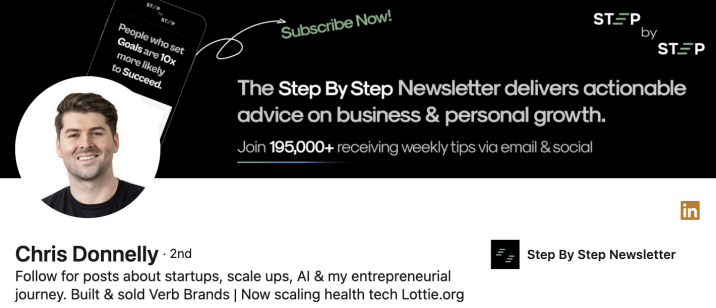
Alt Text: Justin Welsh
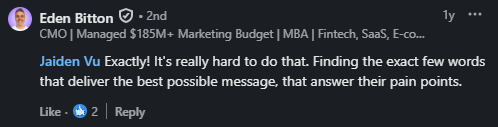
Alt Text: Eden Bitton
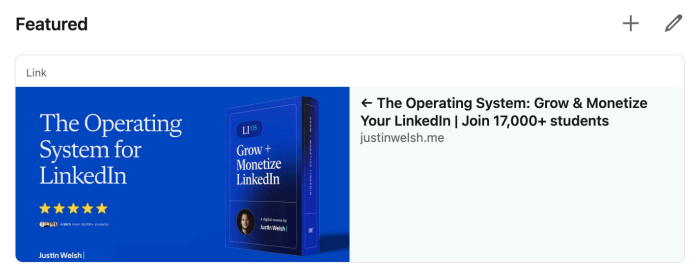
Alt Text: Featured Section
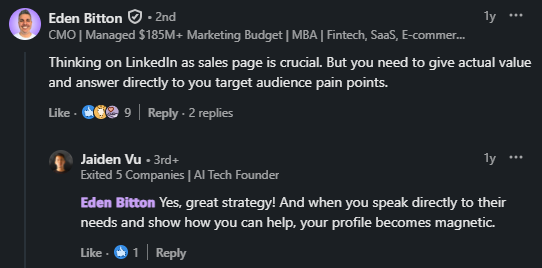
Alt Text: Eden Bitton
Alt Text: Contact Path
Fix the proof surface before sending more messages.
LinkedIn content is not decoration. It is the proof layer that makes outreach less cold and makes the right 50-500 people more comfortable replying when you show up.
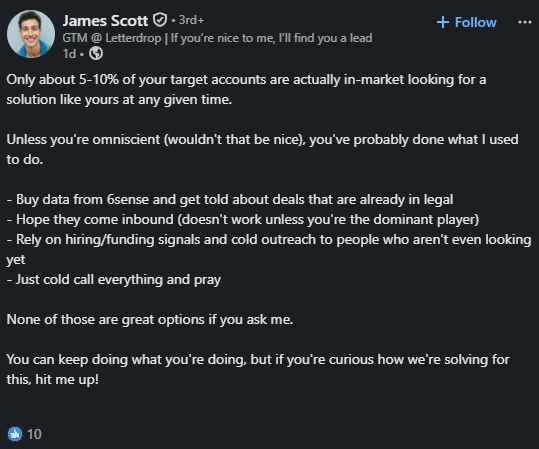
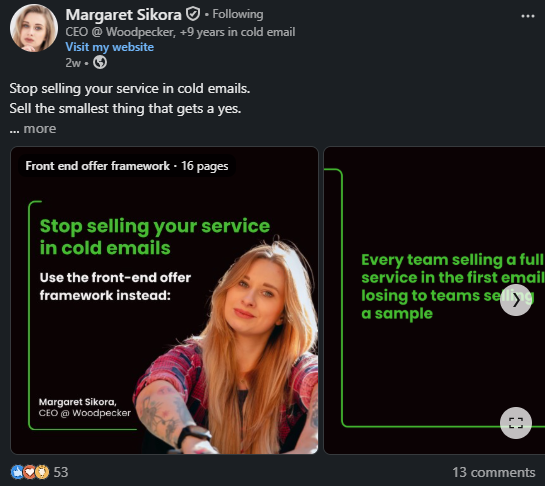
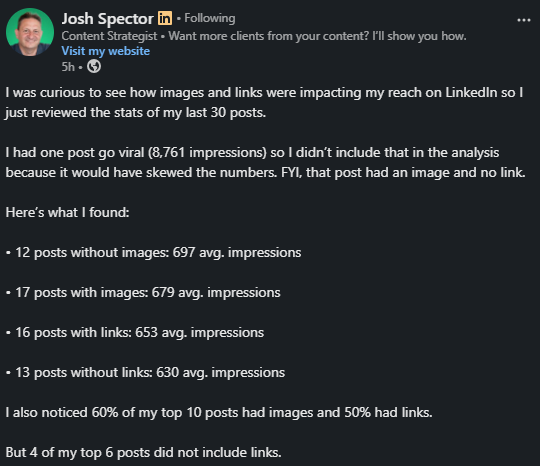
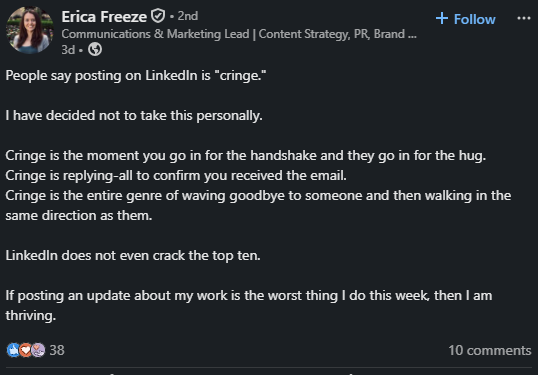
Use five practical post types:
Alt Text: James Scott
Alt Text: Margaret Sikora
Alt Text: Josh Spector
Alt Text: Erica
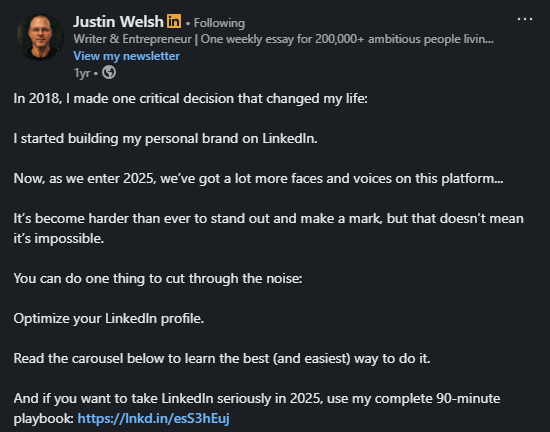
Alt Text: Justin Welsh
If you have no audience yet, write for the person you plan to contact this week. A post about why agency outbound fails after domain warmup is more useful than a broad post about “sales tips.”
The goal is that a prospect can click your profile after a comment or DM and see relevant thinking.
Must Read: LinkedIn Account Suspended? 12 Proven Ways To Protect Your LinkedIn Account in 2026
Static lists are where LinkedIn spam begins. Active prospects are better because they give you a reason to start a conversation.
Look for people who are already showing signs of timing:
Filter with five questions:
Filter
Question
Fit
Is this the buyer and company type you chose?
Timing
Is there a recent reason they care now?
Activity
Are they active enough to see and answer?
Accessibility
Can you reach them without forcing the channel?
Problem evidence
Can you point to a real issue, not a guess?
This is slower than scraping a giant list, but every message starts from a reason.
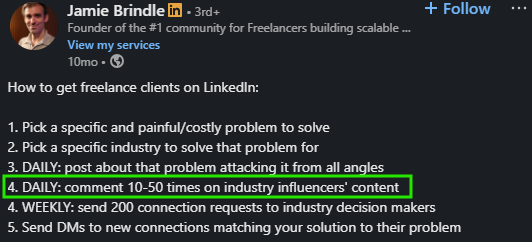
Alt Text: Jamie Brindle
As Jamie, with over 26K followers, mentioned, spend 10-20 minutes a day becoming recognizable to the right people. Not everyone. The right people.
Good engagement adds something. It can sharpen the argument, add a field example, ask a useful question, or respectfully disagree. Empty praise does not count.
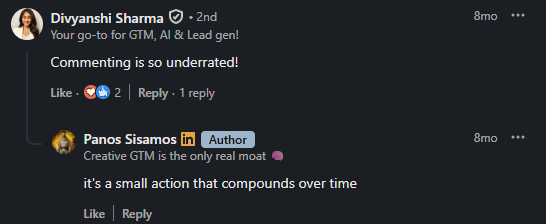
Alt Text: Divyanshi
Spam comment: “Great insights, thanks for sharing.”
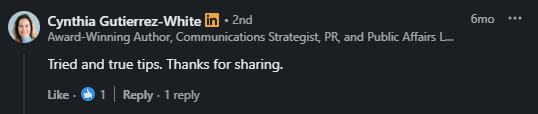
Alt Text: Spam Comment
Better comment: “The missing piece here is timing. If a founder just hired two SDRs, deliverability becomes urgent because every bad sequence burns the same domains the team needs next quarter.”
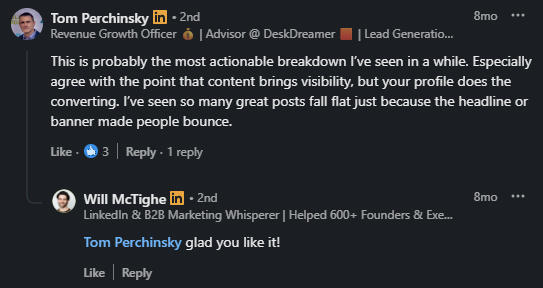
Alt Text: Value Comment
Spam comment: “Love this. DM me.”
Better comment: “This is why I prefer measuring positive replies over accepted connections. Accepted requests only prove the opener worked. Positive replies prove the problem was real.”
After that, a connection request does not feel random. Another comment on the same LinkedIn thread described the platform as mostly built for human-to-human conversations and DMs.
Treat that as the standard: if your comment would look strange coming from a person who might later ask for a sales conversation, do not post it.
Must Read: 7 Ways You Can Manage Multiple LinkedIn Accounts [+3 Tools Recommended]
.jpg)

.jpg)