You do not need another tool that writes a passable first line and calls it prospecting. The best AI Sales Prospecting Tools help B2B teams find the right accounts, enrich the right contacts, and send without breaking deliverability.
In B2B outbound, prospecting still means five jobs have to happen in the right order, finding the right accounts, enriching the right contacts, spotting timing signals, writing relevant outreach, and sending through infrastructure that protects deliverability. If any one of those jobs breaks, the pipeline math breaks with it.
That is why the best AI Sales Prospecting Tools in 2026 are not just copy generators. They are systems for coverage, data, enrichment, signal detection, personalization, sequencing, handoff, and measurement.
This list is written for founders, agencies, SDR leaders, and RevOps operators deciding what to buy next. Some tools here are best for raw contact data. Some are better for outbound execution. Some only make sense once you already have a CRM, a RevOps owner, and enough budget to negotiate annual contracts.
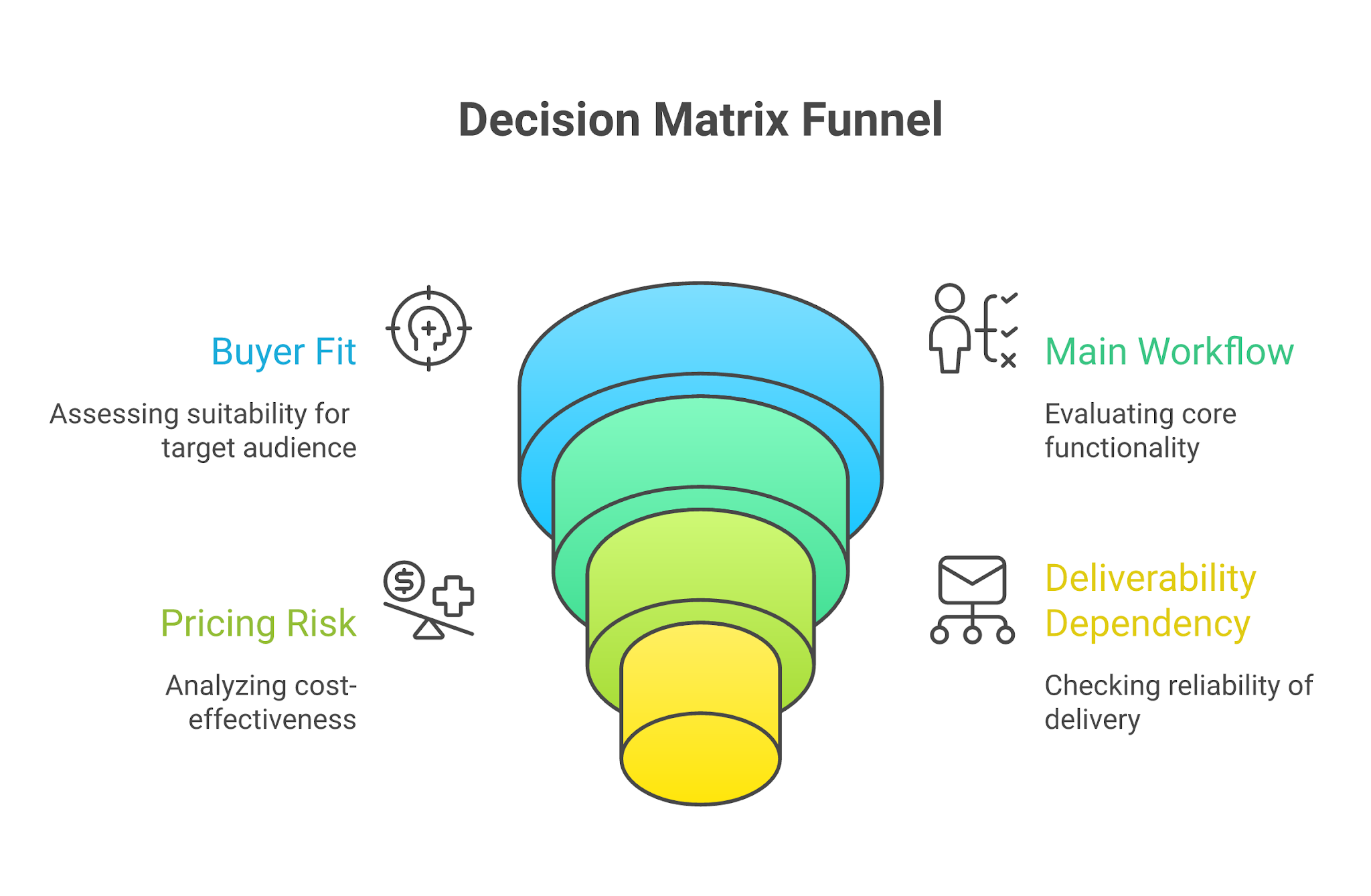
Alt text: AI sales prospecting tool categories
This is a source-grounded evaluation, as of May 2026. We assessed each vendor against official product and pricing pages, public case studies, recent pricing analyses where pricing is not transparent, and public buyer feedback patterns. We did not claim first-hand testing.
Each tool was judged on six dimensions:
For listicle fairness, Salesforge is not automatically ranked first for every team.
Salesforge earns the top spot for teams where outbound execution and infrastructure are the bottleneck. If you only need a clean contact export for manual calling, Salesforge is heavier than you need.
Use this table as the first filter. It will not replace procurement, but it will stop the most common mistake of buying an AI SDR when the real problem is data quality, or buying a database when the real problem is sender infrastructure.
Tool
Best fit
Category
Pricing model / starting point
Implementation / CRM fit
Main tradeoff
Salesforge
Email and LinkedIn outbound teams that need infrastructure plus execution
Outbound execution + AI SDR
Pro at $40/month, Growth at $80/month, Agent Frank from $499/month billed quarterly
Fastest when the team already has ICP clarity and needs mailbox, warmup, sequence, and LinkedIn execution in one stack
Not the first buy if you only need contact lookup
Apollo
Startups and SMB sales teams that want database plus engagement
Sales intelligence + engagement
Self-serve plans with credit and export limits
Low implementation lift; strongest when CRM needs are basic and reps can work inside Apollo daily
Data quality and credit behavior still need monitoring
Clay
RevOps and GTM engineering teams building custom workflows
Enrichment workflow builder
Action and data-credit model
High operator lift; best when a GTM engineer owns CRM sync, waterfall logic, and workflow QA
Requires an operator who owns the workflow
ZoomInfo
Enterprise revenue teams with governance and direct-dial needs
Enterprise sales intelligence
Sales-led contracts
Enterprise implementation; fits Salesforce-heavy teams with RevOps governance and territory rules
Heavy procurement and high cost for small teams
Cognism
EMEA-heavy teams that care about compliance and mobile data
Sales intelligence
Sales-led contracts
Medium implementation; works as a data layer beside CRM and a separate engagement stack
Needs separate sending and deliverability tooling
Lusha
Reps who need fast verified contact reveal
Contact data + enrichment
Credit-based reveals
Low lift; browser-extension-first workflow works when reps enrich records one at a time
Not a full outbound engine
Seamless.AI
Teams prioritizing high-volume contact discovery
Contact discovery
Sales-led / limited public pricing
Medium lift; validate CRM export, cancellation terms, and data QA before scaling users
Pricing and accuracy need tighter validation before commitment
Amplemarket
SDR teams consolidating data, signals, sequences, and dialer
Outbound platform
Tiered plans with credits and add-ons
Medium-high implementation; works when managers enforce one daily operating system
Adoption discipline matters or the platform becomes underused
Regie.ai
Enterprise teams combining agent workflows, enrichment, and dialer
AI sales engagement platform
$180/user/month AI SEP with 10-seat minimum; $499/user/month Force Multiplier with 5-seat minimum
Higher implementation; best with CRM governance, rep coaching, and dialer adoption already in place
Minimum spend excludes many lean teams
11x Alice
Funded teams buying a managed outbound worker
AI SDR / digital worker
Growth visibly starts at $3,750/month billed annually; FAQ also references $36,000/year
Managed implementation; confirm CRM sync, approval gates, and mailbox ownership before signing
Less granular control than building your own stack
Artisan Ava
Teams testing autonomous BDR coverage with a defined ICP
AI BDR
Trial/credit-led public entry path
Moderate lift; needs campaign review, reply QA, and clear guardrails during the first few sequences
Needs close monitoring for guardrails and reply quality
HubSpot Breeze
HubSpot-native teams acting on CRM signals
CRM-native prospecting agent
HubSpot Credits, with outreach contacts priced at $1 each
Lowest lift for HubSpot-first teams; weak fit when CRM data lives elsewhere
Less useful outside HubSpot
Reply.io Jason
SDR teams that want AI help inside multichannel sequences
Sales engagement + AI SDR
Seat plans plus add-ons for channels, data, and validation
Medium lift; fits teams already comfortable with sequence governance and CRM activity sync
Add-on math changes the real monthly cost
Instantly
Email-first teams wanting search, enrichment, and sending close together
Cold email + prospecting
Sending plans plus Instantly Credits
Low-medium lift for cold email teams; CRM-fit depends on how much review happens before export
Generated prospects still need approval and QA
Salesloft
Mature revenue teams standardizing seller actions
Revenue orchestration
Sales-led packages
Enterprise implementation; best when CRM hygiene and seller process already exist
Not a net-new contact database
The right sequence is simple, ICP first, data second, infrastructure third, outreach fourth, agent autonomy fifth. Skip the order and you pay for automation that only scales bad inputs.
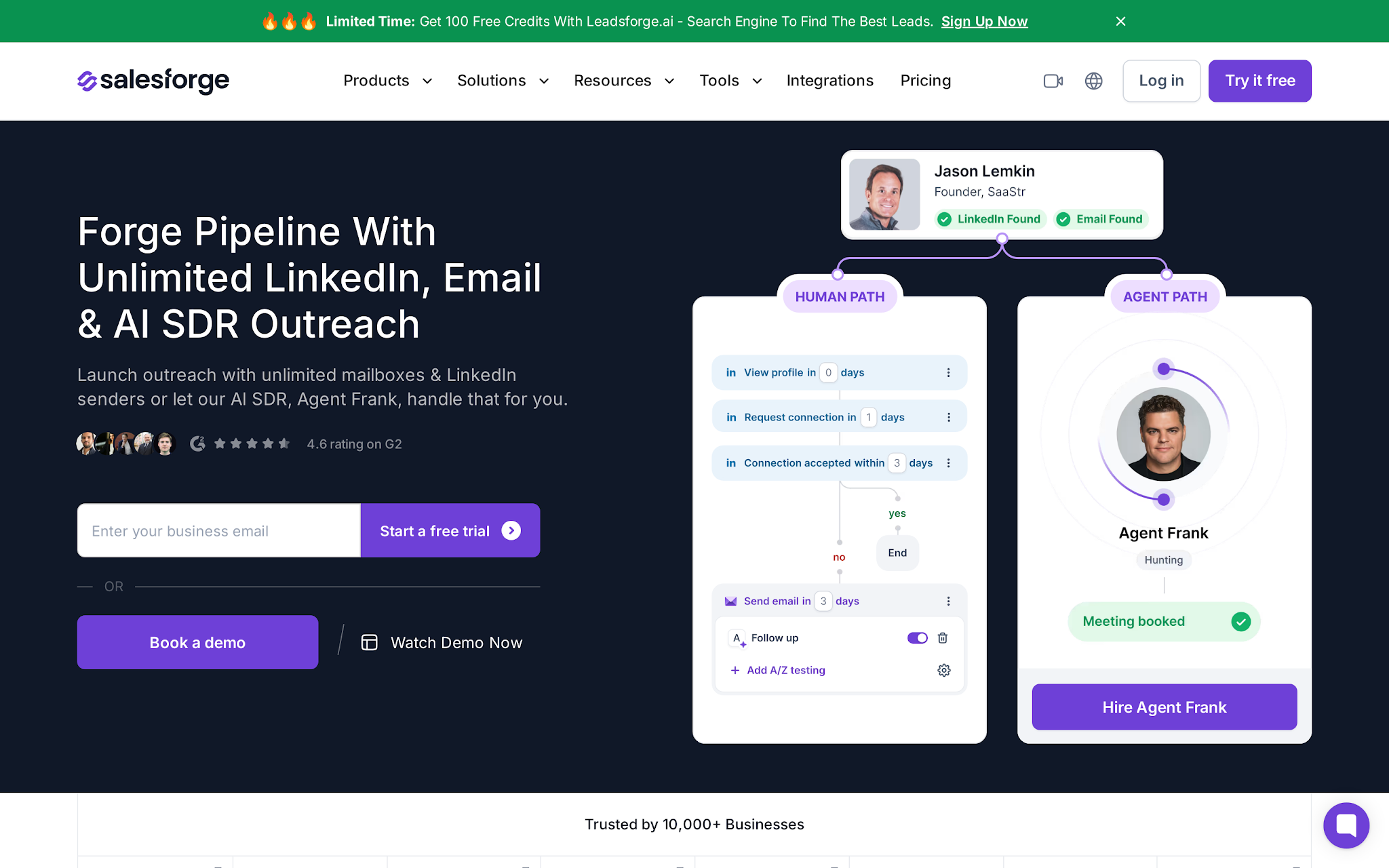
Alt text: Salesforge homepage
Salesforge is the strongest fit when the prospecting bottleneck is not contact discovery alone, but the operating system around outreach. The platform brings unlimited email mailboxes, unlimited LinkedIn senders, deliverability protection, and Agent Frank into the same outbound motion, which matters because prospecting does not stop at finding contacts. Someone still has to send, rotate, warm, monitor, reply, and book.
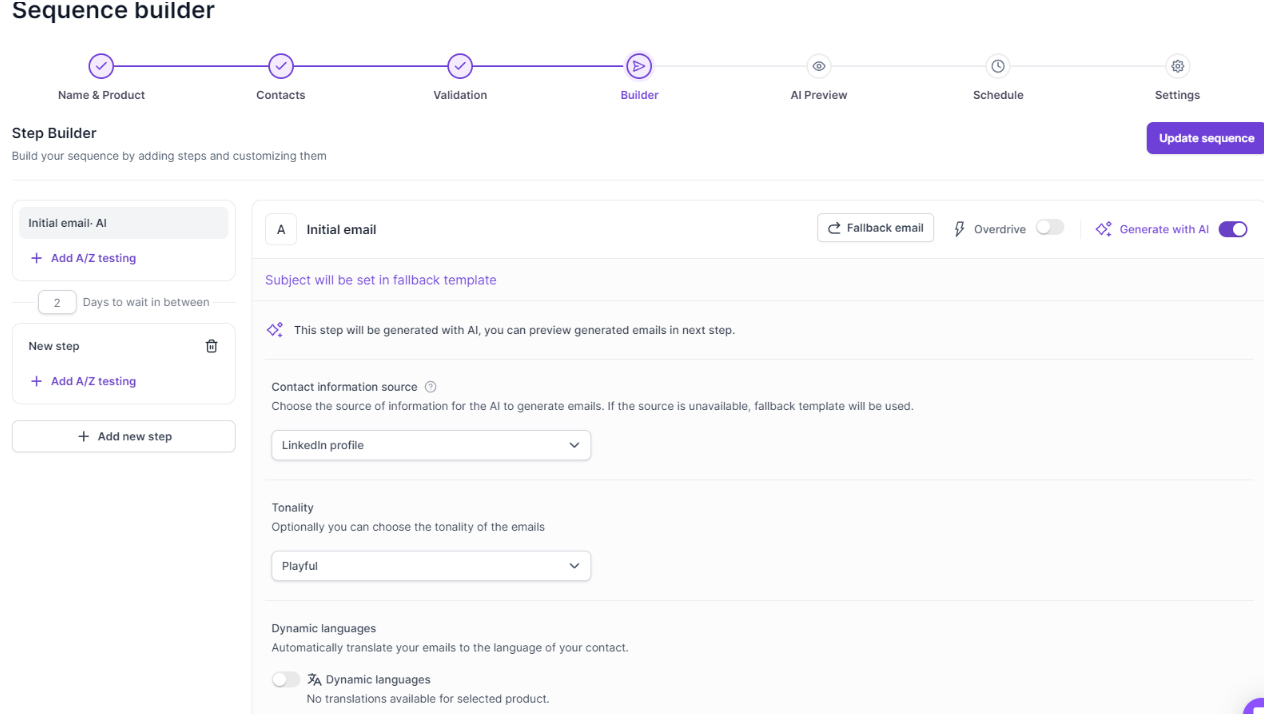
Alt text: Personalize your Campaigns at Salesforge
Salesforge is strongest when the buyer already believes cold outreach works but wants fewer disconnected tools. The Forge Stack covers the layers most teams duct-tape together, Leadsforge for prospect discovery, Mailforge/Infraforge/Primeforge for infrastructure, Warmforge for deliverability, Salesforge for sequences, and Agent Frank for AI SDR execution.
The practical wedge is infrastructure. Salesforge pricing includes unlimited premium warmup, unlimited mailbox connections, smart mailbox rotation, Primebox, sentiment analysis, and dynamic IP rotation on the human plans, with Pro listed at $40/month and Growth at $80/month on monthly billing. Agent Frank starts from $499/month billed quarterly, with 2,000+ contacts per month and 24/7 automated prospecting.
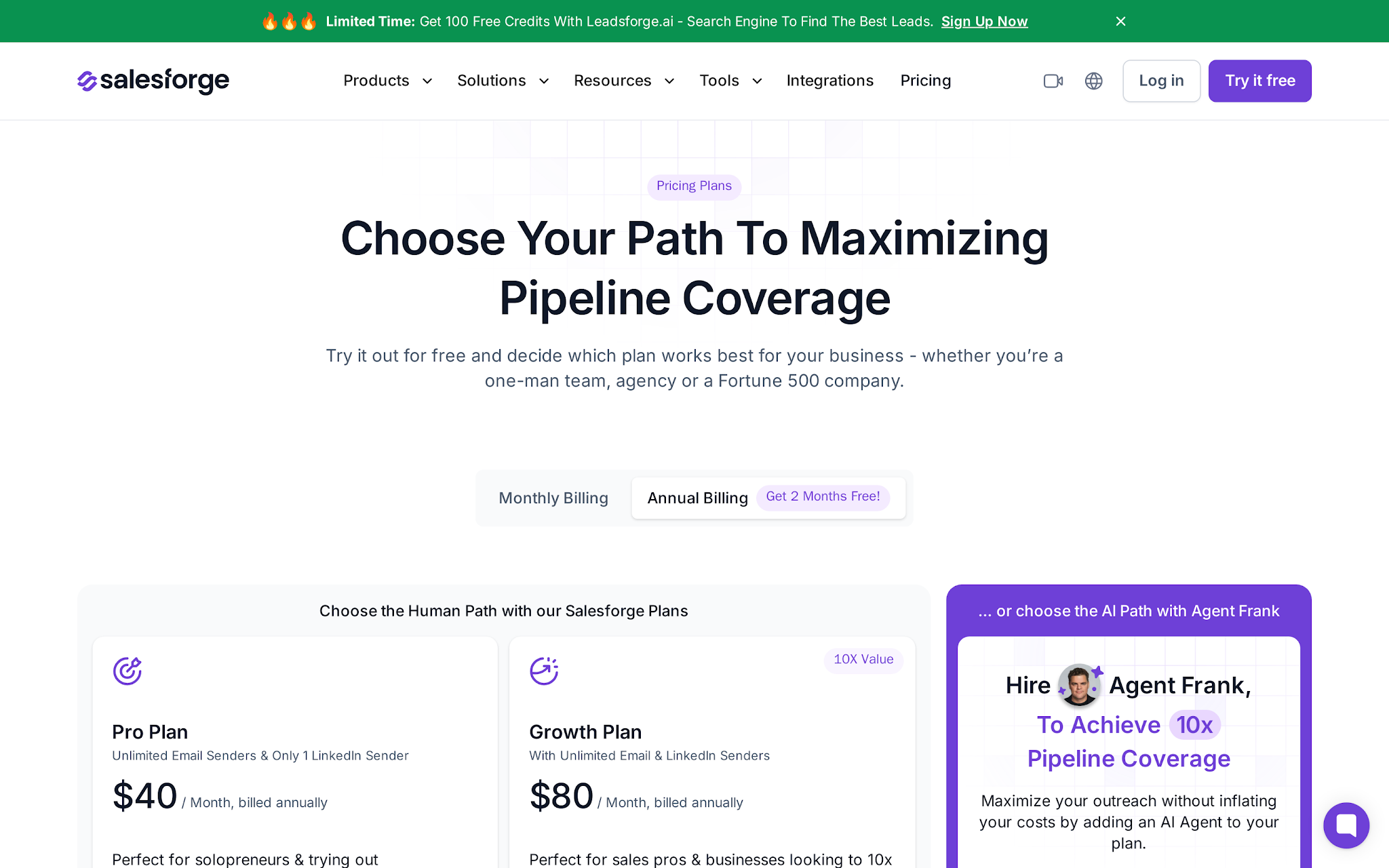
Alt text: Salesforge pricing page showing Pro, Growth, and Agent Frank paths
Best for: Founders, outbound agencies, and growth teams that care about sending volume, mailbox rotation, LinkedIn touches, warmup, and agent-assisted meeting booking in one stack.
Avoid if: You only need a contact database, you already have a locked enterprise engagement stack, or your ICP is still unproven.
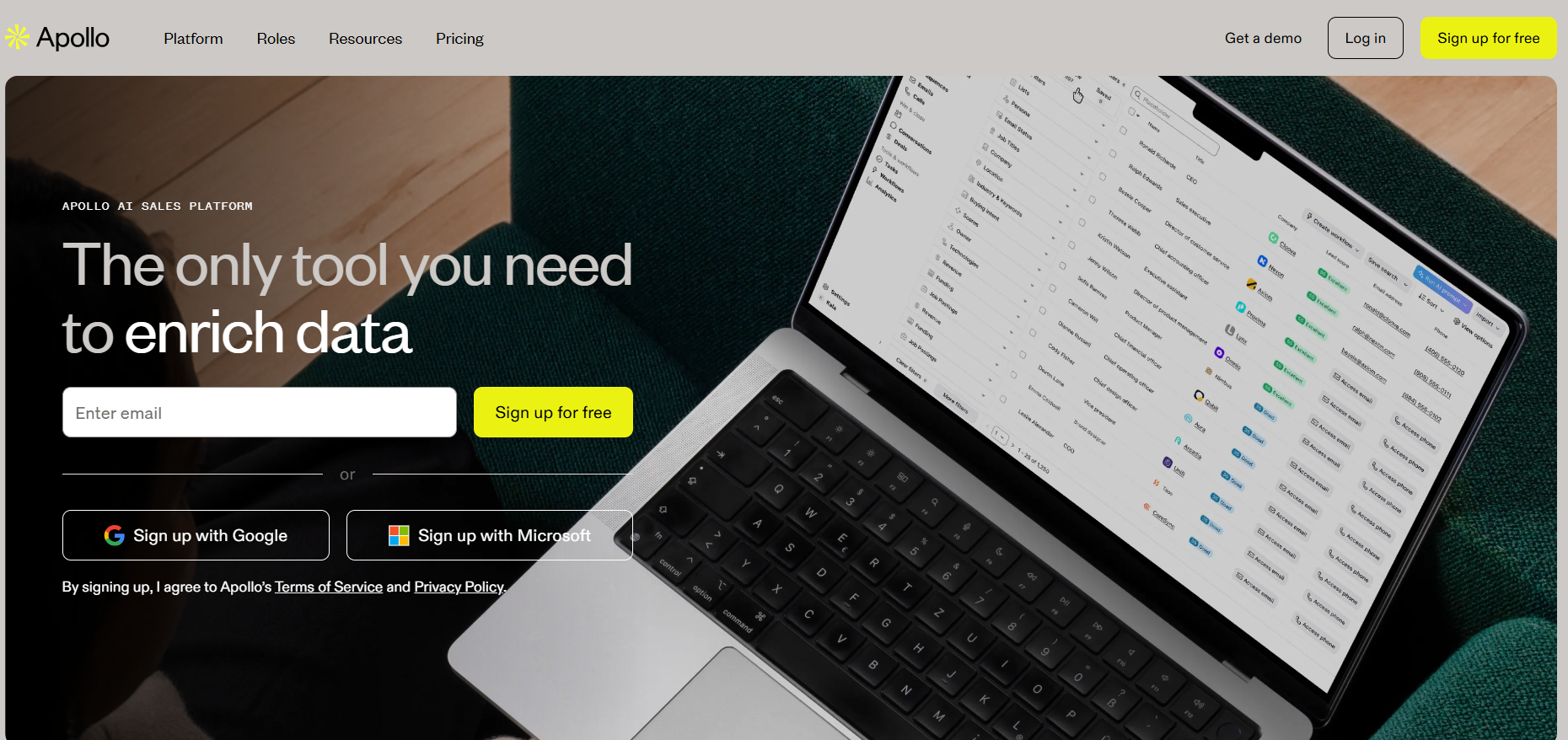
Alt text: Apollo.io homepage
Apollo remains one of the easiest starting points for a lean B2B sales team because it lets reps move from search to sequence without a heavy RevOps build. The product spans outbound, inbound, enrichment, and deal execution, with plans structured for companies of multiple sizes, which makes Apollo’s public pricing easier to understand than a fully sales-led data contract.
The buyer value is speed. A founder or small SDR team can search, save contacts, write sequences, and start outreach without stitching together a data provider and a separate engagement tool. The credit, export-credit, and fair-use details are still worth reading closely because Apollo gets expensive when a team treats the database like an unlimited export machine.
The tradeoff is the same one operators report across large databases, data quality varies by market, persona, and geography.

Alt text: Apollo G2 review about data quality by users
Apollo is strong enough for a large percentage of SMB and mid-market prospecting, but serious outbound teams should still verify emails, suppress risky contacts, and monitor bounce rate before increasing volume.
Best for: startups and mid-market teams that need prospect search, contact data, and basic engagement in one place.
Avoid if: you need heavy mailbox infrastructure, agency-grade sender rotation, or custom enrichment logic across many providers.
Pricing read: Apollo can look cheap at first, but the real question is credit use, export behavior, user count, and whether you need separate deliverability tooling.

.jpg)