
Personalized Outbound Strategy
Get The Right Outbound Strategy In Minutes
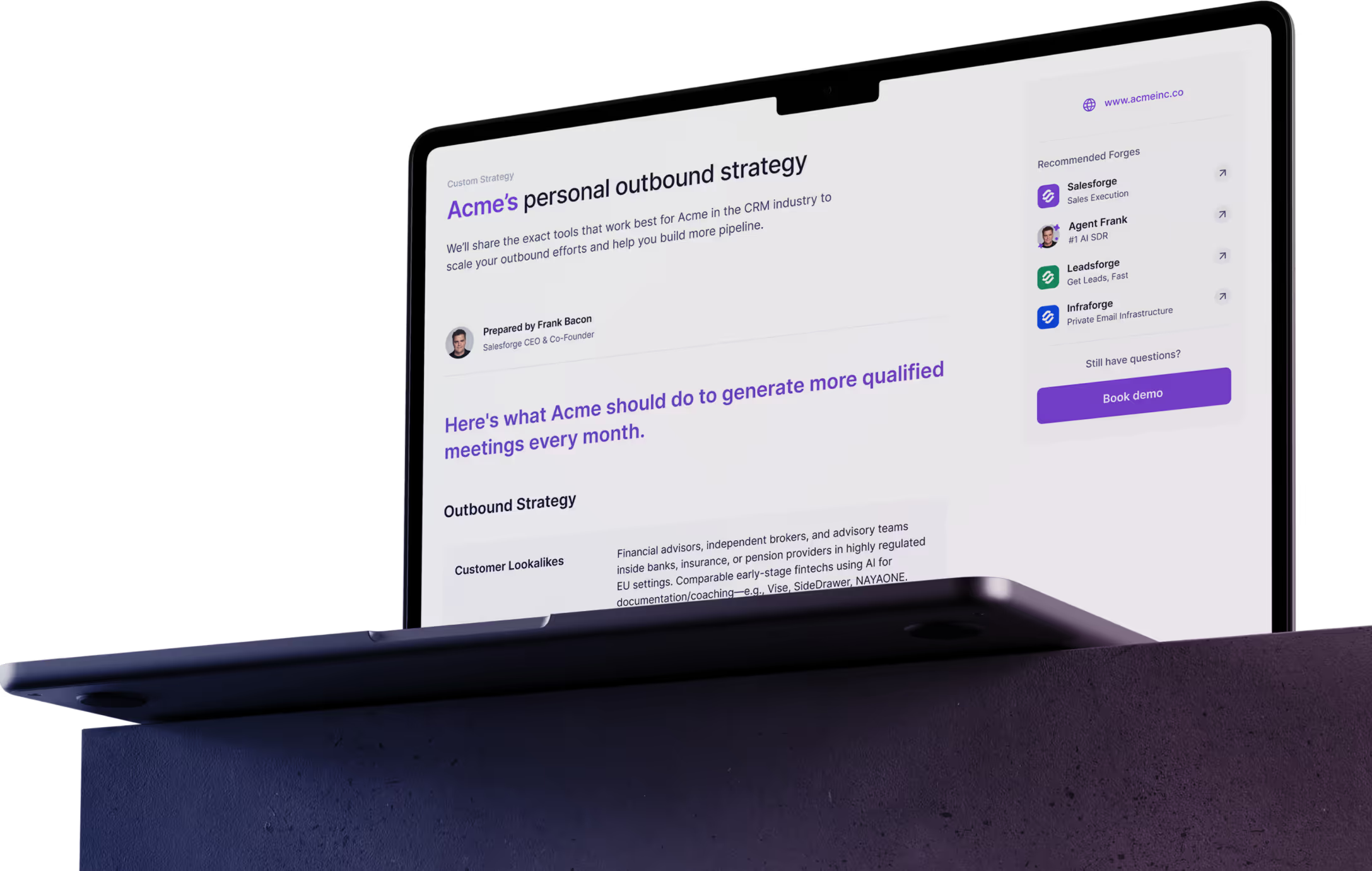
Enter your email to get a custom plan & stack recommendation for your business
It's being carefully crafted by AI
Please check your mailbox in 5 minutes


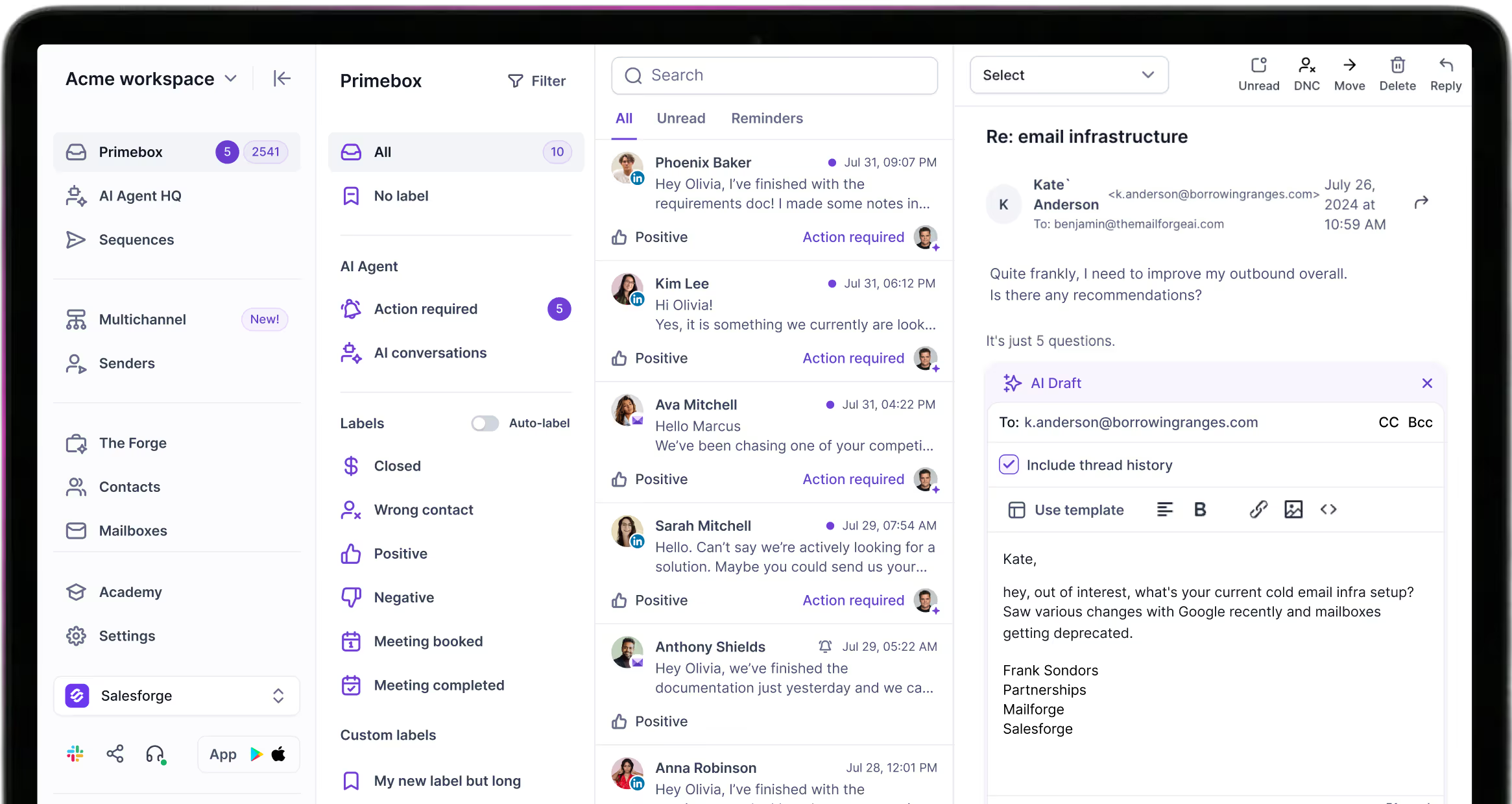
Cold outreach tools shape prospect engagement and response rates. Choosing the right automation tools impacts inbox placement and prospect engagement.
Waalaxy presents tiered pricing with credit bundles and pro plans. Prices vary by billing cadence. Waalaxy also offers an extremely limited free tier. As part of the market of LinkedIn automation tools, these tiers emphasize different balances of sending capacity and cost - useful whether you need only basic automation or a more advanced stack integrated with other tools.
Dripify shows Basic / Pro / Advanced monthly tiers, often billed annually for discounts. Dripify also advertises a 7 day trial period on pricing pages. Its Basic tier is a decent entry point for teams that want gentle, reliable LinkedIn automation and simple outreach sequences before moving up to more robust plans.
Salesforge lists starting pricing tiers and add-ons for higher contact volumes. It also provides a 14 day trial window so teams can test sequences and deliverability. Salesforge’s pricing is positioned toward teams that plan to scale outreach sequences and require deliverability infrastructure and campaign customization at higher volumes.
All three support LinkedIn outreach and email outreach, but only Salesforge emphasizes running both channels as integrated sequences from one dashboard. That unified approach often improves prospect engagement.
For teams using LinkedIn Sales Navigator or other prospecting sources, having multi-channel orchestration in one place reduces context switching and lets teams synchronize connection requests, LinkedIn messaging, and email touchpoints into cohesive outreach sequences.
Feel free to let Salesforge's results speak for themselves:

Waalaxy requires using a Google Chrome extension for LinkedIn automation and prospect import. That extension model makes tasks like sending connection requests and quick profile imports feel immediate, but it ties execution to a local browser.
Dripify and Salesforge run largely as cloud platforms, avoiding extension-dependent execution. Cloud deployment commonly provides more reliable scheduling and removes the need to keep a local browser active for campaign delivery.
Waalaxy uses credits and invitation quotas per plan with larger bundles available. Dripify places daily quotas on lower tiers; higher tiers expand quotas.
Both Waalaxy and Dripify scale seats with pricing, but not Salesforge. Starting from $96/mo, Salesforge's Growth plan allows the use of unlimited seats as well as a shared workspace, in turn providing an overall extremely scalable architecture for many users and higher contact volumes. This makes Salesforge attractive for teams that need both campaign customization and broad seat access without per-seat lock-in.
Deliverability is a core cold outreach metric that can make or break a cold email outreach campaign:
Waalaxy provides email sequences and an inbox add-on, but lacks any native warm-up features.
Dripify includes a dedicated inbox feature and focuses on safe sending with warm-up capabilities.
Salesforge highlights built-in free premium warmup and deliverability monitoring to keep emails landing in inboxes, as well as inbox rotation. For teams prioritizing deliverability and measurable inbox health, these features reduce bounce risk and support higher reply rates.
Waalaxy supports common template fields and dynamic variables for personalization. It also provides premade templates and sequence builders for LinkedIn/email.
Dripify offers variables and AI-assisted elements for personalization. Dripify’s drag-and-drop drip sequence editor supports branching and advanced timing.
Salesforge includes AI-driven message generation that uses multiple personalization sources and is unique for every lead for highly personalized outreach at scale. Salesforge additionally allows building multi-channel sequences with triggers, splits, and performance A/B testing.
Enter your email to get a custom plan & stack recommendation for your business
Please check your mailbox in 5 minutes
Waalaxy integrates with Zapier/Make and common CRMs for lead generation workflows.
Dripify supports webhooks, Zapier, and CRM exports for pipeline integration.
Salesforge offers all of the above integrations - and then some. Salesforge offers webhooks, API and Zapier, as well as having native connectors with major CRMs, Databar, Sendspark, R2B2, GoHighLevel and even Clay. That's without even mentioning the native Forge stack which automates every sales step - from lead generation to outreach.
Waalaxy recommends human-like delays and quotas to keep LinkedIn accounts safe.
Dripify centers safety on cloud execution with IP assignment and throttling.
Salesforge automates safe scheduling and throttling to reduce restriction risks and abide by healthy LinkedIn outreach guidelines. Across all vendors, safety features govern how quickly you’re sending connection requests and linkedin messaging to protect accounts and long-term deliverability.
Waalaxy shows campaign stats, profile visits, and invitation outcomes.
Dripify provides advanced reporting, team performance dashboards, and response metrics.
Salesforge emphasizes cross-channel analytics, conversion metrics, and deliverability health. If you need detailed analytics for A/B tests, pipeline conversion, and spend efficiency, Salesforge and Dripify provide richer dashboards than the very basic reporting some users find in extension-driven tools.
Waalaxy’s chrome extension offers a low barrier to entry for basic users, but additional unnecessary setup. It also advertises live chat support, though several users have critiqued the support's response rates and overall helpfulness.
Dripify’s interface is drag-and-drop and approachable for sales professionals. Dripify also shows customer support and safety documentation prominently.
Salesforge packs advanced capabilities that may require onboarding, but its all presented in a highly intuitive UI. The platform emphasizes a user friendly interface combined with extensive help docs and 24/7 responsive customer support via email and live chat.
Waalaxy’s browser-extension model depends on Chromium browser availability and local execution.
Dripify’s cloud execution runs sequences reliably without the local browser.
Salesforge’s cloud-based platform executes campaigns server-side for consistent results.
All three emphasize optimization to improve response rates via follow-ups and personalization, but Salesforge’s built-in deliverability monitoring and AI personalization often help surface higher response rates at scale.
Waalaxy is attractive to individual users and small teams with limited budgets and its chrome extension is friendly for non-technical users importing LinkedIn profiles and quickly sending connection requests.
Dripify suits growing teams needing advanced safety and reporting, as well as balances simplicity with advanced settings for technically inclined users who want detailed analytics and branching in their outreach sequences.
Salesforge targets sales teams of various sizes, emphasizing scale and integration while still being highly useful for smaller teams. For technically inclined teams, Salesforge offers deeper technical features and APIs and supports complex campaign customization and multi-channel orchestration.
Waalaxy provides dozens of prebuilt sequence templates for LinkedIn outreach.
Dripify offers industry templates and sequence libraries for quick launching.
Salesforge supplies templates, plus AI-assisted playbooks for scaling outreach and for creating highly personalized linkedin messaging at scale.
Follow-up sequences are central to cold outreach success, as most prospects ignore the first outreach:
Waalaxy supports automated follow-ups within sequences.
Dripify’s sequences include multi-step follow-ups with conditions.
Salesforge, on the other hand, automates entire complex follow-up logic across channels.
Systematic, personalized follow-ups increase response rates, build familiarity, and turn initial touches into conversations.
Salesforge, built by a former Googler and VP of sales, bundles built-in deliverability infrastructure, server-side execution, AI personalization, and deep integrations in one cloud product. These elements combine to make it especially suitable for sales teams seeking scale. Those claims are supported on Salesforge’s site.
Choose Waalaxy if you want an affordable start, quick LinkedIn imports via a chrome extension, and low-friction onboarding. It’s good for individuals and small teams.
Pick Dripify for cloud-based LinkedIn automation that emphasizes safety and clear team reporting. It’s good for teams moving beyond single-user tools and wanting a user friendly interface with branching and campaign customization.
Salesforge is tailored for teams wanting scale, free native deliverability or AI personalization across both LinkedIn and email for an affordable price.
All three tools address cold email and LinkedIn oureach, and both Waalaxy and Dripify serve many users well.
But Salesforge provides deeper integration, free premium deliverability, robust analytics, highly personalized message generation and other AI features that help sales teams scale cold outreach competitively. For sales professionals seeking this, Salesforge is the perfect solution.
Deliverability is a stack problem - domain setup (SPF/DKIM/DMARC), sender reputation, sending cadence, and warm-up strategy all interact. Salesforge’s server-side warm-up and monitoring can automate much of that lifecycle (reducing manual warm-up work) and surface issues earlier, whereas Waalaxy often relies on extension/local execution and third-party warm-up workflows and Dripify often balances built-in warm-up guidance with plan-dependent features. Regardless of vendor, you should watch bounce rate, spam complaints, and engagement metrics and tie those back to list hygiene and your automation tools’ sending policies.
Yes! AI personalization + custom sequences can lift open and reply rates by making messages more relevant, improving campaign performance. Salesforge’s approach (AI message generation combined with server-side sequencing and deliverability controls) can scale personalization while enforcing throttling, A/B testing, and inbox rotation to mitigate risk.
Enterprises value reliable integrations, governance, and auditability. Salesforge often markets native connectors, webhooks, and an API that make it easier to integrate with CRMs and Sales Navigator-sourced lists without manual CSV exports; this simplifies lead generation workflows. Trade-offs include vendor lock-in (deep integrations can be harder to migrate away from), potential incremental cost for high volume, and a need for initial onboarding/technical setup. Waalaxy’s Chrome extension may be faster for ad-hoc LinkedIn imports but is less suitable for centrally governed pipelines. Dripify can sit between - cloud-native with reasonable integration points but sometimes fewer enterprise-grade connectors or API depth.
Browser-extension tools execute actions from a user’s machine, which can mimic human interactions but are vulnerable to local network/IP exposures and require the client to keep a browser session running. Salesforge (cloud/server-side) can offer controlled IP pools, scheduled throttling, account rotation, and centralized policies that reduce risky linkedin activities at scale. In the LinkedIn automation space, cloud platforms can more consistently enforce safety rules (daily quotas, randomized delays, smart sequencing) across users.
Salesforge often provides richer cross-channel dashboards than browser extensions, exposing conversion funnels, deliverability health, and sequence-level outcomes that support basic attribution across LinkedIn and email. For many teams this built-in reporting is sufficient to optimize sequences and measure campaign performance. However, for enterprise-grade attribution (multi-touch, revenue impact, customer lifetime value correlation) you’ll want to export event data (via webhooks or API) into a BI/analytics stack to join with CRM/opportunity data.
Integration smoothness depends on overlap and how you plan to orchestrate workflows. Salesforge supports webhooks, APIs and Zapier, which lets you send leads from an email finder into campaigns, or feed Linked Helper exports into Salesforge sequences, but you should plan for: (1) field mapping and deduplication to avoid double-messaging; (2) rate limiting and queuing when multiple sources push contacts simultaneously; (3) suppression list synchronization so unsubscribes and bounces are honored across systems; and (4) minor format or enrichment differences (e.g., how different tools format names, titles, or company fields). Expect an initial mapping and testing phase to ensure automation features trigger in the right order and that attribution and reply logging remain consistent across the stack.