
Personalized Outbound Strategy
Get The Right Outbound Strategy In Minutes
Enter your email to get a custom plan & stack recommendation for your business
It's being carefully crafted by AI
Please check your mailbox in 5 minutes
.webp)
The biggest difference between these two platforms is how they think about integrations.
OutboundSync is designed to be the bridge between your cold outreach tool (like Smartlead, Instantly, or EmailBison) and your CRM (like HubSpot or Salesforce). It doesn’t send emails itself, but simply makes sure that all your campaign activity (opens, clicks, replies, bounces, and more) flows into your CRM automatically. You can even trigger workflows or update lead stages in your CRM based on replies. It’s a powerful solution if you already have a favorite cold email platform and just need it to talk to your CRM.
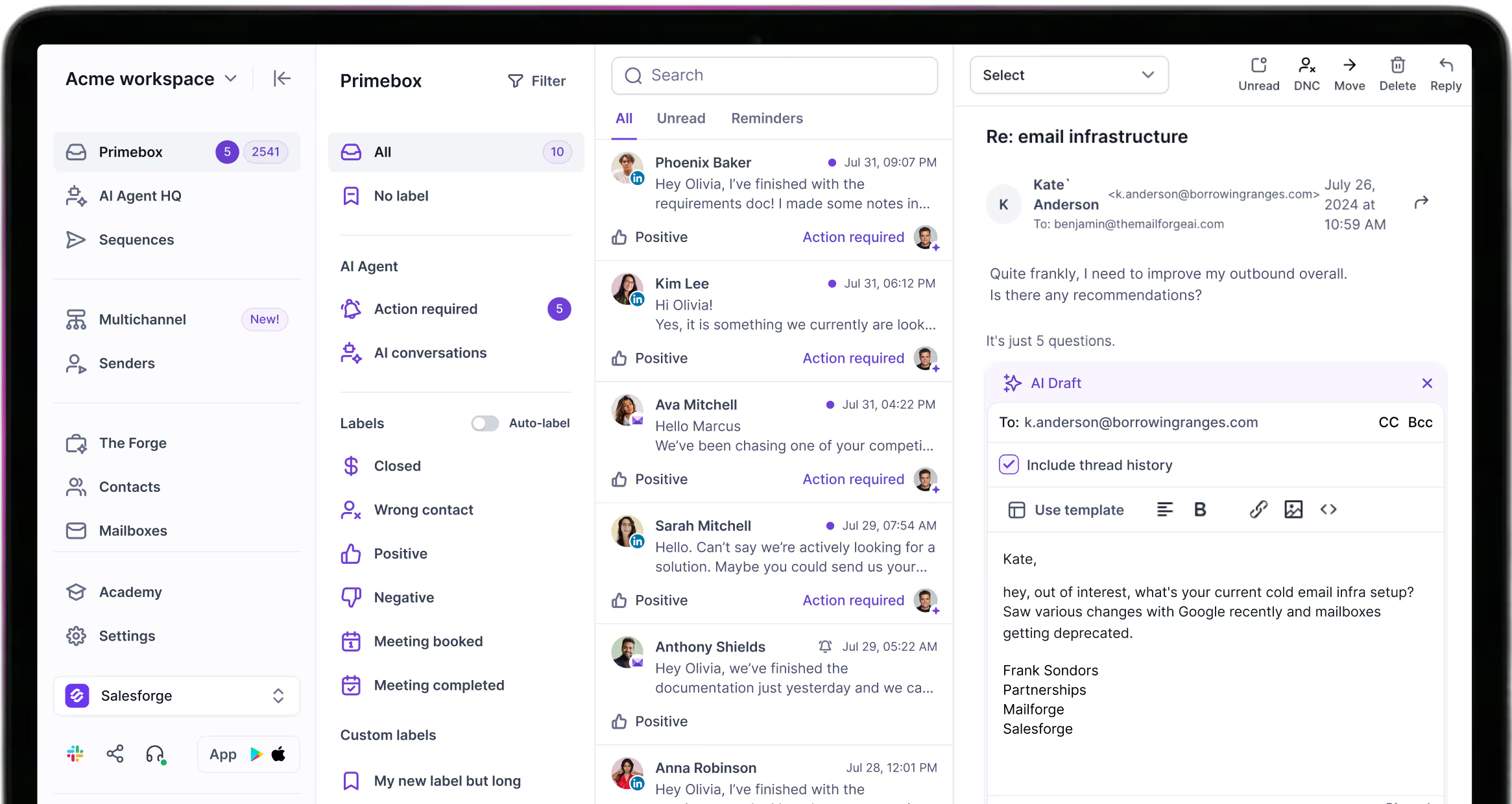
Salesforge, built by a former Googler and VP of sales, is the cold outreach platform. It comes with built-in CRM integrations for HubSpot, Salesforce Attio and GoHighLevel. So rather than connecting third-party tools, Salesforge does everything in-house: it sends the emails / LinkedIn messages, tracks the engagement, and syncs all that data back into your CRM without needing extra tools.
If you’re already using an external cold email tool and love it, OutboundSync is a seamless way to unify your data. But if you’re building or simplifying your outbound stack, Salesforge gives you everything under one roof. Let Salesforge's results speak for themselves:

Let’s talk money, because this is where the value difference really stands out.
OutboundSync starts at $99/month for basic syncing capabilities, going up to $249 or more depending on how many emails you need to sync. But remember, that price only covers the integration, you still need to pay separately for the sending platform (like Smartlead or Instantly), warm-up services, and any additional email infrastructure. So while the sync itself is solid, the total cost of your stack can add up quickly.
Salesforge flips the script. Its entry-level plan starts at just $40/month, and that includes email and LinkedIn sending, built-in CRM sync, email warm-up, AI personalization, and more. Even at its higher-tier plan ($80/month), you’re still getting a full-featured cold outreach platform plus CRM integration for less than the base cost of OutboundSync alone.
In short: if you’re already invested in a specific outreach platform and just need a CRM connector, OutboundSync might be worth the spend. But if you want an all-in-one platform without stacking costs, Salesforge is clearly more budget-friendly.
Now, let’s dig into what these tools actually do.
OutboundSync is a best-in-class sync engine. It tracks every email event and sends it straight into your CRM. It can update deals, move leads through your pipeline, and even help with attribution. It’s great for agencies and teams that want centralized data and full visibility across tools. But it stops short of running campaigns itself; everything else (personalization, sending, inbox management, warm-up) happens in external tools.
Salesforge, meanwhile, is a full-stack LinkedIn outreach and cold emailing platform. It handles everything:
And you don’t need to bolt on anything else. Salesforge has numerous features under its belt including: warming up mailboxes, personalizing messages, allowing for easy workspace management and more. For teams who want to run powerful outbound campaigns without managing a dozen different tools, it’s a great solution.
Enter your email to get a custom plan & stack recommendation for your business
Please check your mailbox in 5 minutes
Choose OutboundSync if…
Choose Salesforge if…
If you’re looking for the most flexible connector to plug your favorite email tools into your CRM, OutboundSync is a powerful option. But it’s just one piece of the puzzle, which means you’ll need to pay for the rest.
If you’re looking for an all-in-one cold outreach platform with CRM sync, warm-up, and AI baked in, Salesforge does everything OutboundSync does (and more) at a fraction of the cost.
For most agencies and sales teams, especially those building lean, efficient outbound engines, Salesforge’s free integrations and full feature set make it a clear winner.