
Personalized Outbound Strategy
Get The Right Outbound Strategy In Minutes
Enter your email to get a custom plan & stack recommendation for your business
It's being carefully crafted by AI
Please check your mailbox in 5 minutes


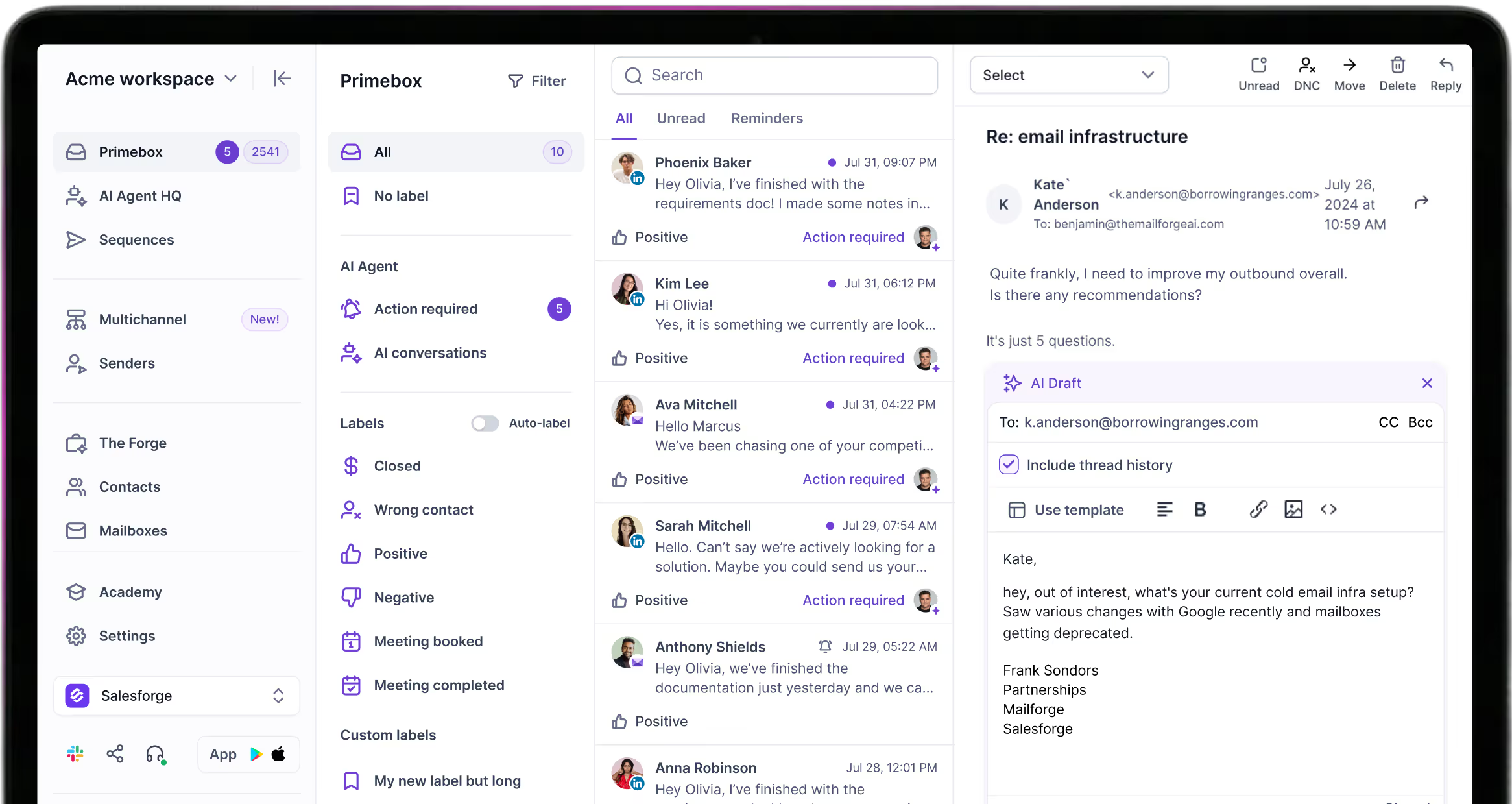
Overview
Cold outreach covers automated LinkedIn prospecting, email outreach, follow ups, message sequences and deliverability engineering, and in this case, all three products present themselves as prospecting tools that automate such repetitive outreach to generate leads. The comparison keeps attention on what sales teams and marketing agencies need to sequence and scale outbound touchpoints.
Salesforge, built by a former Googler and VP of sales, markets itself as a full cold-outreach stack: unlimited LinkedIn senders, built-in email deliverability services, and a combined workspace view. That positioning makes Salesforge attractive for teams that want to run many simultaneous outreach campaigns without per-seat or per-identity fees, while keeping pricing competitive enough for smaller businesses to utilize the tool too. If you prioritize scale, deliverability, and advanced features like AI personalization, Salesforge is purpose-built for that.
If you're still doubtful, feel free to let the results speak for themselves:

Salesflow is a LinkedIn-first automation tool that also supports email outreach. Its standard single-user price lists invite caps (about 400 invites/month) and multi-step automated sequences. Salesflow pitches a quick setup for LinkedIn-driven outreach and offers team/agency plans for larger users. It’s a solid option for sellers who want structured LinkedIn outreach with integrated email touches.
Waalaxy is widely known for its Google Chrome extension that makes LinkedIn automation accessible to non-technical users. Waalaxy offers a very limited freemium option so small teams and individuals can test the barebones campaigning features. Paid tiers add more invites, and even higher tiers add an email finder, and email outreach capabilities. Waalaxy’s visual campaign builder and browser-extension model make it appealing to solopreneurs and small teams who prioritize ease of use.
Salesforge runs email + LinkedIn natively, so you can design multi-channel sequences in one place. This is true multi-channel prospecting: LinkedIn actions and email touches live in the same campaign flow.
Salesflow also supports both channels, though its core is LinkedIn-first.
Waalaxy offers LinkedIn automation via a Chrome extension and adds email sequences on paid tiers.
For teams focused on combining LinkedIn and email to maximize replies, Salesforge’s integrated stack reduces friction.
All three tools automate connection requests, messaging, profile visits, and staged follow-ups. Differences matter in scale:
If your strategy depends on multiple LinkedIn accounts or agency-style multi-client management, Salesforge’s unlimited approach avoids per-profile billing. That reduces overhead for bigger teams and agencies.
Cold email success depends on deliverability:
For high-volume email outreach, Salesforge’s deliverability tooling is the differentiator.
Personalized messaging improves reply rates, helps build trust, shows relevance, reduces spam perception and creates genuine conversations - leading to higher conversions and stronger long-term relationships:
If your playbook needs AI-assisted highly-personalized copy, Salesforge’s automation tools are perfect to reduce time spent per lead.
Enter your email to get a custom plan & stack recommendation for your business
Please check your mailbox in 5 minutes
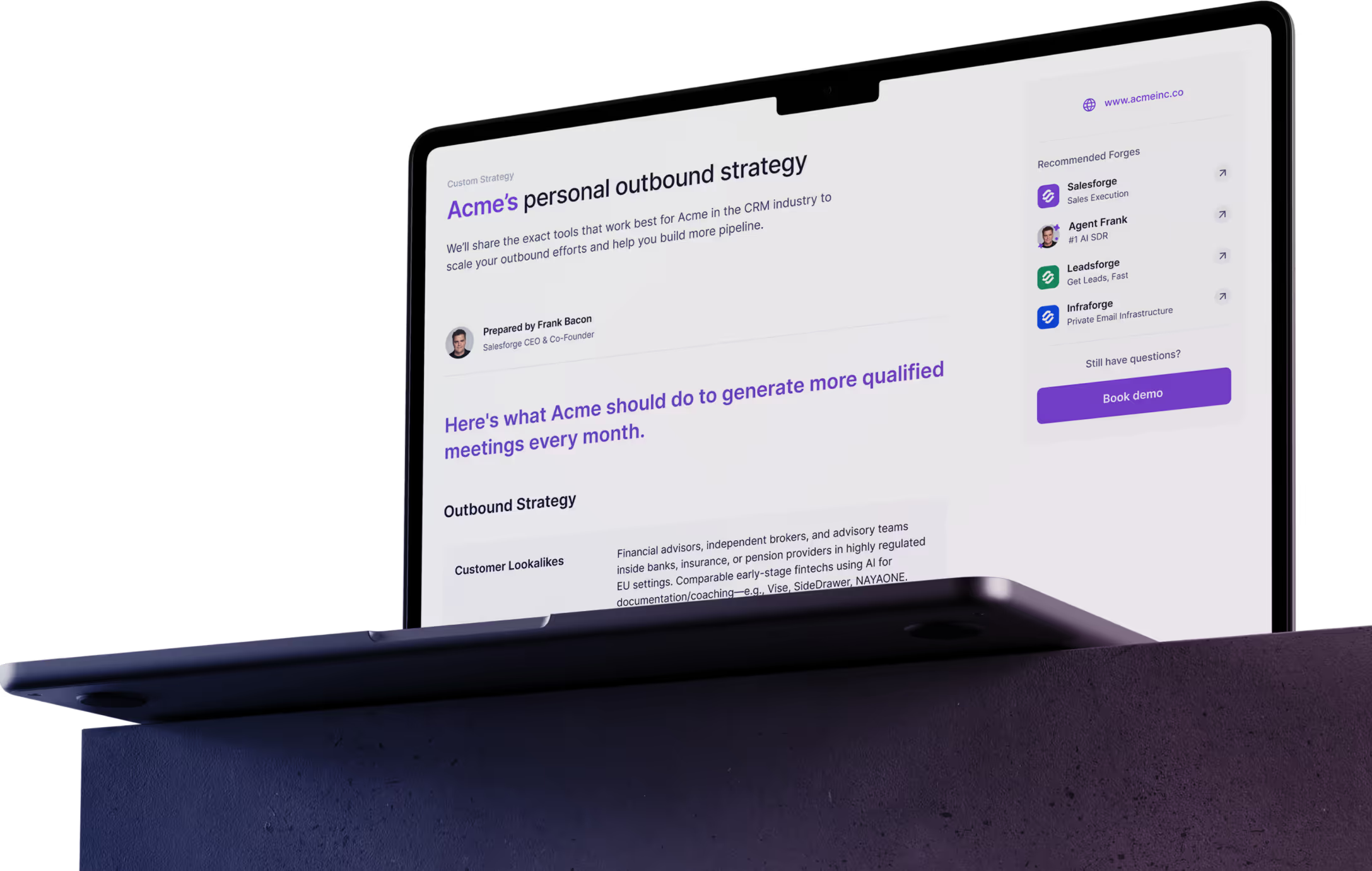
Campaign management features include scheduling, branching logic, A/B testing, and follow-up sequencing. All three tools support multi-step flows and conditional logic to varying degrees:
On campaign management, Salesforge focuses on scale and iteration; Waalaxy focuses on straightforward campaign creation; Salesflow balances both.
You need detailed analytics to reveal what's working, identify bottlenecks, optimize messaging/timing, and allocate resources efficiently - generally increase ROI through data-driven campaign refinement.
Salesforge offers detailed, advanced analytics and support for A/B testing so teams can measure connection rates, reply rates, and conversion metrics across channels.
Salesflow reports campaign stats and has advanced reporting options.
Waalaxy shows campaign conversion and reply data in its dashboard.
Integration capabilities matter - outreach data should flow into your CRM and workflows seamlessly:
For enterprise-grade sync and automation at prices even small teams can handle, Salesforge’s API and native connectors truly do provide robust integration capabilities fitting for any sales team.
If you run outreach for multiple clients or manage large sales floors, per-seat costs and workspace management matter:
For scaling outreach across many users and accounts, Salesforge’s model reduces overhead and simplifies multi-client campaign management.
All three tools are built for sales professionals, not engineers. Their functionality shouldn't give your team headaches.
Waalaxy’s extension is ideal when you need a quick setup and minimal technical experience.
Salesflow aims for a middle ground with straightforward UI and admin options.
Salesforge packs many more features, which can increase initial learning curve but packs it all into an intuitive, user friendly interface. Salesforge also mitigates this with documentation, academy training, and strategic onboarding to reduce ramp time.
Automation must simulate human behavior to avoid platform flags. All vendors emphasize safe sending.
While Salesforge has automatic measures and guidelines for LinkedIn sender profiles to avoid any risks, it is still recommended to distribute actions across several LinkedIn profiles and email infrastructures to reduce risk.
Salesflow caps invitations per user to keep activity within safe ranges.
Waalaxy sets invite caps on paid tiers for safety.
All three platforms are popular tools in the outreach market and automate steps that otherwise consume sales teams’ time:
Waalaxy and Salesflow excel at ease-of-use and LinkedIn-focused prospecting.
Salesforge, however, is purpose-built to combine LinkedIn and email outreach at scale while preserving deliverability and providing AI personalization.
If your priority is to scale outbound systematically - distribute outreach across many linkedin profiles, run automated sequences across multiple channels, and integrate results into CRMs with rich analytics - Salesforge’s capabilities and architecture make it the strongest choice among the three for enterprise-style cold outreach.
Salesforge is more than basic automation - it’s a purpose-built suite of automation tools and prospecting tools that combine LinkedIn actions, email deliverability, AI personalization and analytics. For sales teams wanting scale, Salesforge replaces piecemeal tools with a single, user friendly stack built to protect sender reputation and drive consistent pipeline.
Salesforge supports distributed LinkedIn account activity and automated connection requests so you can spread outreach across multiple accounts safely. Its workflows simulate human-like behavior, schedule invites/messages, and let teams scale outreach without per-profile fees - ideal when you depend on predictable invite cadence and reply tracking.
Yes - Salesforge’s workspace model and automation tools are designed for growing sales teams across various industries. You can manage multiple workspaces, share targeted prospect lists, run multi-channel prospecting campaigns, and keep reporting centralized so operations from SMBs to agencies scale without per-seat overhead.
Salesforge provides native CRM integration, APIs and webhook support so outreach syncs directly into your CRM. That makes importing and acting on targeted prospect lists seamless - leads, replies and engagement metrics flow into your existing sales stack for follow-up and pipeline forecasting.
Salesforge runs true multi channel prospecting (LinkedIn + email) with built-in email warm-up and mailbox rotation to preserve sender reputation. Its automation tools orchestrate sequences across channels, A/B test messaging, and monitor deliverability so teams can scale outreach without common cold-email pitfalls.
Absolutely - Salesforge balances powerful features with a user friendly interface and onboarding. Teams moving from basic automation or single-channel prospecting tools can import targeted prospect lists, automate connection requests and email sequences, and quickly iterate campaigns with analytics and templates geared for sales teams.