
Personalized Outbound Strategy
Get The Right Outbound Strategy In Minutes
Enter your email to get a custom plan & stack recommendation for your business
It's being carefully crafted by AI
Please check your mailbox in 5 minutes


Both platforms pitch scale and reliability for LinkedIn outreach and outreach overall, but they position themselves differently:
For teams chasing more meetings via advanced, combined LinkedIn campaigns and email sequences, Salesforge leans into scale, deliverability, and stack integrations; HeyReach leans into LinkedIn-specific automation and a unified inbox experience.
Alternatively, you can just let Salesforge's results speak for themselves:

If your priority is scale, especially for lead gen agencies running many LinkedIn campaigns and LinkedIn accounts, both vendors solve the “more users = more cost” problem differently:
In reality, Salesforge’s positioning around sending capacity comes with complementary focus on inbox placement and data hygiene, which helps campaigns actually land and generate leads and meetings at scale.
Campaign structure and sequences determine whether outreach becomes a string of messages or a coherent strategy:
For agencies and GTM experts who want one campaign to drive consistent touch patterns across accounts, Salesforge’s approach to sequence management and reporting gives a clearer path from leads and data to booked meetings.
Managing replies is mission-critical for outreach teams.
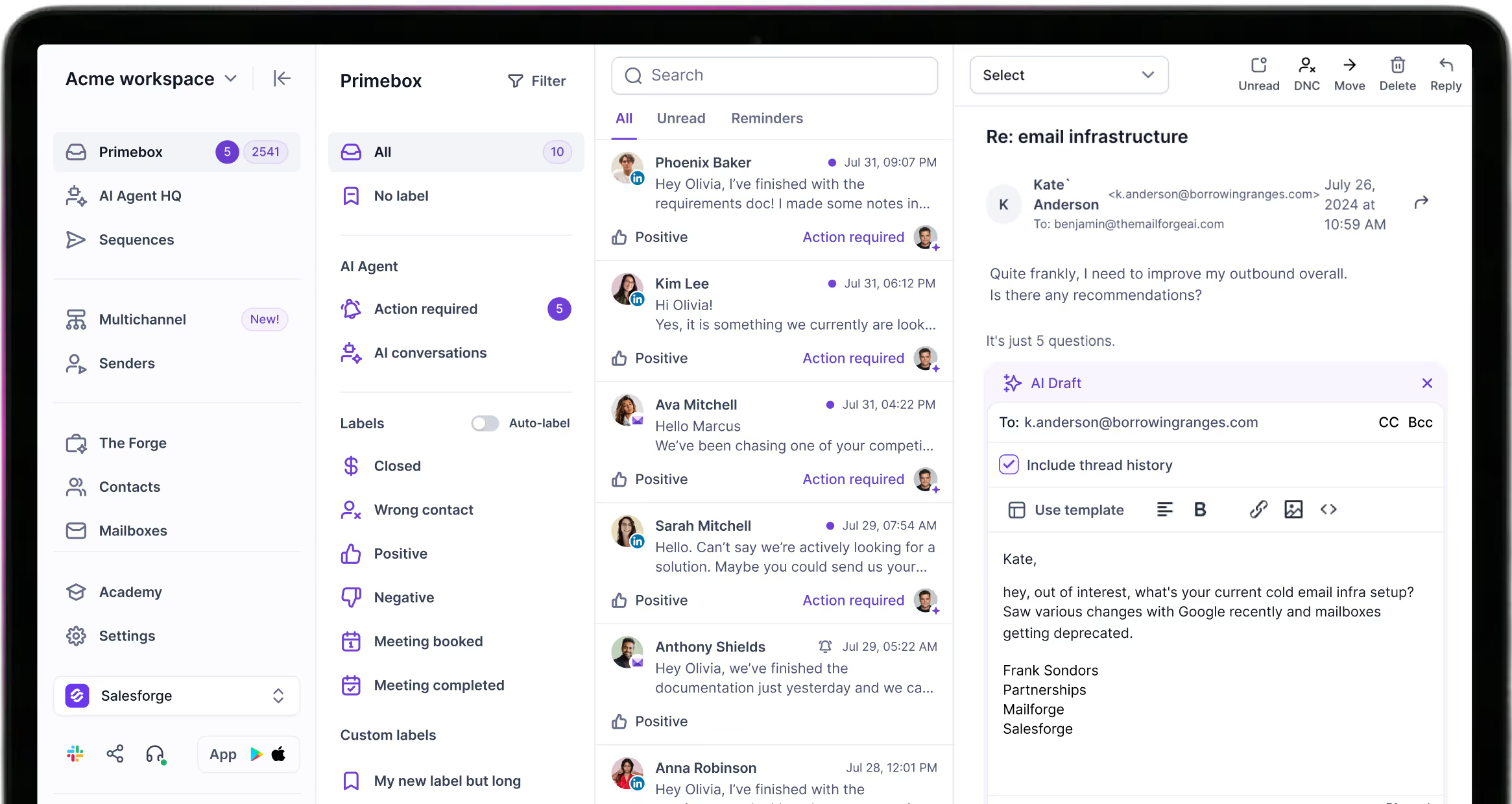
HeyReach advertises a unified inbox and one centralized inbox experience where users can manage LinkedIn messages, send voice notes from desktop, and reply on behalf of colleagues - a clear benefit for teams that need a single place to handle all Linkedin replies.
Salesforge also provides inbox management and reply monitoring but places extra emphasis on integrating replies into CRM workflows and logging for campaign optimization.
If your priority is a centralized inbox purely for LinkedIn messages and desktop voice notes, HeyReach is strong; if you want unified logging, CRM integration, and automated reply handling to feed sales workflows, Salesforge pulls ahead.
Both tools integrate with popular automation and GTM tools to integrate outreach with lead lists and CRM systems:
For teams that must integrate outreach data into HubSpot and automate logging of messages and meetings, Salesforge’s integration focus simplifies the handoff from outreach to sales execution.
Cold outreach depends on the quality of leads and how easily you can import and enrich lists:
For agencies and sales teams running many accounts and campaigns, Salesforge’s emphasis on data hygiene and integration with verification and enrichment tools reduces bounce, improves targeting, and helps craft messages that convert to meetings.
High-volume outreach only matters when messages actually arrive.
HeyReach focuses on LinkedIn deliverability and account safety for LinkedIn campaigns, while Salesforge pairs sending capacity with infrastructure and warm-up practices designed to protect inbox placement for email sequences too.
Salesforge’s documentation and case studies point to deliberate attention on deliverability and domain health - a big benefit for teams that mix LinkedIn outreach with email outreach and need sustained, measurable pipeline growth. This translates into more meetings and a better ROI on outreach spend over time.
Both platforms support personalization to keep outreaches engaging rather than robotic:
For sales teams focused on personalization at scale (without losing logging or automation), Salesforge’s multi-channel personalization is easier to tie back to accounts, pipelines, and meetings in your CRM.
Automation is about scale and safety:
For agencies that need unlimited senders plus automation that integrates with their workflow automation and logging practices, Salesforge’s focus on infrastructure plus automation gives an operational edge when running dozens of simultaneous campaigns.
Enter your email to get a custom plan & stack recommendation for your business
Please check your mailbox in 5 minutes
The ability to log every message, every sequence step, and every booked meeting into a CRM or reporting dashboard is a decisive benefit for sales teams and lead gen agencies that want to iterate strategy and prove ROI.
HeyReach provides metrics around LinkedIn campaigns and reply handling inside its unified inbox.
Salesforge provides campaign analytics, logging, and pipeline reporting that tie outreach activity directly to meetings and revenue. This reporting orientation makes optimizations and A/B testing of sequences and messages far easier.
Lead gen agencies and internal sales teams that manage multiple accounts benefit from unlimited senders and shared workflows:
When you need to automate campaign tasks, connect leads to CRM, and show clients the benefits in meetings booked and pipeline, Salesforge’s stack-first and integration-first model supports agency operations better in the long run.
HeyReach emphasizes ease of use and rapid setup for LinkedIn accounts and campaigns, while Salesforge couples product onboarding with resources like academy content, templates, and live Ask Me Anything sessions targeted at cold outreach mastery.
Salesforge’s learning resources are tailored to help founders and outbound teams refine strategy, run multi-channel sequences, and integrate with CRMs so users turn leads and messages into meetings faster.
HeyReach’s “one fixed cost” messaging simplifies pricing for teams that plan to use many LinkedIn accounts, which is attractive for agencies and sales teams focused on LinkedIn.
Salesforge positions itself on value for multi-channel outreach and deliverability; while not the same single-price pitch, it enables predictable scaling because sending capacity and integrations are designed to support growth without constant per-sender surprises.
For decision-makers weighing fixed cost simplicity versus infrastructure-backed multi-channel value, Salesforge often shows stronger lifetime benefits when campaigns include email, linkedin messages, and integrated CRM logging for meetings.
Features that correlate with more meetings include accurate lead data, sequence personalization, integration with CRM, automated logging, and reliable inbox placement:
Account safety is particularly important for LinkedIn outreach and for email infrastructure:
For agencies that must protect client LinkedIn accounts and email reputations while scaling outreach, Salesforge helps ensure safety through operational controls and visibility into campaign behavior across accounts and campaigns.
Power users who want to integrate outreach into custom stacks will appreciate both platforms’ support for Clay templates and automation hooks:
If your GTM experts and engineers need to integrate campaign events into downstream systems, Salesforge’s broad integration surface and focus on workflows and logging makes it easier to connect outreach to attribution, meetings, and revenue.
HeyReach is an excellent fit if your program is LinkedIn-first: LinkedIn outreach, LinkedIn campaigns, and many LinkedIn accounts managed under one fixed cost with a centralized inbox and desktop voice notes.
Salesforge is a stronger choice if your outreach is multichannel, needs rigorous deliverability, tight CRM integration, and campaign logging to convert leads into meetings reliably.
For lead gen agencies and GTM experts who want a single platform to scale outreach, automate workflows, integrate data, and show more meetings to clients, Salesforge’s multi-channel, integrative stance makes it the more production-ready option.
If your cold outreach is exclusively LinkedIn-focused, HeyReach offers a compelling package: unlimited senders, one fixed cost, a centralized inbox, and voice notes straight from desktop - very attractive for LinkedIn campaigns and agencies.
For teams and lead gen agencies that need a production-ready multichannel outreach engine - one that ties LinkedIn outreach to email, CRM logging, data enrichment, and deliverability practices to reliably book more meetings - Salesforge is the stronger option.
Choose Salesforge if you want multi-channel outreach with strong deliverability, integrations to HubSpot and CRMs, campaign logging and automation, tools for scaling accounts and sequences, and the ability to convert leads and messages into measurable meetings. But, ultimately, the better option depends on your needs.
Wanna hear more from the Forge?
Salesforge is a cloud based platform that runs LinkedIn + email in one workflow, so your outreach efforts span multiple channels without juggling tools. It bundles deliverability features, direct integrations to CRMs, and unlimited senders on the Growth plan.
Salesforge supports one LinkedIn account per sender and lets agencies add unlimited LinkedIn senders on Growth. It can work with LinkedIn Sales Navigator for targeted lists while protecting account safety via sending rotations and rate limits, though there's no native LinkedIn Sales Navigator integration for Salesforge yet.
Salesforge includes free unlimited warm-up, mailbox rotation and dynamic IPs to protect inbox placement - reducing the need for third-party warm-up tools. That boosts reply rates and ensures the personalized messages land in inboxes. Support teams help monitor deliverability and remediate issues,
Yes - Salesforge provides unlimited workspaces, whitelabel options, role controls, and onboarding. A specialized Customer Support Team and dedicated support channels (live chat, demos, Slack community) help agencies scale safely and train teams, making it agency-friendly versus single-account tools.
Salesforge uses AI personalization credits and multi-source personalization to generate tailored messages for email and LinkedIn, improving response rates for Lead Generation campaigns. Combine that with direct integrations to CRMs and the global inbox to route replies and iterate on campaign performance across multiple channels.