
Personalized Outbound Strategy
Get The Right Outbound Strategy In Minutes
Enter your email to get a custom plan & stack recommendation for your business
It's being carefully crafted by AI
Please check your mailbox in 5 minutes


For a thorough understanding of what each option offers, a simplified comparison table isn't enough to grasp all intricacies that come with each tool, so let's dive deeper into what makes Amplemarket and Salesforge unique.
Salesforge, built by a former Googler and VP of sales, presents itself as an outbound sales platform engineered to power multi-channel outreach and deliverability-conscious scaling for sales teams and agencies. It emphasizes features like:
And pricing plans aimed at everything from startups to enterprise sales teams. In case you think Salesforge is too good to be true, feel free to let the results do the talking:

Amplemarket, by contrast, is positioned as an AI sales copilot and data-driven sales platform that focuses heavily on lead generation, intent signals, enrichment and multichannel sequences.
Amplemarket’s strength is its data:
The product is frequently pitched to sales and marketing teams that want integrated research and targeting baked into outreach workflows.
Both platforms target growth-minded companies, but their emphasis diverges: Salesforge centers deliverability and outbound mechanics, and Amplemarket centers prospect quality, intent and enrichment (similarly to another Forge tool - Leadsforge).
That difference shows up in how each platform organizes features and support:
Salesforge provides 2 plans oriented around outreach scale and a 14-day free trial (with 2 free months granted when using annual billing):
Amplemarket offers tiered plans for different scale needs and includes a free trial for all plans.
When you map channels to outcomes, both platforms cover the essentials for modern outbound.
Salesforge builds the sequence, inbox, and warm-up plumbing required to run outbound email and social at scale while keeping human oversight in the loop for messaging and cadence control, with phone outreach capabilities also coming soon.
The practical difference is where the platforms put their engineering emphasis:
Personalized outreach is table stakes, and both platforms provide the messaging building blocks that let reps create sequences, templates and variants.
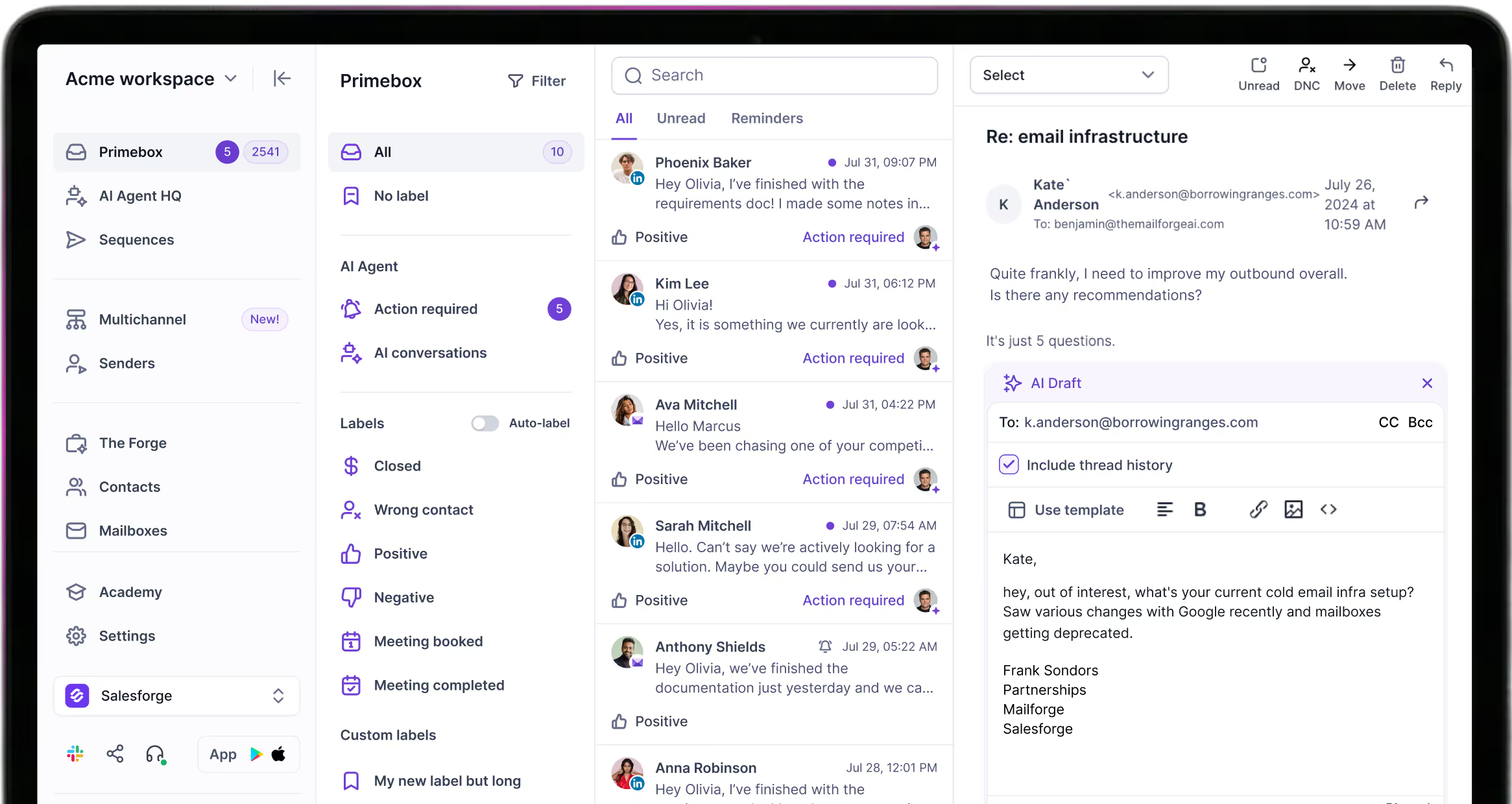
Salesforge also highlights the Primebox (a unified inbox that centralizes replies and helps teams monitor response quality and hand off opportunities quickly) and Warmforge-powered warm-up that keeps personalized email sending from degrading deliverability.
Amplemarket’s AI assists in drafting and tailoring messages for multi-channel cadences, which is useful when you want personalization grounded in prospect data and behavioral signals.
The difference in practice is how personalization scales:
For teams whose primary success metric is reply rate and pipeline quality from email-driven sequences, Salesforge’s combination of message personalization plus deliverability tooling tends to produce more consistent inbox results.
Campaign performance and conversion rates depend heavily on deliverability, especially for teams sending high volumes of cold email, and that's where Salesforge shines.
Salesforge emphasizes email deliverability extensively, with:
And more. Building sender reputation gradually while spreading volume across addresses and IPs to avoid single-mailbox throttles or sudden reputation hits is crucial for a scaling business. And that's paired with proprietary infrastructure options:
Those infrastructure features reduce the risk of landing in spam and make multi-channel outreach more reliable, especially when you have a leads database and want to integrate email at scale.
Amplemarket provides standard deliverability tooling as part of its product stack through features like a Domain Health Center and a Deliverability Booster, and it advises on mailbox hygiene and recommendations, but otherwise its comparatively lacking in terms of deliverability.
For teams scaling outreach campaigns that require many sending identities, Salesforge's level of deliverability and infrastructure support reduces the operational burden of setting up domains, warming mailboxes, monitoring inbox placement, and gambling on emails landing in the primary inbox.
Enter your email to get a custom plan & stack recommendation for your business
Please check your mailbox in 5 minutes
Operational scale requires simple primitives for mailboxes, seats and workspaces.
Salesforge also touts a unified inbox (Primebox) to conveniently manage replies, mailbox rotation to keep reputation steady, and controls that help teams avoid overloading single accounts.
When you need to scale dozens or hundreds of mailboxes and want the lowest operational tax on adding mailboxes and seats, Salesforge’s framing reduces the management overhead and significantly reduces costs.
Amplemarket places heavy emphasis on integrations, particularly around data and CRM syncs (HubSpot, Salesforce, Pipedrive, etc.) and enrichment flows that feed sequences.
It also offers webhooks, an API, and connectors for automation platforms.
Salesforge takes native integrations to the next level, with one important distinction being the proprietary Forge Stack, which keeps prospect data, campaign history, and inbox conversations aligned so that when a lead moves to opportunity stage the handover is seamless. Notable Salesforge integrations include:
Salesforge also has a mobile app and recently even launched its own Chrome extension. If you desire enterprise-scale integrations at smaller-sized sales team pricing, Salesforge will be preferable.
Amplemarket places heavy emphasis on integrations, particularly around data and CRM syncs (HubSpot, Salesforce, Pipedrive, etc.) and enrichment flows that feed sequences.
Agencies and mid-size teams must protect client inboxes and separate reputations.
The operational controls - especially warm-up and IP segmentation - are what make Salesforge a sensible backbone for agencies that want to roll out many campaigns quickly while keeping deliverability high.
For agencies where reselling via whitelabel, protecting clients from account bans, and maintaining high deliverability across multiple simultaneous campaigns is the priority, Salesforge provides everything an agency could desire.
Salesforge focuses on the infrastructure and operational controls that keep high-volume email and LinkedIn outreach performing.
Salesforge's unlimited mailbox and unlimited sender economics, unlimited free warm-up (via Warmforge), mailbox rotation, dynamic IPs and Primebox reply management are practical selling points for sales teams and agencies that need efficient, deliverability-first outbound.
Salesforge focuses on deliverability, mailbox management and scalable email outreach so companies can convert leads reliably, while Amplemarket emphasizes intent signals, prospect enrichment and lead generation data. Use Salesforge when your priority is consistent inbox placement and efficient sending; use Amplemarket or other tools when you need deep competitive intelligence and signal-driven targeting. Together they can verify the right people, increase value for customers, and accelerate growth by combining quality leads with deliverability.
Yes: Salesforge provides warm-up (Warmforge), mailbox rotation, Primebox unified inbox and a mobile app to help small businesses run efficient, personalized email outreach and safe LinkedIn sequences. These features help accounts avoid bans, boost reply rates, and let teams respond faster to engagement so reps can focus on selling and closing deals rather than deliverability ops.
Salesforge connects with major CRMs, SMTP providers, Microsoft (Outlook), APIs and webhooks to keep account and lead data synchronized. Integrations let you verify contacts, push engagement and deals into pipeline tools, and combine Salesforge services with other tools for competitive intelligence or enrichment - so companies maintain clean records, speed up handoffs, and demonstrate value to customers.
Agencies rely on Salesforge’s unlimited workspaces, mailbox rotation, dynamic IPs and whitelabel options to isolate client reputations and run many campaigns safely. Those controls let teams watch deliverability, manage multiple accounts, and scale outreach efficiently without cross-contaminating domains - preserving relationships, increasing engagement, and protecting client deals as volume grows.
Yes - Salesforge combines AI-driven personalization, sequence automation and Primebox reply workflows so reps craft targeted messages and respond quickly to inbound interest. For signal-driven targeting (like Amplemarket’s intent signals) you can pair or integrate other lead-generation tools to find the right people, verify intent, and feed Salesforge sequences - boosting engagement, shortening sales cycles, and closing more deals.