
Personalized Outbound Strategy
Get The Right Outbound Strategy In Minutes
Enter your email to get a custom plan & stack recommendation for your business
It's being carefully crafted by AI
Please check your mailbox in 5 minutes



For a thorough understanding of what each option offers, a brief comparison table isn't enough to grasp all intricacies that come with each tool, so let's dive deeper into what makes Salesforge, Apollo and Outreach unique.
When evaluating sales engagement platforms, start with outcomes: does the vendor help you identify high quality prospects, automate outreach campaigns that reach the primary inbox, let sales reps manage multi-channel outreach, and provide clear metrics that tie outreach to revenue growth?
Those are the components of a comprehensive sales execution platform.
Salesforge's combination makes it especially appealing to teams that want to seamlessly optimize sales processes fast without a heavy setup or high per-seat cost. Alternatively, you can just let the results speak for themselves:

Salesforge provides 2 plans oriented around outreach scale and a 14-day free trial (with 2 free months granted when billed annually):
Apollo provides 4 plans oriented around outreach scale + a Free plan with limited credits (discounted annual billing):
Outreach offers per-user plans and pricing is quote-based and not published openly.
Deliverability is the unglamorous but mission-critical foundation of any cold email program: superior sequences and the best prospect lists don’t matter if your outreach never reaches the primary inbox. This is one area where Salesforge differentiates itself.
And more. Building sender reputation gradually while spreading volume across addresses and IPs to avoid single-mailbox throttles or sudden reputation hits is crucial for a scaling business. And that's paired with proprietary infrastructure options:
Those infrastructure features reduce the risk of landing in spam and make multi-channel outreach more reliable, especially when you have a leads database and want to integrate email at scale.
Apollo outlines an AI-assisted sales intelligence and engagement platform with strong prospecting and outbound automation, and Outreach centers on enterprise orchestration and revenue workflows (sequence templates, automations, intelligent assists), but when it comes to deliverability - Salesforge reigns supreme.
If your current sales process is seeing deliverability erosion, prioritizing a platform like Salesforge is a practical way to streamline sales processes and improve campaign ROI.
For enterprise teams that must manage complex cadences across email, calls, and account plans, choosing the wrong tool can cause the entire workflow to crumble.
That makes Outreach a great option for organizations with complex sales processes, multiple internal teams touching accounts, and needs for extensive reporting, revenue intelligence, and forecasting.
However, all this sophistication can come with more involved setup, possible additional setup fees, and pricing that typically targets enterprise teams rather than very small or cost-sensitive groups.
Only for teams that need advanced automation capabilities and deep revenue intelligence to support major enterprise sales execution does Outreach sometimes justify the investment.
Handling replies reliably across multiple channels is where outreach campaigns either convert into pipeline or collapse into noise.
While both Apollo and Outreach support unified reply handling in their own ways, neither take it to Salesforge's extent.
Enter your email to get a custom plan & stack recommendation for your business
Please check your mailbox in 5 minutes
Scaling from a handful of reps to an enterprise sales organization changes the platform requirements. At that point, practical outreach depends on clean contact data and tight CRM integrations.
Apollo documents first-class CRM integrations (Salesforce, HubSpot, Pipedrive, Zoho) and enforces a “one CRM at a time” sync model for canonical record keeping. Apollo also supports Zapier to reach many other apps, offers an API and developer docs for programmatic use.
Outreach lists numerous native integrations like CRMs (Microsoft Dynamics, Salesforce), calendar & inbox providers (Gmail/Outlook), enablement tools (like Highspot) and specialty partners such as Demandbase.
Salesforge also highlights a broad, practical integrations surface designed to let teams plug the platform directly into existing sales stacks. Notable Salesforge integrations include:
And many more. If your priority is to keep the team aligned and ensure prospects are tracked consistently in your CRM, all tools cover the essentials - but Salesforge’s emphasis on consolidated data and comprehensive campaign tracking makes it slightly better when you want uniform access to replies and campaign insights across both LinkedIn and email channels.
Customer support channels and resources are an underrated but mission-critical part of selecting the right sales engagement platform. They directly affect time-to-value for onboarding, how quickly you can streamline sales processes, and whether your sales teams can sustain outreach campaigns without frequent operational fire-drills.
Salesforge takes customer support & resources very seriously, while coupling product tooling with a people-first enablement stack that’s designed to reduce onboarding friction.
Besides that, Salesforge customers also get:
If you need a short, practical decision rule:
For many small teams and cost-conscious businesses, Salesforge removes common barriers to effective outreach - making it an excellent choice for organizations whose priority is to streamline sales processes, automate outreach campaigns without a heavy setup, and drive measurable revenue growth from cold outreach.
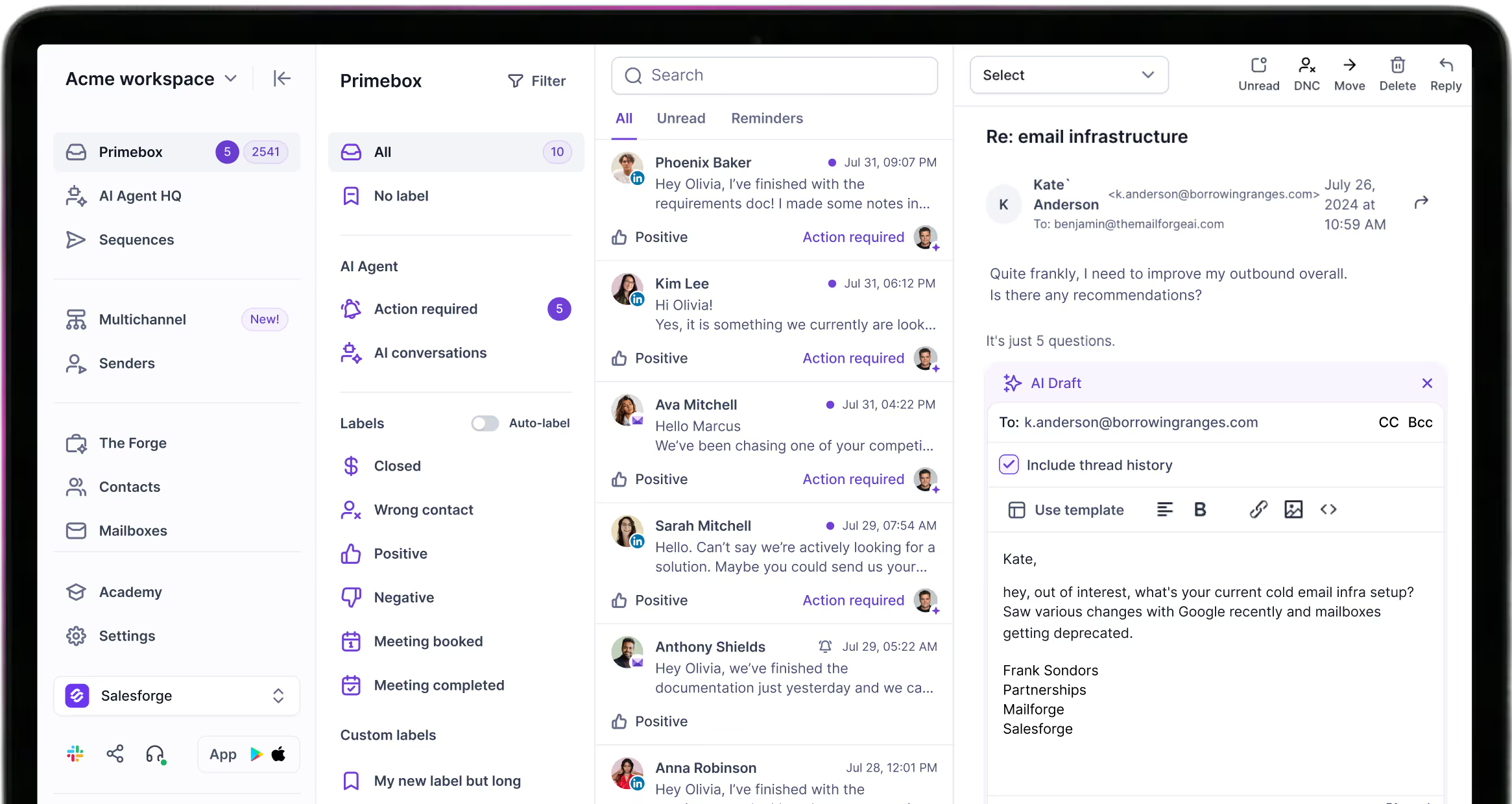
Salesforge is a deliverability-first sales engagement tool with key features like unlimited warm-up, mailbox rotation, dynamic IPs, Primebox unified inbox, A/B testing, and AI personalization. As a sales engagement tool for multichannel outreach it bundles advanced features (analytics, ESP matching, CRM/webhook integrations) into a user-friendly interface so sales professionals and marketing teams can run automated email sequences and personalized campaigns without juggling separate sales tools.
Salesforge supports prospecting efforts and sales reps with lead data enrichment, contact storage, sequence templates, and campaign tracking. Its Forge Stack syncs prospect data with CRMs, enabling marketing and sales teams to manage multichannel outreach, automated email sequences, and follow-ups while reducing the learning curve so reps can focus on converting opportunities through consistent sales strategies.
Salesforge lists two pricing plans: Pro ($48/mo/company) and Growth ($96/mo/company), both with a 14-day trial and two free months if billed annually. The plans include preset credits, unlimited mailboxes, Warmforge warm-up, and Growth adds onboarding and API access. Based on the text, pricing is transparent and no additional setup fees are mentioned for Salesforge.
Yes. Salesforge supports unlimited workspaces, seats, mailbox and LinkedIn sender scaling, API/webhooks and A/B testing. While Outreach targets deep enterprise orchestration, Salesforge provides more advanced features for deliverability-aware scaling and automation that let sales professionals orchestrate multichannel outreach across multiple accounts without sacrificing inbox placement.
Salesforge provides tracking features, detailed analytics, campaign-level metrics, and Primebox conversation context so marketing teams can align outreach to sales objectives. By combining personalized campaigns, multichannel outreach, and deliverability safeguards, it improves outreach efforts, shortens the sales cycle, and helps sales and marketing teams drive revenue growth while providing tools to measure and optimize customer interactions and sales performance.