If you’re searching for a Pardot review, you’re likely checking if this Salesforce tool can truly help you grow B2B pipeline, not just send emails.
Salesforce Marketing Cloud Account Engagement (formerly Pardot) is built to align marketing and sales.
It captures leads, scores intent, nurtures prospects, and pushes hot leads to sales at the right time.
In this Pardot review, we look at how it generates leads, runs nurturing, syncs with Salesforce, handles data at scale, reports ROI, and what it really costs.
By the end, you’ll know if Pardot is worth it for your B2B team or if it’s too heavy for your needs.
Pardot Review: Key Takeaways
Salesforce Pardot is a B2B marketing automation platform that helps marketing and sales teams work together to generate and close more deals.
The tool automatically captures leads from forms and landing pages and creates prospect records without manual work.
Leads are scored and graded based on behaviour and fit so sales teams can focus on the most ready-to-buy prospects.
Engagement Studio lets you build personalised, trigger-based nurture journeys using a visual workflow builder.
Built-in AI (Einstein) predicts how close a lead is to buying and updates scores automatically.
Every prospect action like page views, clicks, and downloads is tracked in one engagement history.
Pricing starts around $1,250 per company per month and usually requires an annual commitment.
What Is Salesforce Pardot?
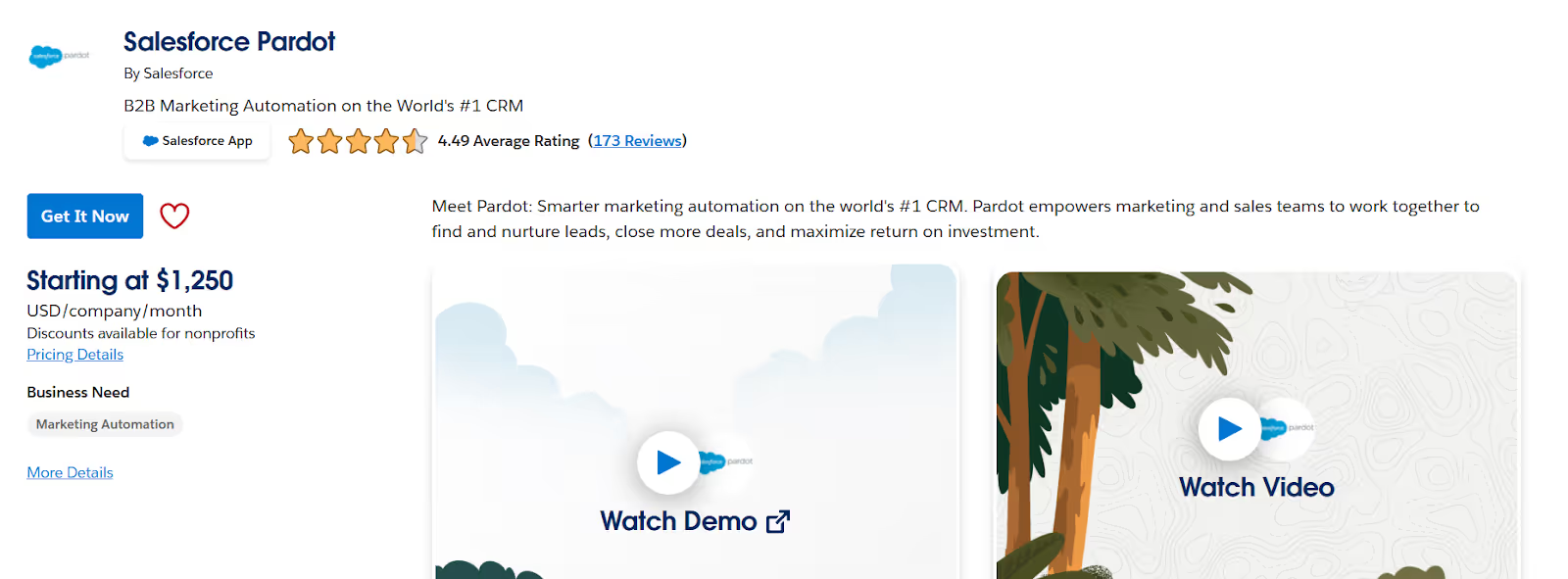
This image shows the Salesforce Pardot
Salesforce Pardot, now called Marketing Cloud Account Engagement, is a B2B marketing automation tool for companies that use Salesforce.
It helps teams find new leads, understand their interest, and communicate with them in a more personal and timely way instead of sending generic emails to everyone.
Pardot tracks how people interact with your website, emails, and forms.
It records actions like page visits, downloads, and clicks, then uses this data to score each lead based on their activity and fit with your ideal customer.
In short, Pardot acts as a bridge between marketing and sales that tracks engagement, automates nurturing, and helps turn interested prospects into customers over longer B2B sales cycles.
Personalized Outbound Strategy
Get The Right Outbound Strategy In Minutes
Enter your email to get a custom plan & stack recommendation for your
business
It's being carefully crafted by AI
Please check your mailbox in 5 minutes
How Salesforce Pardot Works?
Salesforce Pardot works by tracking how people interact with your website and marketing content, then using that data to automate and guide follow-ups from marketing and sales.
A tracking code on your website records visits, page views, clicks, and downloads and turns anonymous visitors into known prospects when they fill out a form.
When a form is submitted, Pardot automatically creates or updates a prospect record and stores their details and activity history.
Each prospect receives a score based on their actions and a grade based on how well they match your ideal customer profile.
Automation rules and triggers update scores, segment prospects into lists, and assign the hottest leads to the right sales reps.
Engagement Studio runs automated email and nurture journeys that react to each prospect’s behaviour.
All prospect and campaign data syncs with Salesforce CRM so marketing and sales work from the same records.
Sales reps can see full engagement history inside Salesforce before they reach out.
When opportunities are won in Salesforce, Pardot connects them back to the original campaigns to show true marketing ROI.
Top Features of Salesforce Pardot
Pardot brings many marketing and sales tasks into one system so teams can attract leads, nurture them, and measure real revenue impact without doing everything manually.
These features work together to capture data, automate follow-ups, and keep marketing and sales perfectly in sync.
Feature
What It Does
Lead Capture Forms and Landing Pages
Builds custom forms and landing pages that automatically add new prospects into Pardot when submitted.
Visitor and Prospect Tracking
Tracks page views, clicks, downloads, and other engagement across websites and marketing assets.
Lead Scoring and Grading
Scores prospects based on behaviour and grades them on fit to highlight sales-ready leads.
Dynamic Content Personalisation
Adjusts email and website content based on industry, job title, score, or grade.
CRM Sync with Salesforce
Maintains two-way synchronisation of prospects, leads, contacts, and campaigns with Salesforce CRM.
Automated Lead Assignment
Routes qualified leads to the appropriate sales representative using rules and triggers.
Segmentation and List Building
Creates dynamic or rule-based lists to target specific audiences for campaigns.
Campaign and ROI Reporting
Links closed deals back to marketing campaigns to measure revenue impact.
Einstein AI Insights
Uses Salesforce AI to predict engagement trends and adjust lead scores automatically.
Salesforce Pardot Pricing
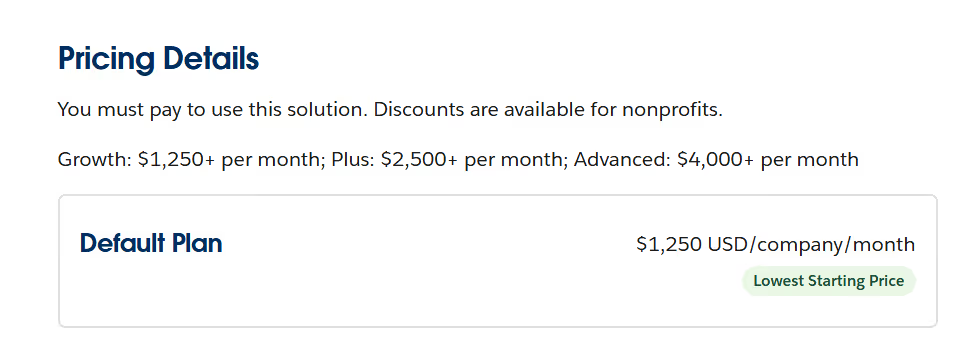
This image shows the Salesforce Pardot pricing
Base price starts at $1,250 USD per month for the whole company
You do not pay per user or per seat
Price depends on how many prospects (contacts) you store and email
A fixed number of prospects is included in the base plan
If you need more prospects, you pay extra for each block of 10,000 prospects
Advanced features and higher editions cost more than the base plan
Nonprofits can get special discounted pricing
Pros and Cons of Salesforce Pardot
Pros
Cons
Native two-way sync with Salesforce keeps leads, contacts, and campaigns aligned
Automatic lead scoring and grading highlight the most sales-ready prospects
Advanced automated nurture journeys through Engagement Studio workflows
Real-time prospect activity alerts support timely sales follow-up
Primarily built for Salesforce users, with limited value outside that ecosystem
High starting price that increases as prospect database grows
Initial setup and optimisation require technical expertise and time
Large databases and complex automations can affect processing speed
Is Pardot the Right Fit for You?
Pardot is built for B2B teams that want marketing and sales to work from the same data and process.
It focuses on automated nurturing, lead qualification, and revenue tracking inside Salesforce.
Pardot is a good fit if you:
Use Salesforce CRM and want marketing and sales data fully synced.
Need automated B2B lead nurturing based on real prospect behaviour.
Want built-in lead scoring and grading to prioritise sales-ready leads.
Run multi-step email journeys that adapt to each prospect’s actions.
Require real-time alerts when prospects open emails, click, or submit forms.
Need closed-loop reporting to connect campaigns to pipeline and revenue.
Have resources to manage data quality, automations, and Salesforce sync.
Pardot may not be the right fit if you:
Do not use Salesforce as your main CRM system.
Only need simple newsletters or basic email marketing.
Want very low-cost tools with no prospect-based pricing limits.
Prefer a quick, plug-and-play setup with minimal configuration.
Have a small database and low email or automation volume.
Best Pardot Alternative for Outbound Outreach – Salesforge
Pardot is used to manage and nurture leads inside Salesforce.
But if your goal is to start new conversations every day, run cold outreach, and book meetings, Salesforge is the stronger alternative.
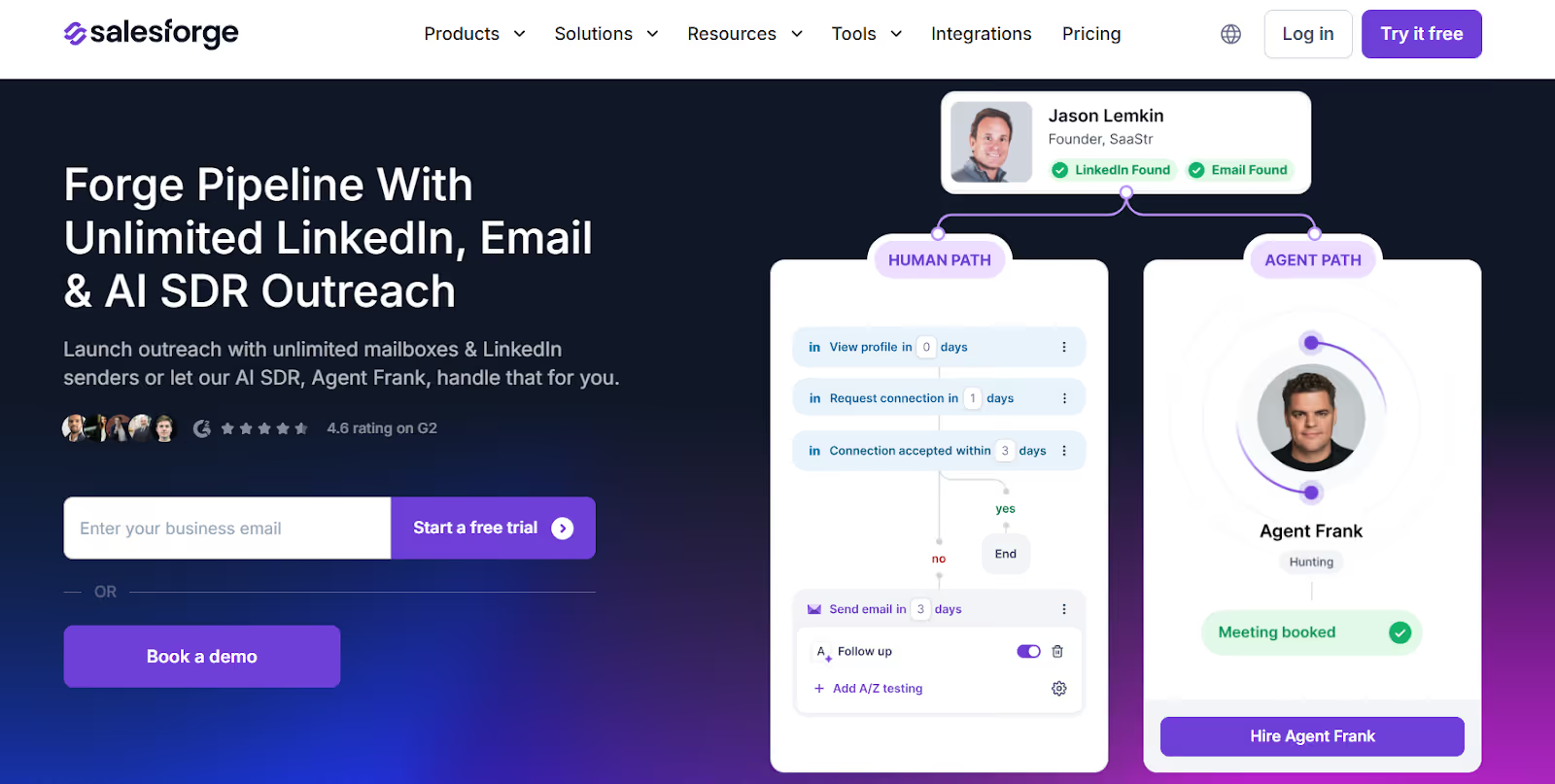
This image shows the Salesforge homepage
Salesforge is a cold outreach platform built for email and LinkedIn prospecting at scale.
Instead of only working with leads already in your CRM, Salesforge helps you reach new prospects and manage all conversations in one place.
Salesforge allows you to:
Send outreach across email and LinkedIn from one dashboard
Connect unlimited mailboxes to increase sending safely
Use unlimited LinkedIn senders (on Growth plan)
Warm up mailboxes automatically using Warmforge
Rotate mailboxes and IPs to protect deliverability
Manage all replies from email and LinkedIn in Primebox™
This image shows the AI SDR by Salesforge
Salesforge also includes an AI SDR called Agent Frank, who can:
Find prospects from a large B2B contact database
Write personalized emails using LinkedIn and web data
Follow up automatically in multi-step sequences
Book meetings for your team
Unlike tools focused on internal lead nurturing, Salesforge is built for active outbound and pipeline creation.
Pardot vs Salesforge: Feature Comparison
Feature
Pardot
Salesforge
Main Use
B2B lead nurturing within Salesforce
Cold outreach and outbound pipeline generation
Outreach Channels
Email-based nurturing campaigns
Email and LinkedIn outreach
New Prospecting
Not included
Built-in prospect search through Agent Frank and Leadsforge
Sending Scale
Not built for high-volume cold outreach
Unlimited mailboxes with rotation support
Reply Management
Managed inside Salesforce workflows
Unified inbox (Primebox™) for email and LinkedIn replies
Starting Price
Approximately $1,250 USD per company per month
From $48 per month with a free trial
If you mainly work inside Salesforce to nurture existing leads, Pardot fits that workflow.
If you want to reach new prospects, automate email and LinkedIn outreach, and book meetings at scale, Salesforge fits better based on the features in your provided data.
Personalized Outbound Strategy
Get The Right Outbound Strategy In Minutes
Enter your email to get a custom plan & stack recommendation for your
business
It's being carefully crafted by AI
Please check your mailbox in 5 minutes
Is Salesforce Pardot Worth It?
Yes, if your main goal is to capture leads from your website, score them, and nurture them with personalised email campaigns inside Salesforce, Pardot is a solid choice.
But if you need to start new conversations, run cold email and LinkedIn outreach, and book meetings, Pardot isn’t built for that.
For teams focused on outbound and daily pipeline generation, Salesforge is a better fit.
It helps you send LinkedIn and email outreach at scale, use AI to follow up, and manage all replies in one place.




.jpg)

.jpg)

.jpg)