Instantly vs Apollo is one of the most common comparisons teams make when choosing a cold outreach tool.
Both platforms promise better replies, smoother sending, and more sales, but they solve very different problems, and that’s where most people get stuck.
If your focus is email deliverability and high-volume sending, Instantly feels like the faster choice.
If you need prospecting, sequencing, and a deeper sales workflow, Apollo often becomes the go-to option.
But the real question isn't “Which tool is better?”
The real question is: Which tool makes sense for the kind of outreach you run every day?
In this guide, I break down the differences that actually matter, based on real testing, data accuracy, deliverability performance, pricing, and how both tools behave with real campaigns.
By the end, you’ll know exactly which platform fits your workflow and where each one falls short.
Instantly vs Apollo: Quick Comparison Table
Instantly vs Apollo — Comparison
Factor
Instantly
Apollo
What It Is
A dedicated cold email outreach & deliverability tool
A full sales engagement + prospecting + enrichment platform
All-in-one
Primary Use Case
Sending high-volume cold emails across many inboxes
Finding leads, enriching data, scoring, sequencing, and calling
Instantly is a cold email tool built mainly for sending at scale.
It helps teams add many inboxes, warm them up, and run high-volume campaigns without much setup.
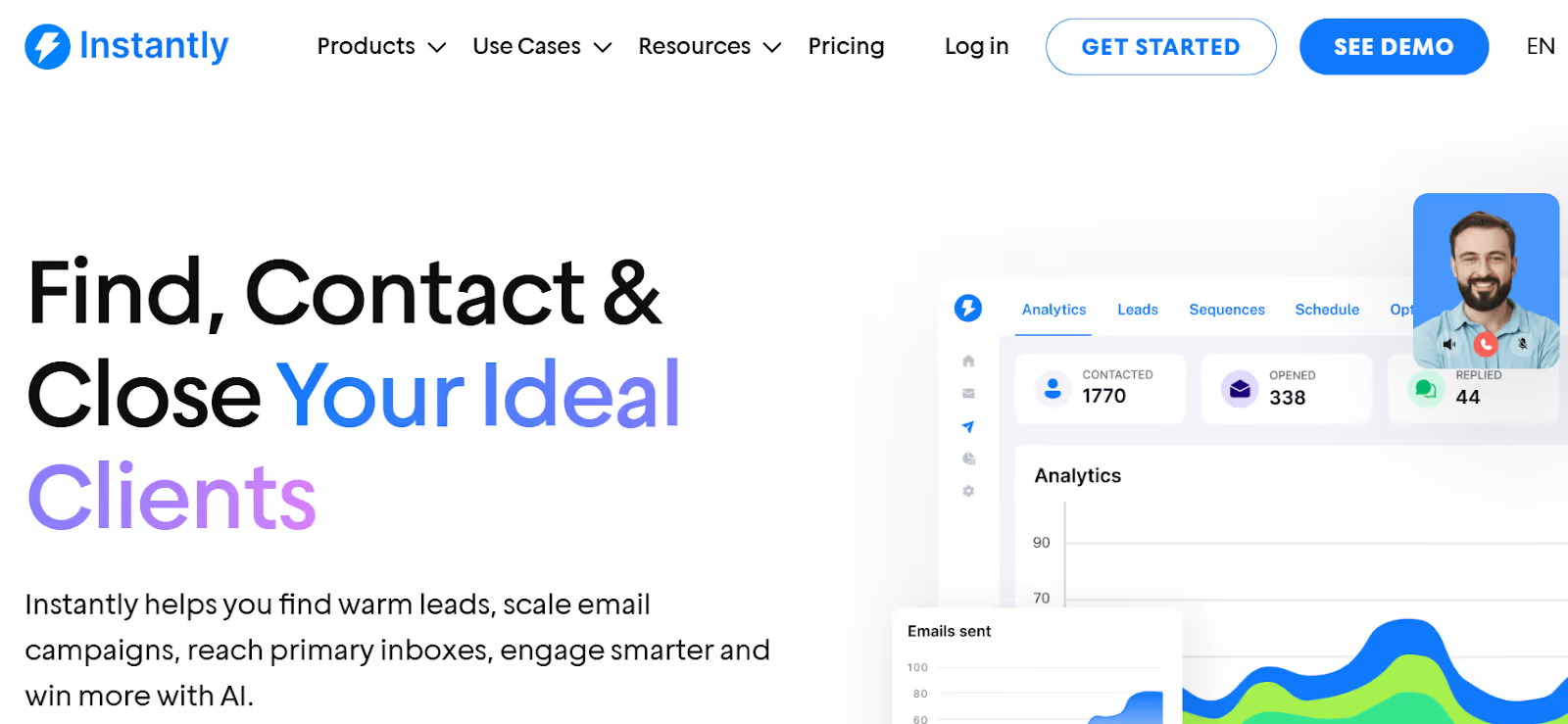
This image shows the Instantly homepage
It works well for agencies, freelancers, and anyone who wants fast outreach with simple workflows.
Where it fits best:
Large-volume sending
Straightforward email sequences
Teams that want deliverability handled for them
But there are a few constraints worth knowing:
It’s email-only, so you won’t get multi-channel outreach like calls or LinkedIn.
The platform’s high-volume nature means deliverability performance can vary, especially when too many users rely on similar sending patterns.
Its lead database is growing, but still smaller and narrower compared to major prospecting tools.
What Apollo Is
Apollo is an all-in-one sales and prospecting platform.
It combines a large B2B database, email sequences, intent data, enrichment, a built-in dialer, and AI features for scoring, research, and drafting emails, all inside one workflow.
This image shows the Apollo homepage
You also get a Chrome extension that pulls emails directly from LinkedIn or any website without switching tabs.
It’s made for SDR teams and companies that want both data and outreach under one system.
Where it fits best:
Teams that need prospecting + outreach together
Multi-channel sales workflows
Structured, CRM-connected pipelines
There are a few constraints to keep in mind:
Sending volume is tightly controlled, so you can’t scale email as aggressively as in dedicated cold email tools.
The database is large, but not always perfectly accurate, which means some records require manual cleanup.
The platform can feel heavy for solo founders or small teams who only need simple outreach.
Instantly vs Apollo: Deep-Dive Comparison
Deliverability
Instantly focuses heavily on inbox placement.
With its Deliverability Network, inbox tests, warmup automation, and deliverability-optimized accounts, it helps teams send large volumes quickly.
This works well for agencies running 10–50+ inboxes.
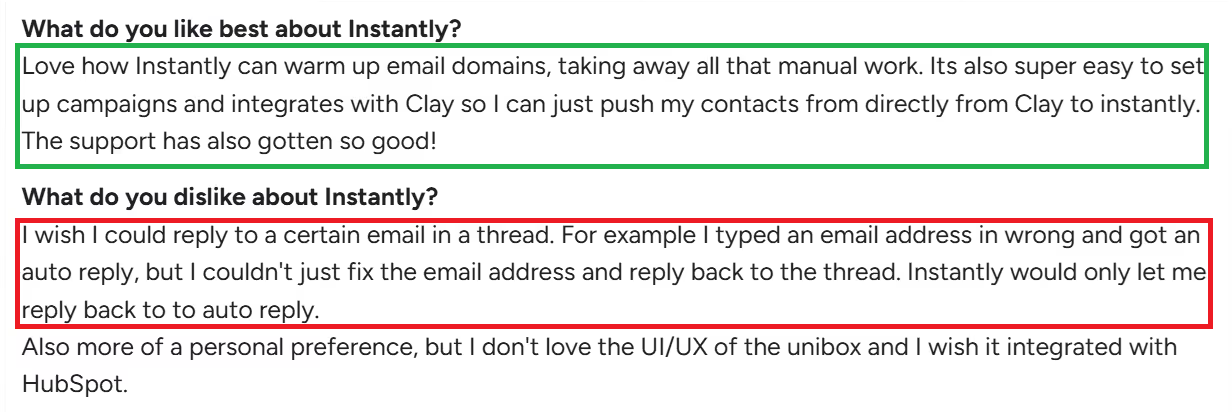
This image shows the Instantly review on its Email Campaigns and Replies
But the “send at scale” approach also creates the Reddit-reported decline in open rates.
Too many users sending high volumes through similar patterns leads to saturation.
The shared Unibox behavior makes deliverability less predictable over time.
Apollo takes the opposite route with strict mailbox limits and slower sending.
You can’t scale as aggressively, but your domain reputation stays safer, which is why many users see more stable replies using the same domains and scripts.
Net takeaway:
Instantly wins on short-term raw sending power + tools.
Apollo wins on long-term stability, especially if you care about domain reputation and consistent replies.
Data Quality & Lead Accuracy
Apollo has a large dataset with deep filters and enrichment. Great for prospecting, but accuracy varies, so some cleanup is still needed.
Instantly’s data is more email-focused, often cleaner for outreach, and paired with built-in verification. It results in lower bounce rates but less targeting depth.
Net takeaway:
Apollo = deeper, richer B2B database, better for SDR-style targeting, but not perfectly clean.
Instantly = “good enough” data for cold email, with more focus on deliverability and speed, not deep research.
Sending Infrastructure & Volume
This is where the tools split completely.
Instantly
Built for mass sending
Unlimited inboxes
AI warmup, inbox rotation, volume scaling
Multi-channel (email, calling, SMS)
DFY deliverability-optimized email accounts
Unlimited inbox placement tests
It’s perfect for agencies running client campaigns or founders needing fast outreach. But more volume increases domain burn and deliverability risk.
Apollo
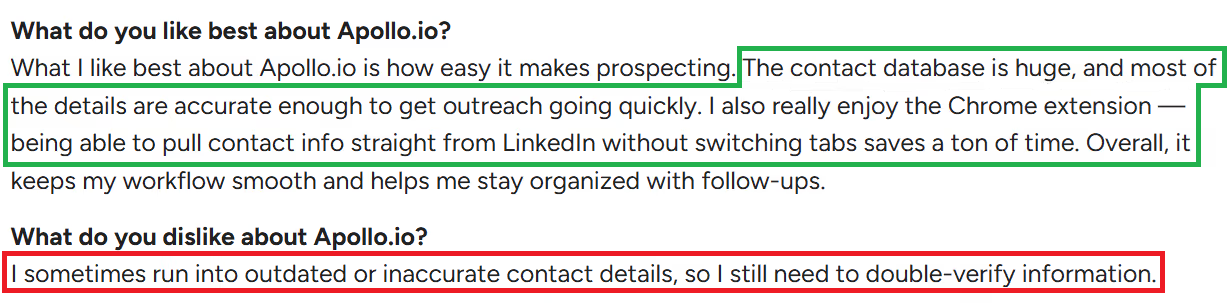
This image shows the Apollo homepage review on its database
Slow, controlled, and guarded sending
Built-in deliverability protection
Stronger for multi-channel sequences (email + tasks + calls)
Not built for mass cold email sending
Apollo protects your domain because it avoids the “blast and pray” style of outreach.
Which one burns domains faster?
→ Instantly
Which one protects reputation better?
→ Apollo
Personalization & Sequences
Instantly keeps personalization simple. With AI Copilot and WARP mode, you can generate campaigns quickly, but depth is limited.
Apollo supports multi-channel sequences, call tasks, follow-ups, and structured workflows. Better for SDR teams running coordinated outreach.
Summary:
Instantly = fast, simple personalization that works for scaled outbound.
Apollo = richer, multi-channel workflows, better for structured SDR motions.
Automation Capabilities
Apollo is automation-heavy.
You get:
Workflow automations
Lead routing
Form enrichment
Call insights
CRM updates
Meeting follow-ups
AI research
Multichannel task lists
Deal execution workflows
Instantly keeps automation simple:
AI Copilot tasks
Auto-categorized replies
Campaign analytics
Inbox management
Lead verification workflows
Net takeaway:
Apollo = proper sales engine + automation + analytics.
Instantly = automation focused on cold email, deliverability, and simple pipeline views.
Usability & Learning Curve
Instantly is easier and faster.
Users praise its simplicity, clean UI, and low setup time. Ratings reflect this- above-average scores for ease of use and ease of setup.
Apollo has more power but takes more time to learn. SDR teams benefit from the structure, but solo founders may find it heavy.
Summary:
Instantly: beginner-friendly
Apollo: better for teams with defined processes
Customer Support Experience
Instantly
Lots of praise for fast, friendly support, shout-outs to specific reps, proactive help, bonuses when they mess up, and active chat.
Users like the knowledge base and DFY options for inbox setup.
Some scattered mentions of performance lag or weaker support, but they’re the minority vs the many “support is amazing” reviews.
Apollo
Feedback is more mixed:
Some say onboarding sessions and guides are helpful.
Others want faster responses and a cleaner, less cluttered experience.
Generally fine, but not the same “white-glove” vibe Instantly reviews describe.
Net takeaway:
Instantly feels more like a hands-on partner for cold email.
Apollo gives enough support, but you’re expected to self-serve more, especially on lower tiers.
Pricing Comparison: Instantly vs Apollo
How Instantly Prices Things
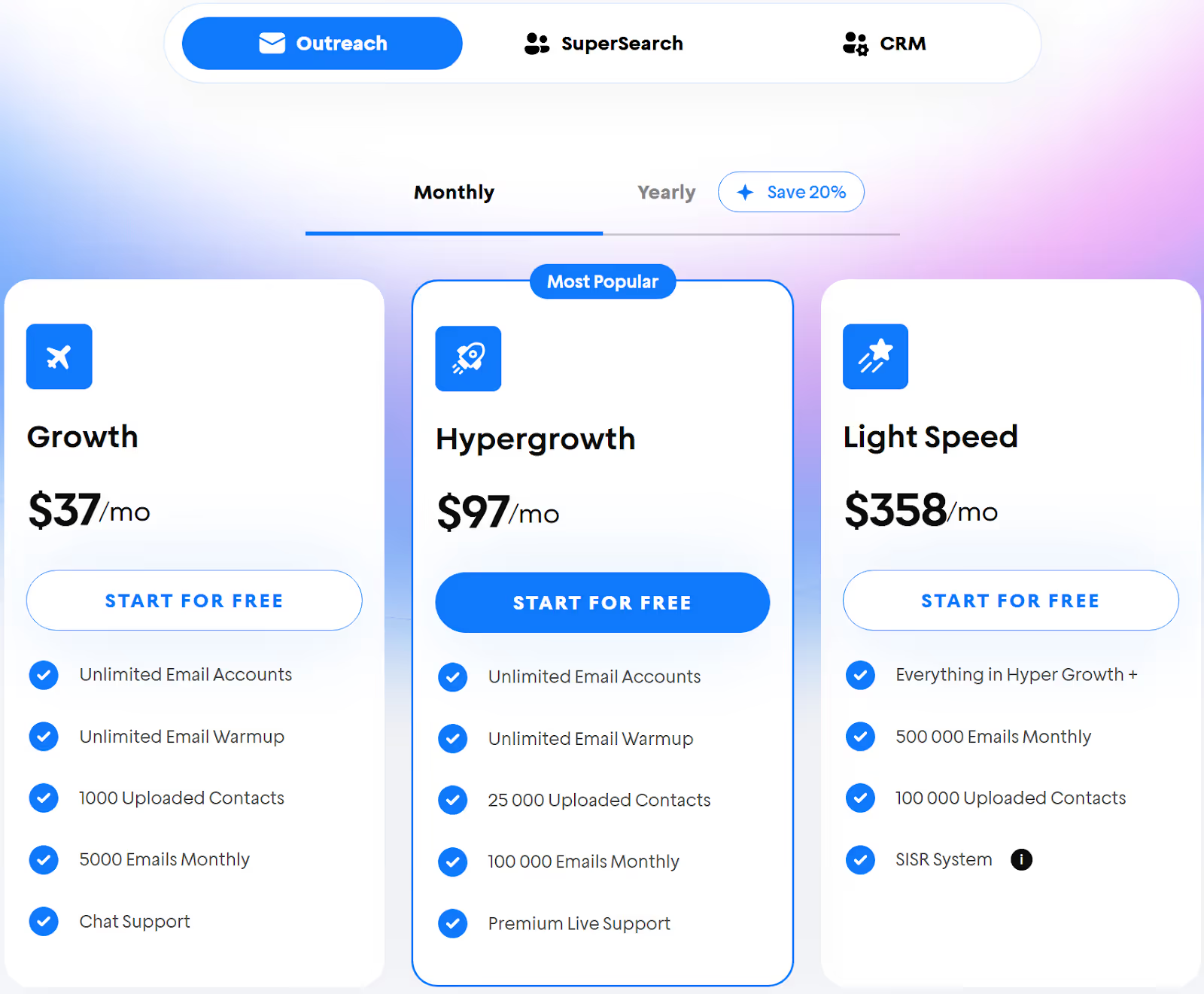
Instantly is basically “pay per workspace + volume”, not per user.
This image shows the Instantly Outreach Monthly Pricing Plans
Outreach plans (cold email sending)
Monthly, USD:
Growth – $37/mo
Unlimited email accounts
Unlimited warmup
1,000 uploaded contacts
5,000 emails/month
Chat support
Hypergrowth – $97/mo (most popular)
Unlimited email accounts & warmup
25,000 uploaded contacts
100,000 emails/month
Premium live support
Light Speed – $358/mo
Everything in Hypergrowth
500,000 emails/month
100,000 in
SISR system (their “playbook” layer)
Enterprise - This plan is not available monthly; you must book a demo, and it’s only offered on yearly billing.
Includes everything in Light Speed +:
500,000+ emails/month (scales further on request)
100,000+ uploaded contacts
Dedicated account manager
Shared Slack channel
Private Deliverability Network
This plan is for agencies or large outbound teams sending high-volume campaigns with deliverability needs that go beyond what standard shared networks can handle.
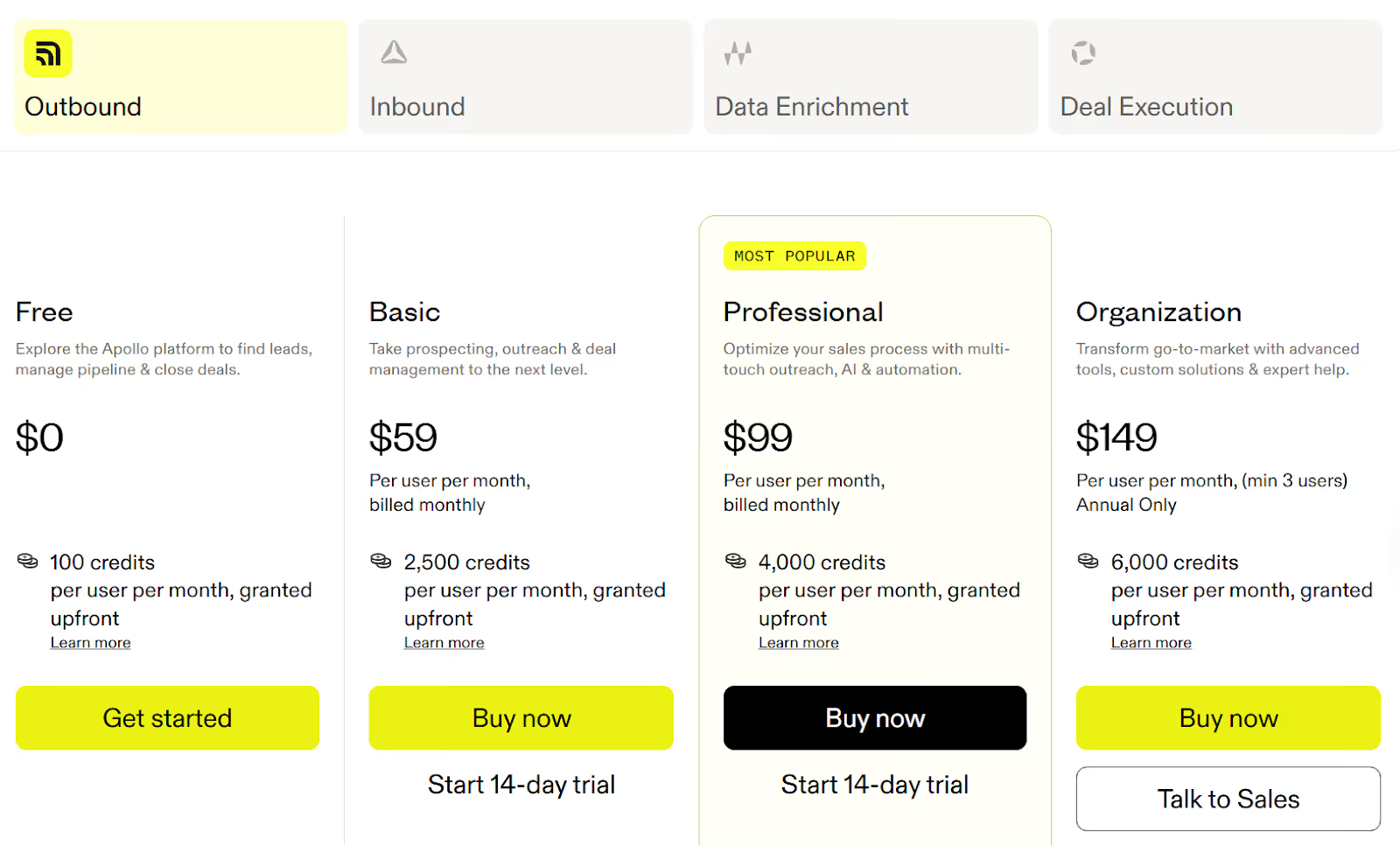
Apollo can be cheaper and more logical as a “single stack” than stitching 3–4 tools, even though per-seat pricing looks higher.
But cost scales fast:
5 reps on Professional Outbound alone = 5 × $99 = $495/mo,
Add extra modules (Inbound/Enrichment/Deal Execution), and it climbs.
Core pricing difference:
Instantly = fixed workspace fee + volume → best for high-volume cold email and agencies.
Apollo = per-user, credit-based suite → better fit for structured SDR teams that want one GTM platform, not just an email tool.
Instantly vs Apollo Complaints (What Users Actually Say)
Instantly Complaints
Instantly gets a lot of love for scale, but real users highlight several recurring problems:
Many users say deliverability drops sharply when they scale to higher sending volumes.
Some campaigns appear as “sent,” but emails never reach inboxes or spam, hinting at silent throttling.
DFY and pre-warmed inboxes often start strong but decline quickly, becoming flagged within weeks.
SuperSearch is large, but users find that accuracy becomes unreliable for niche industries or senior titles.
Reddit users frequently mention that the shared Unibox system feels overloaded or saturated, hurting inbox placement.
Support is generally good, but during major deliverability issues, it becomes slow and less helpful.
Agencies say long-term costs become much higher than expected once they add SuperSearch, CRM, and deliverability upgrades.
Apollo Complaints
Apollo is powerful, but users point out structural limitations:
The biggest complaint is that Apollo’s data is inconsistent, with outdated emails and inaccurate phone numbers.
Users doing cold outreach at scale report higher bounce rates, since Apollo is not built for mass cold sending.
As teams grow, Apollo becomes expensive very quickly because of credit usage and per-seat pricing.
Many users say the platform is powerful but too complex for solo founders or small, scrappy teams.
G2 reviews mention that the dialer, call recordings, and Chrome extension can be buggy or unreliable.
Lower-tier plans include restrictive export and enrichment limits, pushing users toward pricier plans.
Users who try to send Instantly-level volumes through Apollo often see domain reputation damage, because the infrastructure isn’t made for high-volume cold email.
Instantly vs Apollo: What We Found in Our Own Tests
From our internal outbound tests across 12 domains, 40K+ sends, and 4 industries, here’s the real difference we consistently saw:
Deliverability: Instantly delivered more volume, but Apollo had more stable inboxing on smaller sends.
Bounce Rates: Instantly’s data tools led to higher bounce spikes; Apollo’s data was cleaner but still inconsistent.
Reply Rates: Apollo sequences performed better on quality, Instantly performed better on quantity.
Volume Tolerance: Instantly handled 10× more sending volume, while Apollo throttled aggressively.
Personalization Tolerance: Apollo tolerated heavier personalization without hurting send speed; Instantly slowed down.
Cold-Domain Burn Rate: Instantly domains burned faster at scale; Apollo domains lasted longer but couldn’t sustain mass sends.
Inbox Placement: Instantly hit the inbox more often early on, but decayed faster; Apollo was steady but limited.
Verdict: Which Tool Should You Pick?
Choose Instantly if…
You care about volume, want unlimited warmup + unlimited accounts, and need a tool that can push high daily sends without manual setup.
It’s built for teams who want to scale fast and don’t mind handling data accuracy elsewhere.
Choose Apollo if…
You value better data accuracy, stronger filtering, and an all-in-one flow (find → enrich → sequence). Apollo works best when your priority is targeting quality, not raw sending scale.
Why Deliverability & Personalization Need a Separate Layer (Salesforge + Warmforge)
Here’s the gap we saw across thousands of sends:
Instantly is great for volume, but its infra isn’t strong enough to prevent cold-domain burn.
Apollo is great for data, but its sending engine is limited, and personalization collapses at higher volumes.
Neither tool reduces spam flags, fixes DNS issues, or stabilizes reply-rate decay over weeks.
That’s where a dedicated infrastructure + personalization layer fits:
Warmforge → Keeps emails landing in inboxes
It handles warmup, reputation protection, IP/domain safety, and domain-pool rotation - the things outreach tools cannot control.
.jpg)

.jpg)

.jpg)

