
Personalized Outbound Strategy
Get The Right Outbound Strategy In Minutes
Enter your email to get a custom plan & stack recommendation for your business
It's being carefully crafted by AI
Please check your mailbox in 5 minutes
Apollo MCP Server lets AI assistants access GraphQL APIs through MCP tools.
This is useful when your AI agent needs to pull data from backend systems, query internal records, or work with existing API operations.
But outbound workflows solve a different problem. You don’t just need AI to access an API. You need to:
Apollo MCP Server can help a technical team connect AI to internal data.
But it does not give you leads, verified emails, LinkedIn profiles, or campaign execution.
So if you’re looking at Apollo MCP Server for outbound workflows, the real question isn’t just what it does.
The real question is whether API access is enough to help you generate pipeline. In this Apollo MCP Server review, we’ll break that down clearly.
No, not for most outbound teams. Apollo MCP Server is built to connect AI with GraphQL APIs.
It helps AI agents access internal data, not generate pipeline. Here’s where it fits:
What it helps with:
What it doesn’t help with:
Apollo MCP Server is a strong backend tool for developers, but it is not built for generating pipeline or running outbound.
Apollo MCP Server is a Model Context Protocol (MCP) server built by Apollo (Apollo GraphQL).
It acts as a bridge between AI tools and your GraphQL APIs. Instead of AI working only with text, it can use real API operations as tools.
Apollo MCP Server exposes GraphQL operations as MCP tools that AI assistants can discover and use. That means an AI assistant can:
All of this happens through a controlled setup where only specific operations are exposed.
So instead of building custom integrations for every API, it provides a standard way to connect AI with APIs through the MCP protocol.
The key idea is to lets AI tools use your APIs, not just generate answers.
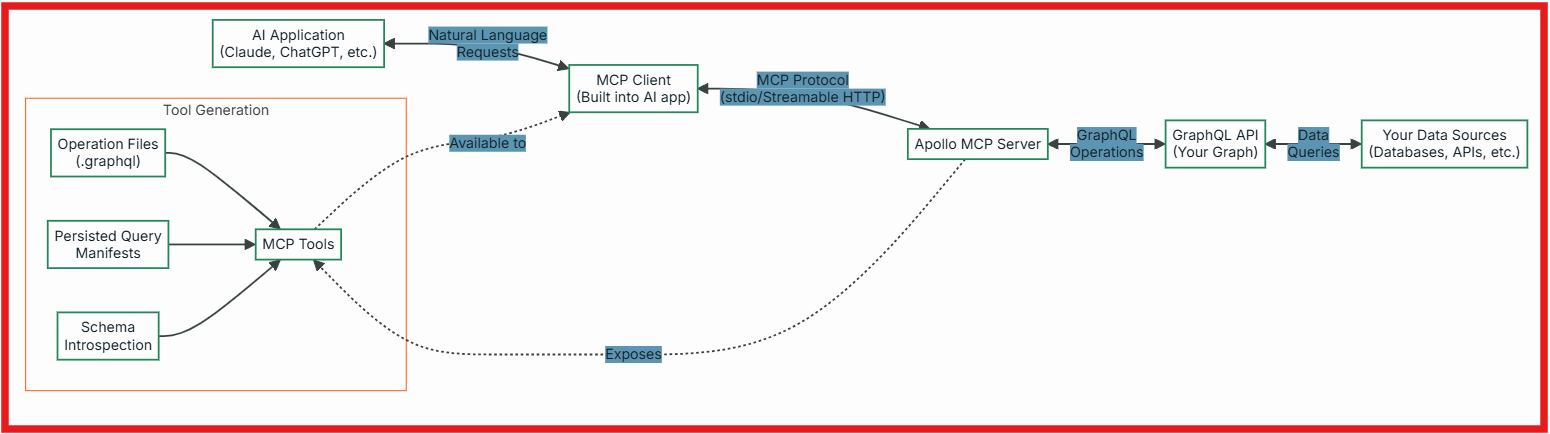
Apollo MCP Server sits between your AI tool and your GraphQL API. The easiest way to understand it is that it turns your API into something an AI can actually use.
Instead of calling APIs directly, the AI uses predefined tools created from GraphQL operations.
Here’s how the flow works:
This works because Apollo MCP Server converts GraphQL operations into MCP tools that AI models can discover and use.
From what I’ve seen, the important part is control. You don’t expose your entire API. You only define specific operations that the AI can use. To set it up, you need:
Each step is controlled and predictable. That means the AI only does what you allow it to do. In simple terms, it takes an AI request, maps it to a GraphQL operation, and returns real data back.
Now that you understand how it works, let’s look at what it actually offers in more detail.
Apollo MCP Server focuses on making AI and API interaction structured, secure, and predictable. Here are the key features that elps:
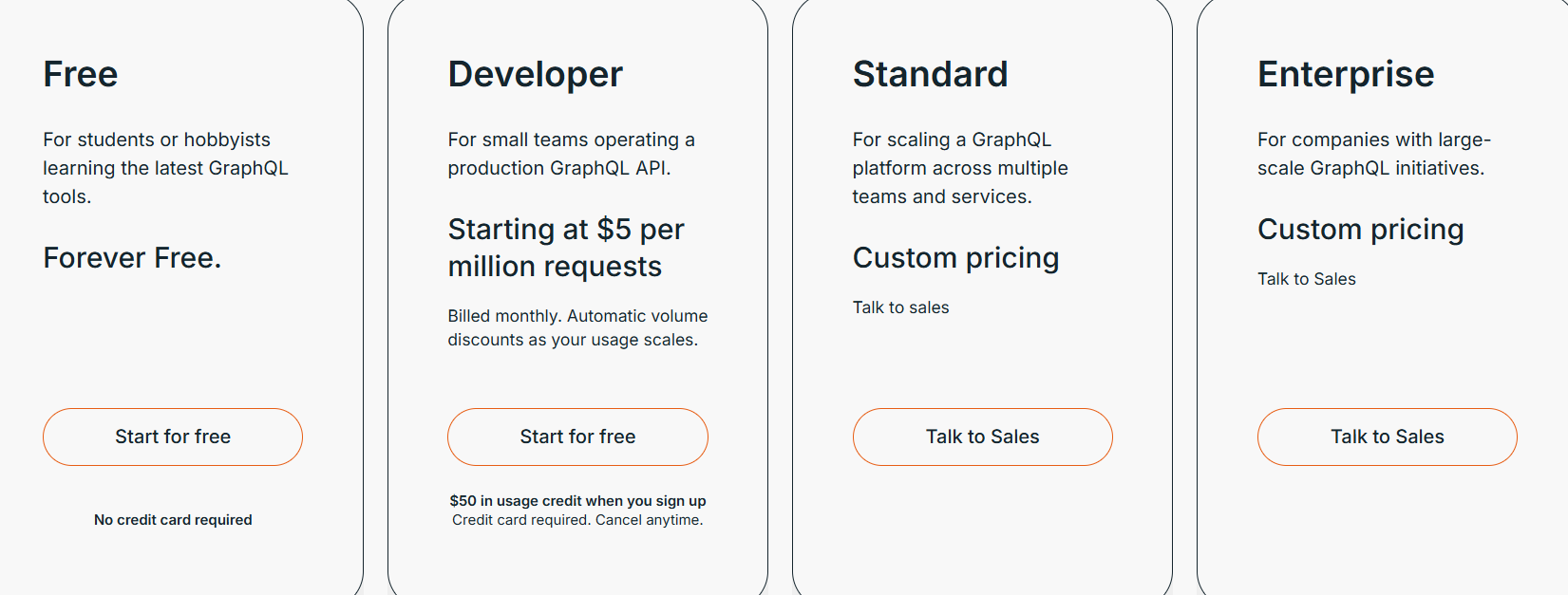
Apollo MCP Server does not have separate pricing. It is part of Apollo’s GraphQL ecosystem, so pricing depends on Apollo GraphOS usage. Here’s the pricing:
So you are not paying for the MCP server itself. You are paying for:
Apollo MCP Server is included as part of this ecosystem.
Apollo MCP Server is not a general-purpose outbound tool. It is a developer-focused layer for AI + APIs.
It is a good fit if:
From what I’ve seen, it works best in teams where AI needs to interact with backend systems in a controlled way.
It is not a good fit if:
In these cases, it will feel like the wrong tool because it does not solve those problems.
Apollo MCP Server is a good choice if your goal is to connect AI with APIs. It is not the right choice if your goal is to generate pipeline or run outbound workflows.
Apollo MCP Server is useful when your team wants AI to access GraphQL APIs. But outbound workflows usually start with a different problem. You first need people to reach out to, not just API access. That means:
That is where Leadsforge is more relevant. Leadsforge is a B2B lead generation tool that lets you search across 500M+ contacts, find leads based on your ICP, enrich them with emails, LinkedIn profiles, and phone numbers, and export lists to CSV or Salesforge.
The key difference is simple:
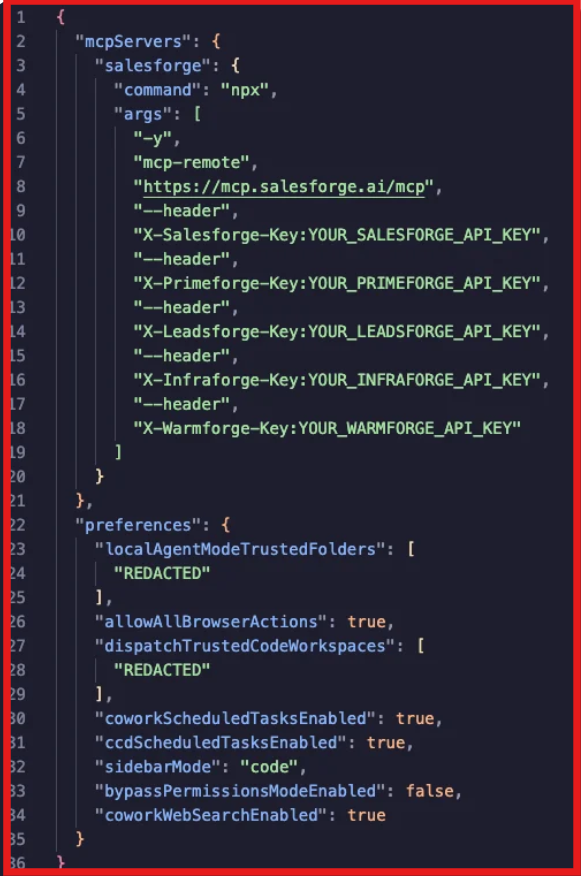
If you are using MCP workflows, this becomes even more useful. AI assistants can access Leadsforge and other outbound tools through a single MCP setup.
This MCP server connects tools like Salesforge, Leadsforge, Primeforge, Infraforge, Warmforge, and Mailforge to AI assistants like Claude or Cursor.
This means AI can search for leads, enrich data, and manage outreach workflows in one system instead of switching between tools.
Here’s a quick comparison:
From an outbound perspective, Leadsforge is more aligned with use cases like lead generation and enrichment. Apollo MCP Server fits better when the goal is connecting AI to internal APIs.
This demo shows how one MCP setup connects Leadsforge and other tools into a single outbound workflow:
Enter your email to get a custom plan & stack recommendation for your business
Please check your mailbox in 5 minutes
Apollo MCP Server is a solid tool for developers who want AI to work with APIs. If your goal is to connect AI with internal data or build AI-powered workflows, it makes sense.
But outbound needs leads, enrichment, and execution. Apollo MCP Server does not solve that part.
From what I’ve seen, most teams don’t struggle with writing emails anymore. They struggle with finding the right prospects, getting clean contact data, and moving from list to pipeline.
That’s where a tool like Leadsforge fits naturally. It helps you go from “who should I contact?” to “ready-to-use lead list” in one place.
And if you want to go further, you can plug it into the Forge MCP setup and connect it with the rest of your outbound workflow.
If your goal is to generate pipeline, not just connect APIs, Leadsforge is a better place to start.
Try Leadsforge now with 100 free credits!
.jpg)

.jpg)

.jpg)