
Personalized Outbound Strategy
Get The Right Outbound Strategy In Minutes
Enter your email to get a custom plan & stack recommendation for your business
It's being carefully crafted by AI
Please check your mailbox in 5 minutes


For a thorough understanding of what each option offers, a brief comparison table isn't enough to grasp all intricacies that come with each tool, so let's dive deeper into what makes Salesforge, Yesware and Salesloft unique.
At a surface level, each vendor seems targets similar needs, but they're far from identical.
Alternatively, you can just let Salesforge's results speak for themselves:

That positioning is perfect for teams whose sales strategy depends on running prospect lists at scale with little operational friction.
Salesforge provides 2 plans oriented around outreach scale and a 14-day free trial (with 2 free months granted when billed annually):
Yesware provides 3 tiered plans oriented around outreach scale + a very limited free tier (annual billing saves up to ~23%):
Salesloft requires contacting sales for pricing information, though it's likely their pricing doesn't go lower than triple digits.
If your outreach efforts combine cold emails with LinkedIn touches, the way a platform orchestrates those channels is a primary buyer concern.
The fact that Salesforge aims to consolidate email and LinkedIn actions into one workflow reduces the need for separate platforms for social touches and email campaigns - a clear operational win when your sales playbooks require many users to coordinate on the same prospect list.
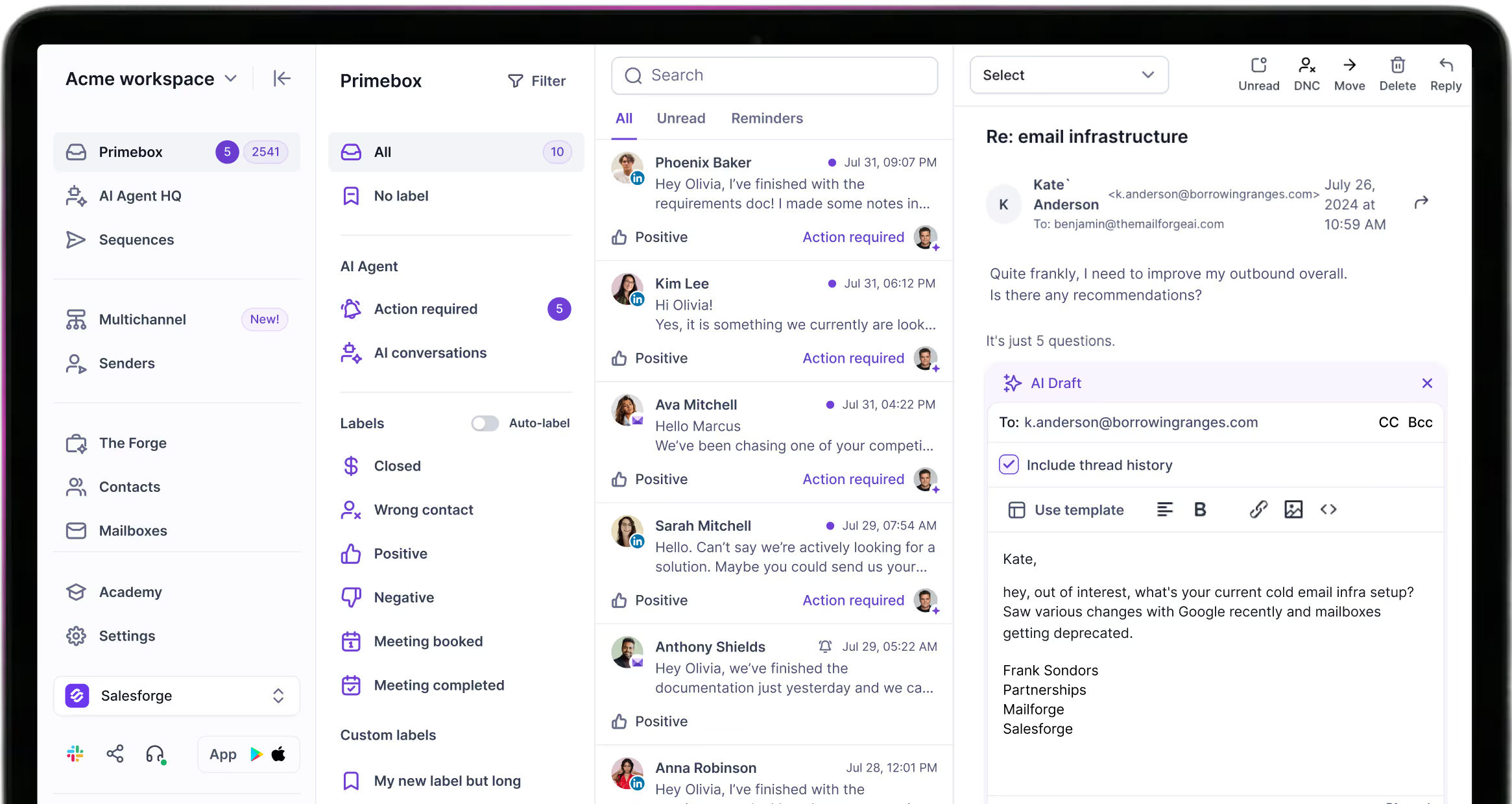
Managing replies across multiple campaigns and multiple channels is where outreach operations either scale elegantly or fall into chaos. Salesforge’s Primebox is a worthwhile highlight in this aspect - it isn’t just another “unified inbox", it’s a core part of the tool that actively ties replies back to campaigns while also layering deliverability-aware tooling and AI analysis on top.
By contrast, the standard sequence behavior you see in Yesware and Salesloft doesn't offer the advanced consolidated reply capabilities across channels like Salesforge does.
Deliverability is a “make-or-break” capability for any cold outreach program: you can have the best email templates and campaign management but if your message doesn’t reach the inbox, the campaigns fail.
This is the area where Salesforge shines:
And more. Building sender reputation gradually while spreading volume across addresses and IPs to avoid single-mailbox throttles or sudden reputation hits is crucial for a scaling business. And that's paired with proprietary infrastructure options:
Those infrastructure features reduce the risk of landing in spam and make multi-channel outreach more reliable, especially when you have a leads database and want to integrate email at scale.
If your current sales process is seeing deliverability erosion, prioritizing a platform like Salesforge is a practical way to streamline sales processes and improve campaign ROI.
Enter your email to get a custom plan & stack recommendation for your business
Please check your mailbox in 5 minutes
Scaling from a handful of reps to an enterprise sales organization changes the platform requirements. At that point, practical outreach depends on clean contact data and tight CRM integrations.
Salesloft's model is great for massive enterprise teams that need predictive analytics, deep CRM integration, and pipeline management across many systems, but it assumes you will leverage other specialist platforms as part of a larger proprietary or semi-proprietary tech stack.
Salesforge highlights a broad, practical integrations surface designed to let teams plug the platform directly into existing sales stacks. Notable Salesforge integrations include:
And many more. Salesforge is also available as a Chrome extension and can be downloaded as a mobile app to provide as much convenience as possible.
If your priority is to keep the team aligned and ensure prospects are tracked consistently in your CRM, all tools cover the essentials - but Salesforge’s emphasis on consolidated data and comprehensive campaign tracking makes it slightly better when you want uniform access to replies and campaign insights across both LinkedIn and email channels.
Customer support channels and resources are an underrated but mission-critical part of selecting the right sales engagement platform. They directly affect time-to-value for onboarding, how quickly you can streamline sales processes, and whether your sales teams can sustain outreach campaigns without frequent operational fire-drills.
Salesforge takes customer support & resources very seriously, while coupling product tooling with a people-first enablement stack that’s designed to reduce onboarding friction.
Besides that, Salesforge customers also get:
There’s no universal “best” option - only the right fit for your sales goals.
Salesforge is a sales engagement platform built for multichannel campaigns - email outreach and LinkedIn touches - so sales reps can run high-volume outreach efforts from one console. It supports email campaigns and email marketing campaigns with customized templates and email templates, engagement tracking and automation features to sequence actions, schedule meetings, and keep outreach efforts synchronized across reps and workspaces.
Salesforge bundles automation features (cadences, mailbox rotation, dynamic IPs) with built-in email tracking and engagement tracking, A/B testing, spam/placement checks and deliverability tooling. That combo means email campaigns hit inboxes more reliably, reporting features surface valuable insights on opens/replies, and sales reps can optimize sales outreach and shorten the sales cycle with data-driven adjustments.
Salesforge’s pricing plans focus on scale (Pro/Growth tiers) and include high contact/message limits, unlimited seats/mailboxes options and bundled deliverability tools - giving more features per plan for large outreach. Yesware is lightweight and mailbox-centric; Salesloft targets enterprise with advanced reporting but higher cost. For teams weighing Salesloft vs Yesware, Salesforge is often better when you need bundled infrastructure, automation features and fewer add-on fees.
Yes - Salesforge’s unified inbox ties replies from email and LinkedIn back to campaigns, supports presentation tracking, and centralizes engagement tracking. Built-in reporting features and analytics give sales teams valuable insights on campaign performance, funnel velocity and which email templates or outreach efforts shorten the sales cycle - so reps can prioritize leads, schedule meetings and iterate faster.
Salesforge emphasizes timely assistance with 24/7 email and live chat, guided onboarding, knowledge bases, community resources and technical support. New teams get help with list hygiene, customized templates, integrating CRMs, and training on automation features and reporting. That people-first approach reduces time-to-value and helps sales reps adopt email templates, phone calls and multichannel campaigns without long ramp-up.