
Personalized Outbound Strategy
Get The Right Outbound Strategy In Minutes
Enter your email to get a custom plan & stack recommendation for your business
It's being carefully crafted by AI
Please check your mailbox in 5 minutes


For a thorough understanding of what each option offers, a simplified comparison table isn't enough to grasp all intricacies that come with each tool, so let's dive deeper into what makes Zopto and Salesforge unique.
Salesforge, built by a former Googler and VP of sales, positions itself as an all-in-one outreach sending platform that bundles multi-channel automation (email + LinkedIn) with an emphasis on deliverability, infrastructure, personalization, and campaign orchestration.
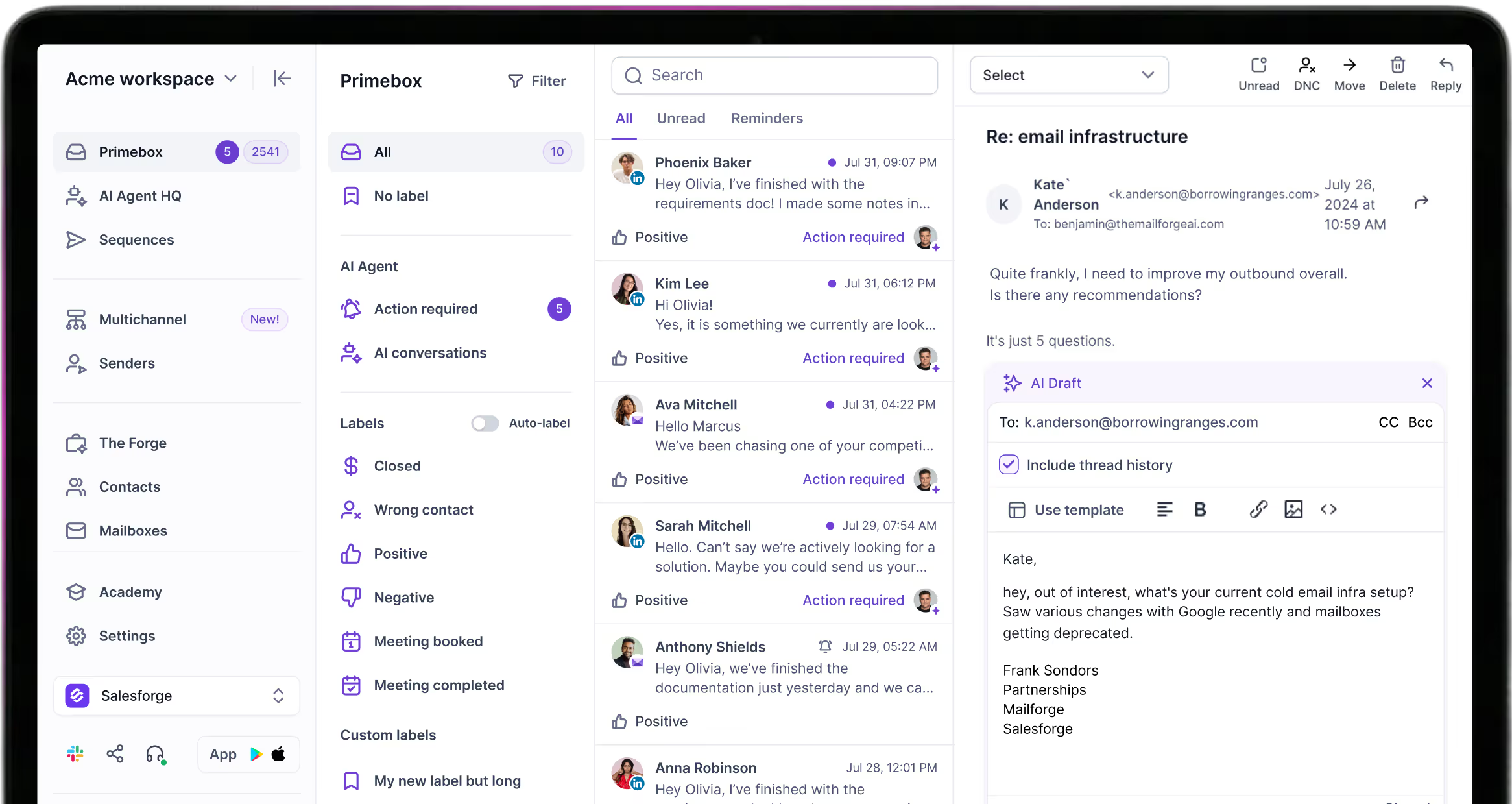
Notable Salesforge highlights include: the Primebox (consolidated inbox with advanced message drafting), unlimited mailboxes and LinkedIn senders and free premium warm-up via Warmforge.
Alternatively, you can just let Salesforge's results speak for themselves:

Zopto, by contrast, is a LinkedIn-only outreach and social-selling solution with a proprietary platform, dedicated IP approach for cloud access, and a feature set optimized around LinkedIn-specific outreach and profile-based targeting.
Zopto markets itself to businesses that want to amplify their LinkedIn outreach using automation that tightly integrates with LinkedIn Sales Navigator and that can scale prospecting rhythms across multiple sender profiles.
Zopto provides 4 paid plans with no free plan/trial available.
The plans are as follows (with quarterly/volume discounts):
For agencies, Zopto offers the following plans:
Salesforge provides 2 plans oriented around outreach scale, as well as a 14-day free trial.
The plans are as follows (with 2 free months granted when using annual billing):
Crafting comprehensive campaigns means two things: reliable targeting and sequencing, and personalization that scales.
Both platforms let you A/B test messaging and refine cadences, but Salesforge’s value proposition is the seamless handoff between channels, so your outreach efforts can be designed as single campaigns covering LinkedIn messages and emails rather than two disconnected plays.
If you need lead generation opportunities across platforms, think about whether you want a LinkedIn-first automation tool or a feature rich platform that treats LinkedIn as one channel among many.
Deliverability is the silent, critical capability behind any effective cold outreach program - if your emails don’t land in primary inboxes, response rates crash.
For teams that plan to send high volume email plus LinkedIn outreach, Salesforge’s approach - email warm-up, deliverability controls, and infra designed for scale - makes lead generation via cold outreach easier in practice because it reduces the risk of domains hitting spam filters and allows teams to send emails effortlessly from multiple mailboxes.
LinkedIn remains, along with email, the most important cold outreach channel for many B2B sales teams.
Zopto’s platform was built with LinkedIn at its center: it integrates well with LinkedIn Sales Navigator, supports profile URL campaigns, group targeting, and Sales Navigator filters, and provides features around connection funnels and InMails.
Zopto’s academy content emphasizes how to use Sales Navigator filters in group campaigns and how to create campaigns from profile viewers and LinkedIn events - making it attractive for teams that have invested in Sales Navigator seats and want to automate the legwork of LinkedIn lead generation.
Salesforge similarly supports LinkedIn as a channel, with most of the aforementioned features present too. The main differentiator is the incorporation of a broader multi-channel strategy, allowing LinkedIn messages to be scheduled as part of broader sequences and combining Sales Navigator-based targeting with email follow-ups.
Enter your email to get a custom plan & stack recommendation for your business
Please check your mailbox in 5 minutes
Both platforms have leaned into automation and AI to varying degrees.
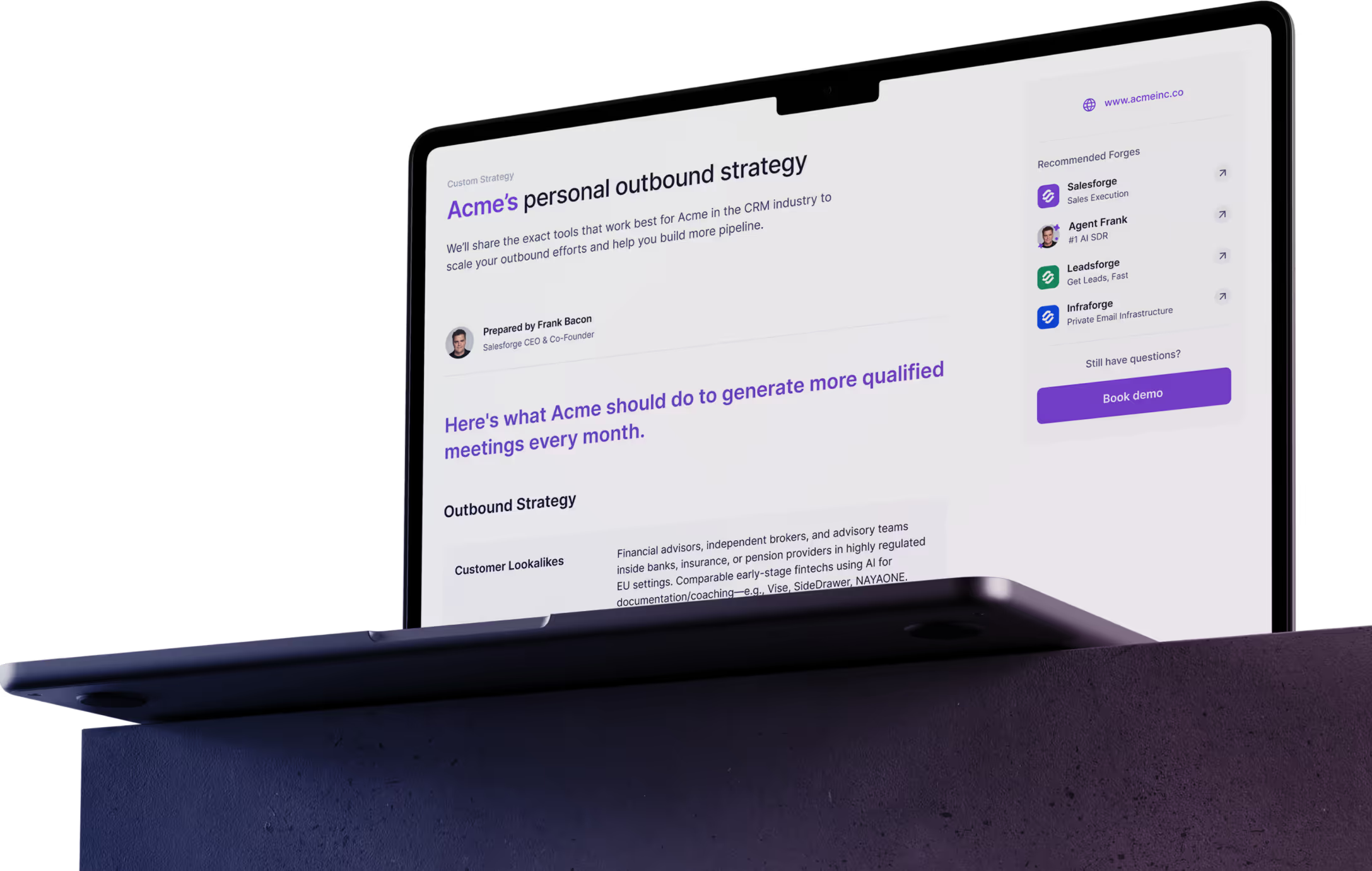
It’s important to be precise: if your definition of “advanced AI assistant” implies an autonomous SDR that prospects, books, and negotiates without human oversight, that’s a different conversation (although Salesforge does offer Agent Frank for this too)
Salesforge provides AI personalization tools and integrative automation to speed up message creation and follow-ups, and Zopto provides standard AI features focused on LinkedIn message automation and inbox reply automation.
Both will lift manual writing work and can increase response rates when templates are tuned properly, but what tilts the balance for teams that value consistent, contextually-accurate replies is how Salesforge handles inbox conversations. Salesforge emphasizes unified, consolidated inbox workflows to manage replies across mailboxes and LinkedIn messages together (via Primebox), which makes tracking context and next steps simpler for small teams and large teams alike.
Managing inbox conversations is where outreach becomes account management: you want replies, scheduling, and follow-ups to be tracked and easy to action.
Automation often trips up when it runs into platform limits - LinkedIn throttles invites and flags unusual behavior to protect its network.
Zopto dedicates documentation to auto-scale and randomize limits and teaches users how to avoid sudden spikes in activity that trigger LinkedIn safety mechanisms. That's valuable for teams that automate many profiles and need to stay under the radar.
Salesforge also accounts for platform safety but focuses controls on sequencing diversity, warm-up, and domain-level safety when email is involved.
Zopto includes reporting on campaign performance, sentiment outcomes, message open rates and engagement metrics tied to LinkedIn initiatives.
Salesforge provides analytics and reporting that aim to connect campaign performance back to deliverability and inbox outcomes. Metrics show why some sequences produce more replies and how infrastructure decisions (warm-up, IP hygiene) affect performance.
For teams that iterate quickly, having campaign-level dashboards, prospect-level data, and exportable metrics is indispensable - both platforms provide this, but Salesforge’s reporting is often touted as tying together deliverability statistics with campaign performance, which helps explain not just what happened but why.
How a product supports team collaboration matters: small teams and small businesses need straightforward dashboards and easy onboarding, while large businesses and agencies want multi-account management, role-based access, and the ability to run many campaigns simultaneously without losing visibility or quickly incurring costs.
Both products have agency-oriented features, but Salesforge’s scale-oriented infrastructure is arguably better suited to larger operations.
Integration with CRMs and data export are essential if your outreach needs to feed pipeline systems.
Zopto commonly integrates with CRMs and can push LinkedIn-sourced leads into your CRM via native connectors or third-party middleware, which helps preserve campaign data and prospect context.
Salesforge likewise supports CRM syncing and data exports, and the Forge Stack approach tries to keep prospect data, campaign history, and inbox conversations aligned so that when a lead moves to opportunity stage the handover is seamless.
Beyond that, notable Salesforge integrations include:
And many more. Salesforge is built to play cleanly with existing pipelines while keeping inbox and sender infrastructure consolidated.
If LinkedIn outreach and Sales Navigator–driven sourcing are the core of your go-to-market playbook - then Zopto is a decent, intuitive option. Its academy content and LinkedIn-focused controls make it a fast way to scale LinkedIn outreach, although its steep pricing can hinder smaller teams.
If, however, you need a platform that treats LinkedIn as one channel among several, you care deeply about deliverability, advanced personalization, multi-channel orchestration, and keeping inbox conversations neatly consolidated across channels, Salesforge is typically the better fit.
Salesforge’s emphasis on deliverability tools and campaign orchestration helps teams achieve higher response rates and generate more leads without the operational risk of burned domains or fragmented prospect context.
For businesses that expect to send large volumes of email and LinkedIn messages as part of their outreach and want a tightly-integrated stack, Salesforge gives better long-term ROI.
Salesforge runs email + LinkedIn campaigns with AI hyper-personalization, warm-up/deliverability tooling, and a unified inbox to convert more leads; Zopto is a LinkedIn-first automation tool optimized for Sales Navigator. For cross-channel outreach efforts and tailored lead generation strategy, Salesforge helps companies personalize at scale and keep conversations tidy across tools.
Salesforge starts at $48/mo (with annual discounts and a 14-day trial), offering mailboxes, warm-up, and multi-channel features - good for small businesses seeking productivity and lower entry costs. Zopto’s plans begin much higher (from about $197/mo) and focus on LinkedIn services, so companies with tight budgets often find Salesforge’s annual plans more cost-effective.
Yes - Salesforge’s Primebox consolidates email and LinkedIn replies so users can adaptly manage inbox conversations, craft AI replies, and track campaign history in one place. Combined with Warmforge deliverability and mail-rotation tools, teams waste less time switching tools and can convert more leads faster.
Salesforge lets teams create multi-step, multi-channel sequences (including scheduled LinkedIn actions) and tailor templates to target audience and companies; it focuses on coordinated outreach rather than only social posts. Zopto does provide a dedicated LinkedIn post scheduler and deep Sales Navigator integrations if your strategy is LinkedIn-centric. Use Salesforge to enhance omni-channel outreach and productivity.
Companies and agencies can use Salesforge’s AI personalization, Agent Frank agents, integrations (CRMs, API, Zapier), tutorials/videos, and whitelabel services to tailor campaigns for their target audience. That combination helps teams create scalable outreach, enhance response rates, and turn prospects into qualified leads while preserving sender reputation.