
Personalized Outbound Strategy
Get The Right Outbound Strategy In Minutes
Enter your email to get a custom plan & stack recommendation for your business
It's being carefully crafted by AI
Please check your mailbox in 5 minutes


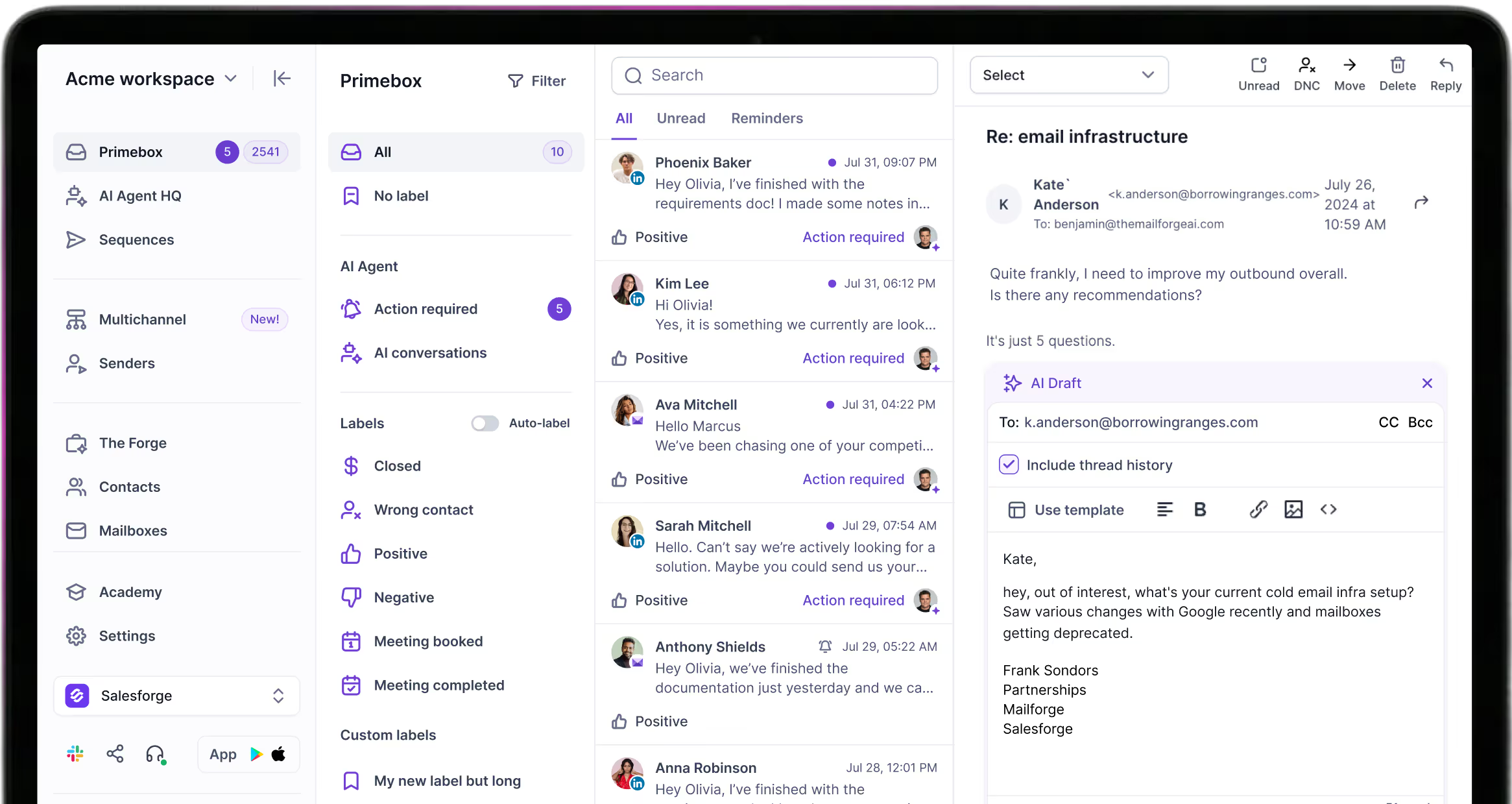
For a thorough understanding of what each option offers, a simplified comparison table isn't enough to grasp all intricacies that come with each tool, especially with a tool as elusive as Ulinc. Let's dive deeper to properly grasp what makes both tools unique.
Salesforge, built by a former Googler and VP of sales, is a multi-channel outreach platform that combines email infrastructure and LinkedIn sending capabilities to automate prospecting workflows at scale.
At its core Salesforge highlights unlimited LinkedIn senders, mailboxes, workspaces and seats, the Primebox for unified reply management across channels, advanced automatic AI message generation with hyper-personalization, and a stack of tools to streamline every prospecting step:
Salesforge emphasizes deliverability and infrastructure as much as sequence design, helping users set up all the plumbing that makes outreach campaigns actually land in recipients’ inboxes.
Salesforge also offers an optional AI SDR that can run prospecting and booking workflows completely automatically - Agent Frank.
For teams that treat leads and data seriously and want high quality outreach coupled with consistent results, Salesforge reduces the friction between leads discovered and leads converted.
Salesforge seems too good to be true? Then let the results speak for themselves:

Ulinc is a fairly enigmatic tool with not much information publicly available regarding it. Regardless, what is true is that it's a LinkedIn automation solution that offers the typical features you'd expect from a LinkedIn automation tool: connection requests, personalized messaging, scheduling follow-ups, and campaign tracking.
Ulinc runs behind an invite-only model with webhooks seemingly being the primary method for integrations in Ulinc.
The lack of consistent, centralized, official product documentation or widely verifiable case studies is an important factor for businesses that need reliable data flows and vendor transparency. If your outreach relies on predictable account behavior, consistent product support, and clear data ownership, a tool with minimal public footprint can introduce risk:
In short, Ulinc covers standard LinkedIn automation actions, but the uncertainty around its concrete specifics matters when you’re comparing it to a well-documented platform like Salesforge.
When businesses compare outreach tools they typically map features to outcomes: can the tool automate personalized messaging at scale while preserving deliverability? Does it centralize replies and data, and is it user friendly for account and team management?
Salesforge shows a multi-channel approach that includes LinkedIn and email in the same sequences, conditional steps, and a unified reply inbox (Primebox) which captures replies even if prospects respond from different addresses.
Salesforge also offers free warm-up via Warmforge, deliverability testing and monitoring, an API, whitelabel options, and many other integrations - features that directly affect campaign performance, lead hygiene, and operations.
Ulinc, based on scarce writeups, is focused solely on LinkedIn actions with basic analytics for campaign tracking. That makes Ulinc more specialized in LinkedIn, while Salesforge specializes in both email and LinkedIn.
For teams that want to automate across channels and keep leads and account data consolidated, Salesforge's orientation simplifies workflows and reduces data fragmentation. Ulinc may remain useful as a LinkedIn-only automation option where the team already handles email from a separate system, although that can become a hassle to seamlessly manage.
Ulinc has no official vendor-published pricing page readily available. The most direct price mention that can be found is a Reddit comment that lists the Ulinc pricing as starting at $75.
Salesforge provides 2 plans oriented around outreach scale and a 14-day free trial as well (with 2 free months granted when using annual billing):
Deliverability is one of those behind-the-scenes things that most articles mention but few teams prioritize early enough. It’s the difference between an outreach audience that receives and reads your messages versus one that never sees them because messages are filtered or bounced.
Salesforge differentiates itself by treating email infrastructure as a first-class component.
Those deliverability investments let Salesforge customers set up multi-domain sending, maintain sender reputation, and scale without the common pitfalls of shared-sender platforms.
Ulinc, as a LinkedIn-focused tool, doesn’t handle email deliverability or infrastructure, which is sensible given its scope, but it also means you’ll need a separate solution for high-volume email or for sequences that mix LinkedIn and email.
LinkedIn is a key channel for B2B outreach and the ability to automate connections and messaging while preserving personalization is central to success.
Salesforge supports unlimited LinkedIn senders and seats as part of its multi-channel sequences, allowing teams to add many accounts without any constraints.
Salesforge also integrates LinkedIn steps into conditional sequences that combine email and LinkedIn touchpoints and captures replies in a consolidated inbox (Primebox) so teams don’t lose prospects who answer on LinkedIn or via a different email.
Ulinc is a LinkedIn-native automation tool that focuses on automating connection requests, follow-ups, and personalized messaging inside LinkedIn. That specialization can be intriguing if your entire outreach program is LinkedIn-first and you want a narrowly focused tool, but it also introduces friction if you need to connect LinkedIn outreach to email workflows, CRM updates, or deliverability monitoring.
Salesforge’s multi-channel model reduces that friction by treating LinkedIn as one channel in a broader outreach account and audience strategy, which is important when your outreach efforts depend on orchestrating sequences across channels and storing prospect data consistently.
Personalized messaging is the single most cited driver of reply rates in outreach: personalized lines, contextual references, utilization of multiple sources and sequence timing that match your audience all matter.
It is fair to assume that Ulinc's message personalization isn't as advanced as Salesforge's state-of-the-art multi-source AI hyper-personalization, therefore, for teams that rely on both rich lead data and high-volume messaging, Salesforge’s combination of lead tools, personalization features, and robust integrations tends to produce more predictable and receptive outreach outcomes.
Enter your email to get a custom plan & stack recommendation for your business
Please check your mailbox in 5 minutes
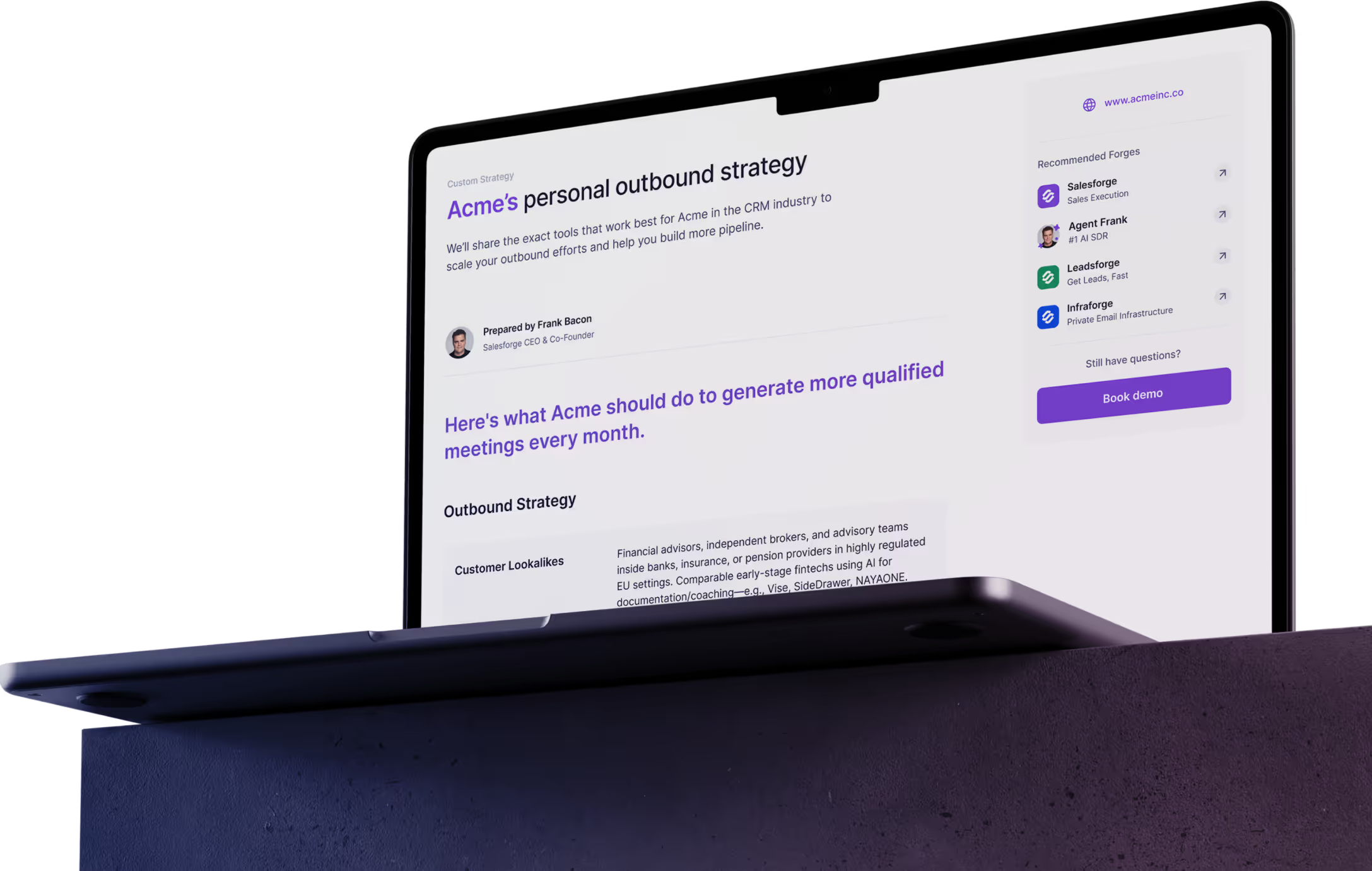
Your outreach tool should be part of an ecosystem that moves leads from discovery to CRM, scoring, and sales follow-up.
This obscurity and lack of mention of any Ulinc integration capabilities on other tools such as CRMs means its integrations are likely not nearly as robust as Salesforge's.
Salesforge offers an in-app Academy, help desk, video tutorials, a large Slack community and 24/7 email and live chat support for customers - resources that matter when you’re training new users or troubleshooting any issues.
There are also case studies and several G2 ratings that can be referenced, which give prospective customers concrete examples of outcomes and a way to compare results or expand their knowledge.
Ulinc’s presence in community forums, threads, and scattered blogging shows there is user discussion, but the absence of a centralized support portal or a robust public knowledge base makes it harder to depend on consistent help and onboarding resources.
If your priority is to enhance outreach efforts with reliable deliverability, centralized account and audience management, advanced personalization and the option of a comprehensive stack that integrates leads, mailboxes, and LinkedIn sequences, Salesforge is the stronger, more transparent choice.
Ulinc may be functional for narrow LinkedIn automation use-cases, but the limited public information and fragmented online mentions make it harder to trust for mission-critical campaigns that require CRM integration, data hygiene, and predictable scaling - and that's if you can even get ahold of an invite to sign up.
For businesses serious about growing leads and protecting sender reputation across channels as soon as possible, Salesforge offers a clearer path to build, automate, and measure outreach at scale.
Salesforge was created as a multi-channel platform (LinkedIn + email) to centralize lead generation and replies, while Ulinc is a narrower LinkedIn tool focused on LinkedIn automation. For professionals needing consolidated leads, customizable sequences, and deliverability controls, Salesforge enables broader, more predictable outreach than a LinkedIn-only approach like Ulinc.
Yes. Salesforge provides a user friendly interface that lets professionals create and customize multi-channel cadences, automate LinkedIn outreach steps, enable A/B testing, and manage leads in Primebox - all without stitching tools together. It’s built to speed adoption for teams.
Salesforge bundles Warmforge and infrastructure (Mailforge/Primeforge/Infraforge) to enable mailbox warm-up, dynamic IPs, and placement testing so your LinkedIn outreach + email sequences actually reach prospects - improving lead quality and conversion versus using a standalone LinkedIn tool.
Absolutely - Salesforge supports unlimited LinkedIn senders, customizable LinkedIn automation steps within multi-channel sequences, and API/webhook integrations so professionals can recreate or improve Ulinc-style LinkedIn outreach while keeping leads and CRM sync centralized.
Salesforge lists Pro and Growth plans (with a free trial); pricing enables scaling from solo pros to teams and offers add-ons like Agent Frank for automated prospecting. Compare these published plans against Ulinc’s sparse public pricing to judge transparency and ROI for lead generation.