
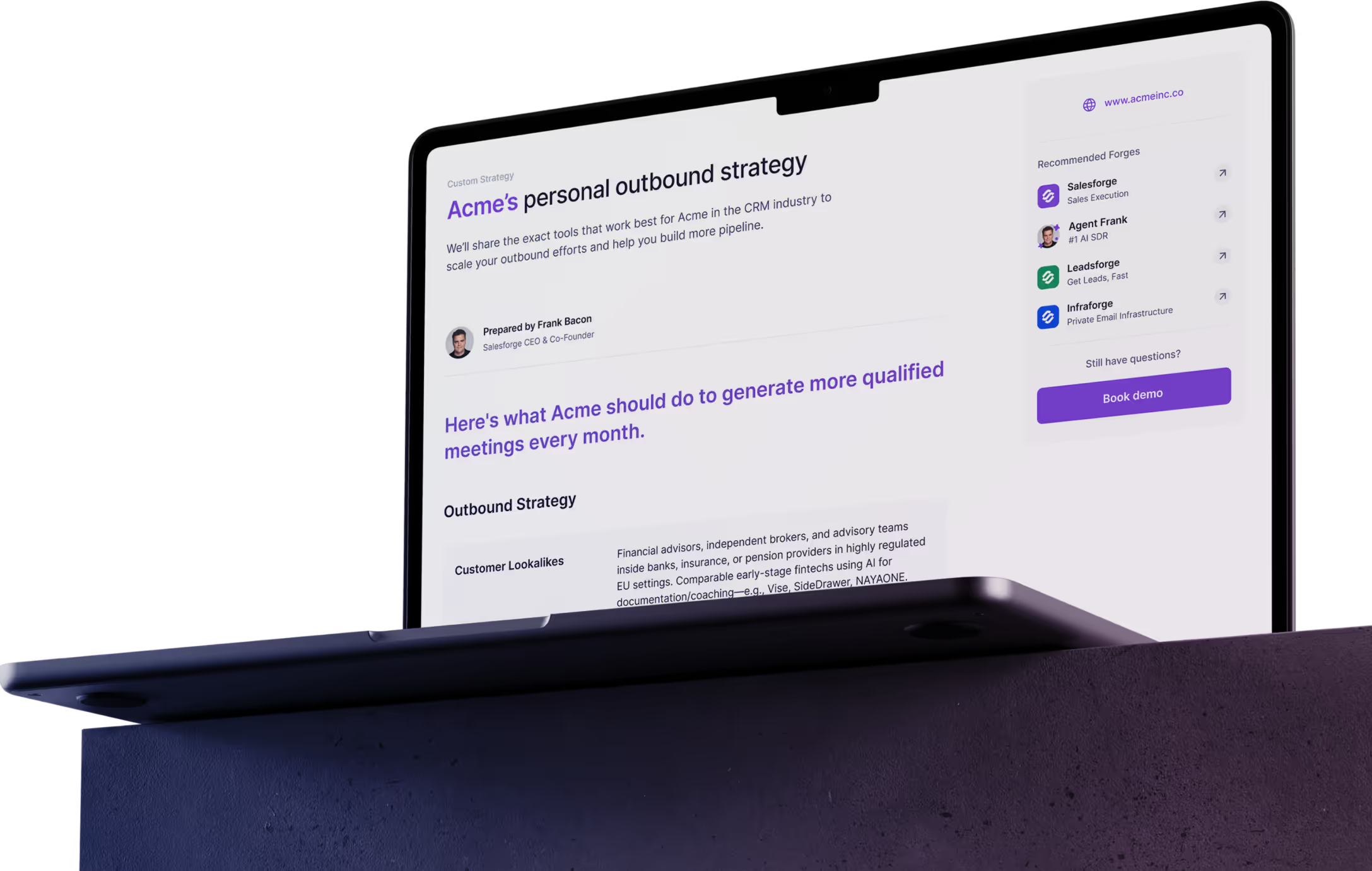
Personalized Outbound Strategy
Get The Right Outbound Strategy In Minutes
Enter your email to get a custom plan & stack recommendation for your business
It's being carefully crafted by AI
Please check your mailbox in 5 minutes


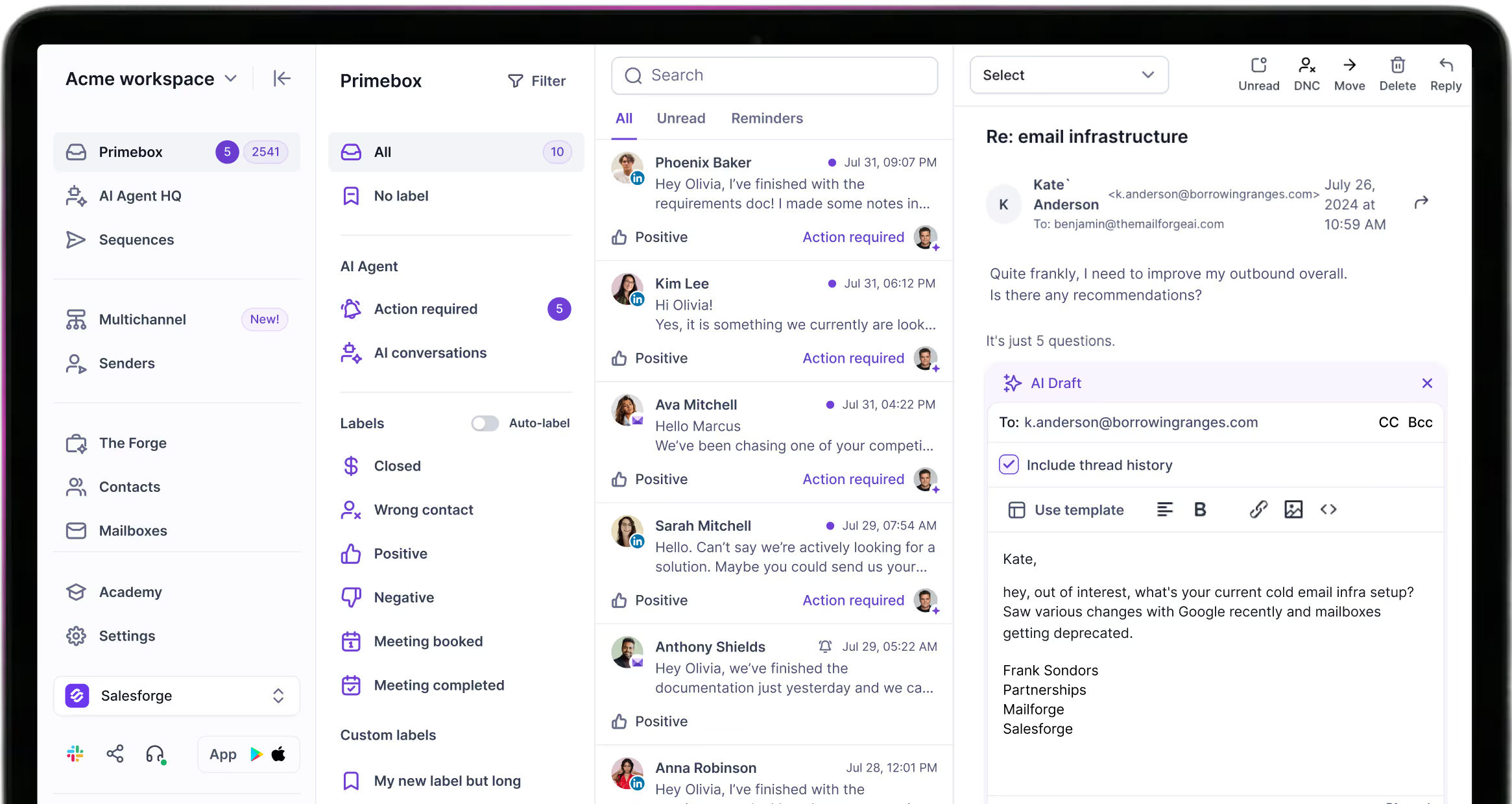
For a thorough understanding of what each option offers, a simplified comparison table isn't enough to grasp all intricacies that come with each tool, so let's dive deeper into what makes LinkedAutomate and Salesforge unique.
Salesforge and LinkedAutomate serve the same goal - get you meetings - but they take very different routes.
Practically speaking, pick LinkedAutomate if you only need standard straightforward LinkedIn outreach. Pick Salesforge if you care about higher response rates, coordinated multi-channel prospecting, extensive deliverability controls, and centralized lead hygiene that reduces risk as you scale.
Doubting Salesforge's capabilities? Let the results speak for themselves:

LinkedAutomate provides four paid plans + a free tier (with a discounted annual Specialist plan that gives the best rates, but is billed yearly):
Salesforge provides 2 plans oriented around outreach scale and a 14-day free trial as well (with 2 free months granted when using annual billing):
Modern outreach often benefits from multi-channel prospecting - mixing email and LinkedIn touchpoints to raise response rates.
That means Salesforge’s cloud based architecture supports orchestration across LinkedIn plus email sequences - useful when you want to connect, then move a prospects conversation or simply follow up with email.
If you only need to grow LinkedIn connections and send LinkedIn messages, LinkedAutomate’s LinkedIn-first toolset is an inexpensive, but severely lackluster option. if you want true multi-channel outreach that includes well-managed cold multi-channel sequences, Salesforge’s broader platform is more appropriate.
One of Salesforge’s clearest selling points is its attention to email deliverability. Salesforge offers unlimited free warm-up (via Warmforge), mailbox rotation, dynamic IPs, ESP matching and other tools to help ensure emails reach the primary inbox rather than spam - foundational for assuring high open and reply rates.
LinkedAutomate doesn’t solve email deliverability - it’s solely for LinkedIn automation - so if your sequences rely heavily on cold email deliverability, LinkedAutomate will need to be paired with another email tool.
If your strategy follows the current meta of of sending messages via LinkedIn with thoughtfully crafted follow-ups via email, Salesforge is built to both automate sending and actively reduce the volume risks that cause account problems.
LinkedAutomate is explicit about supporting various workflows: bulk connection requests, sending messages, auto-views, endorsements, and auto-like/share/comment engagement. On paid plans it also runs campaigns in the background until the daily/monthly limits you choose are reached, and its built-in messenger gives a basic built in CRM experience for organizing replies and messages.
Salesforge handles everything LinkedAutomate can with the added bonus of no Chrome extension necessary. LinkedIn scheduling and send volume throttling are also part of its multi-channel pipeline, meaning it coordinates LinkedIn connection attempts alongside email cadence so you don’t blast connections and messages in an unsafe pattern. Finally, Salesforge also offers unlimited LinkedIn senders, which makes it an incredibly useful and affordable option for larger teams.
For teams that need very bare-bones LinkedIn outreach alone, LinkedAutomate is an attractive option, but for cross-channel orchestration where LinkedIn is one touchpoint among many, Salesforge’s approach is safer and more integrative.
Creating repeatable campaigns, organizing sequences, and automating follow up messages is table stakes for outreach tools.
Salesforge also offers educational assets (Salesforge Academy, guides, tutorials) to help users structure outreach and increase response rate.
Salesforge’s strength is in sequencing multiple channels and ensuring messages are personalized, timed, and delivered - which is where prolonged drip sequences and A/B testing on subject lines and message content become very useful.
Enter your email to get a custom plan & stack recommendation for your business
Please check your mailbox in 5 minutes
Having a place to read replies, organize conversations, and move prospects through pipeline stages is critical.
Salesforge’s pipeline management is aimed at consolidating data and giving you structured ways to search, tag, and prioritize contacts - crucial when you’re juggling many accounts or mailboxes.
Both platforms talk about safety, but from different angles.
Practically, if your team runs high-volume outreach across LinkedIn, a platform that coordinates both channels (and builds in warm-up and mailbox controls) will reduce the chance of account limits being hit compared to running a standalone Chrome extension and a separate email provider without coordination.
LinkedAutomate expects you to manage everything email-related separately. It integrates the LinkedIn messenger into its app and is entwined fairly closely with LinkedIn Sales Navigator, but that's pretty much where its integrations end.
Salesforge, on the other hand, supports many native integrations, as well as the Forge Stack, which keeps prospect data, campaign history, and inbox conversations aligned so that when a lead moves to opportunity stage the handover is seamless. Notable Salesforge integrations include:
And many more. Salesforge is built to play cleanly with existing pipelines while keeping inbox and sender infrastructure consolidated.
It’s focused, although very basic reporting, that answers how many invitations were sent and how many messages or responses you received on LinkedIn.
Because it aggregates data across channels, Salesforge can give you richer insights on what combination of LinkedIn touches and emails drove meetings or responses, which is valuable for truly optimizing multi-channel outreach.
If you desire to manage complex pipelines in a consolidated inbox, hyper-personalize messages at scale, and avoid having to buy additional warm-up or other email deliverability tooling, Salesforge bundles those capabilities in a way that saves operational complexity and ultimately saves time.
LinkedAutomate is fairly inexpensive, but pricing quickly scales with team size. It's fast to onboard, but really barren in capabilities. It's a decent choice for individuals, but teams with ambitious outreach goals will likely prefer Salesforge.
If your outreach is purely LinkedIn - LinkedAutomate is a cost-effective Chrome extension solution that will get you started fairly quickly, but will require expanding very soon, which is where costs will stack up.
If your strategy follows the meta of including LinkedIn with email touches, requires advanced deliverability safeguards, or needs structured lead organization and advanced cross-channel analytics, Salesforge is the safer, more comprehensive platform.
Yes. Salesforge combines LinkedIn automation with broader marketing automation to automate multi-channel lead generation. It coordinates LinkedIn account actions with email sequences, personalization credits, and campaign templates so you can search, create and automate outreach that moves prospects from connection to qualified lead.
Yes. Salesforge lets you automate and throttle invitations, schedule sends and set daily goals so outreach mimics human behavior. On Growth you get unlimited users/seats and unlimited mailboxes, so teams can scale invitation volume safely while controlling pacing and protecting deliverability.
Absolutely. Instead of basic automation, Salesforge offers lead search, tagging, built-in CRM, and campaign builders to create multi-touch sequences. It’s designed to automate full lead-generation workflows - search → create audience → automate messages - so you get more than one-dimensional LinkedIn automation.
Create a campaign, import or search target leads, add LinkedIn and email steps, personalize templates with credits, enable Warmforge warm-up and mailbox rotation, then monitor replies in the unified inbox. You can iterate with A/B testing and automation rules to optimize message cadence and response rates.
Yes. Salesforge is built for team scale - Growth adds unlimited users, API access and integrations - so multiple users can search and organize prospects, automate outreach and invitations, track campaigns and centralize lead generation and reporting across accounts.