
Personalized Outbound Strategy
Get The Right Outbound Strategy In Minutes
Enter your email to get a custom plan & stack recommendation for your business
It's being carefully crafted by AI
Please check your mailbox in 5 minutes

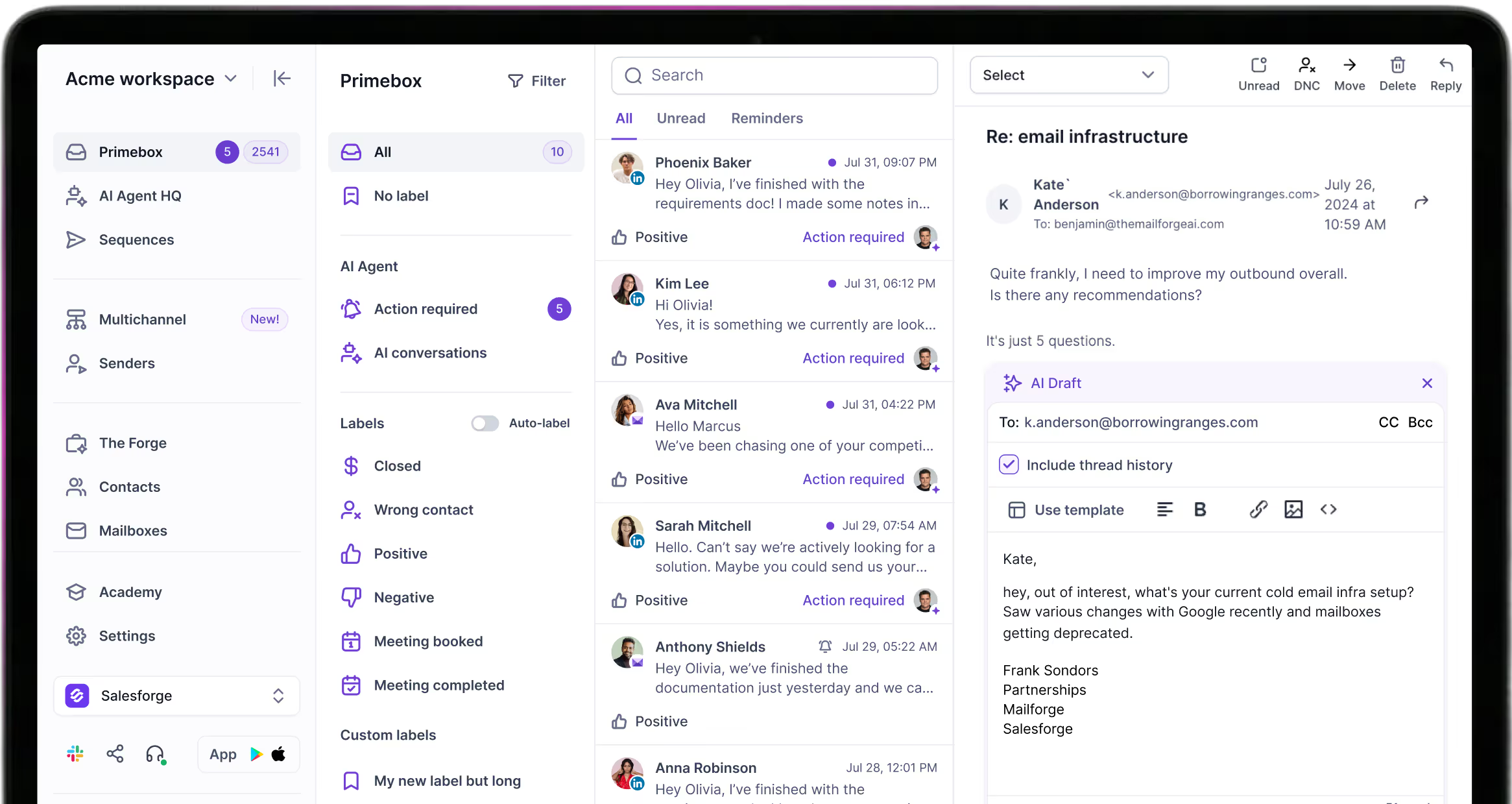
For a thorough understanding of what each option offers, a simplified comparison table isn't enough to grasp all intricacies that come with each tool, so let's dive deeper into what makes Usergems' Gem-E and Salesforge's Agent Frank unique.
Agent Frank, built by a former Googler and VP of sales, is sold as a full AI SDR that sits inside the Forge Stack and is one of the best tools to run outbound on autopilot in the market.
Doubtful? Let the results speak for themselves:

Agent Frank highlights include:
And a tightly integrated Forge Stack (Leadsforge for lead generation, Mailforge/Infraforge/Primeforge for email infrastructure, Warmforge for deliverability).
Gem-E is positioned as UserGems’ outbound AI SDR that layers buying signals and CRM contact data to build lists, prioritize top accounts and draft personalized outbound content such as:
So reps can act on the right person at the right time.
Agent Frank provides flexible pricing oriented around outreach scale. Pricing is charged by Active Contacts (the number of prospects the Agent is processing at any given time), and annual billing includes 2 months free. There is no free trial and demos are required before purchase.
Note that infrastructure to process those contacts via email is not included in this base price. The Salesforge Stack offers multiple infrastructure options based on your budget/needs, so you don't need to stitch third-party products to make it work. The best options for Agent Frank include:
The Forge team will help set up the mailboxes and, additionally, the Mailforge (shared IP) and Primeforge (Gmail and Outlook) email infrastructure options are also available. Additionally, teams can connect their own mailboxes from other providers if desired.
Gem-E provides tiered, usage-oriented pricing built around records & seats. Monthly billing plans include:
Each tier expands seats, records and AI agent capabilities. Gem-E’s outbound & ABM agents, list building, prioritization and AI email/talk-track features are included per the plan’s AI agent skill set.
Sending infrastructure is not bundled within UserGems - you need to bring your own.
One of the clearest contrasts is infrastructure.
Deliverability and infrastructure are where differences become operationally decisive. Deliverability is the linchpin of cold outreach success - a brilliant sequence is worthless if emails land in spam - and this is one area where Agent Frank intentionally differentiates itself.
And more. Building sender reputation gradually while spreading volume across addresses and IPs to avoid single-mailbox throttles or sudden reputation hits is crucial for a scaling business. And that's paired with proprietary infrastructure options:
Those infrastructure features reduce the risk of landing in spam and make multi-channel outreach more reliable, especially when you have a leads database and want to integrate email at scale.
For sales teams or lead generation agencies focused on large scale operations and high-volume cold outreach, Agent Frank’s model minimizes the operational burden of maintaining email metrics, domain health, and warm-up cycles so teams can scale sends across many mailboxes with less risk.
Both vendors emphasize AI that writes messages, but they approach personalization differently in practice.
UserGems positions Gem-E as a tool that helps reps learn from the generated content - the AI outputs act as examples that upskill humans while automating lower-priority outreach.
The latter capability allows for multi-source hyper-personalized AI generated messages.
If your priority is message quality plus reliable delivery at scale, Agent Frank publishes the combination (AI content + sending control) as a premium packaged solution.
Enter your email to get a custom plan & stack recommendation for your business
Please check your mailbox in 5 minutes
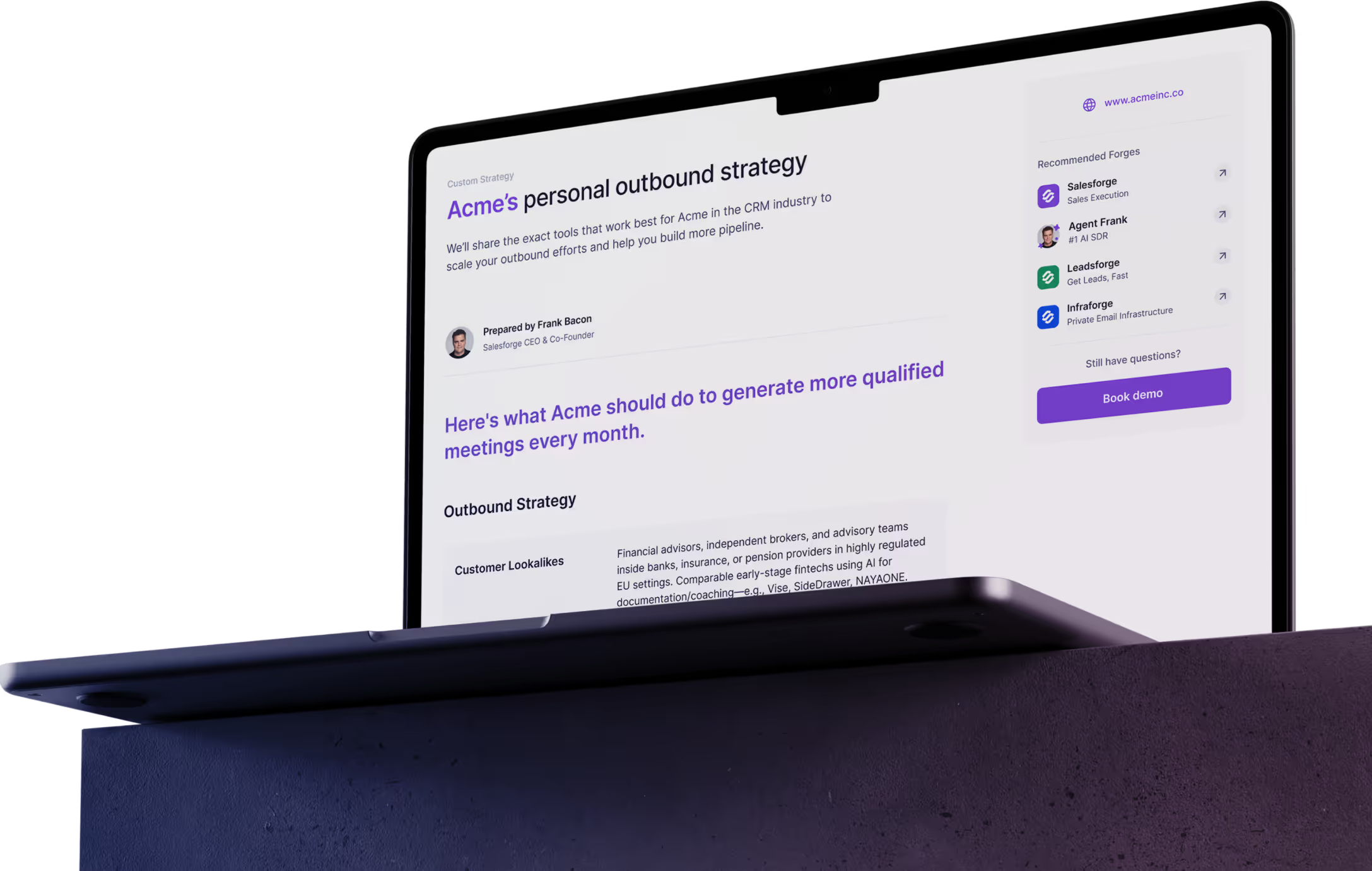
Agent autonomy is a key buyer decision: do you want a black box that runs unattended, or an assistive co-pilot that requires human sign-off?
Salesforge offers both Auto-Pilot and Co-Pilot modes for Agent Frank:
Salesforge also describes goals (click-out, send meeting link, receive meeting link), tonality options and even operating hours - which gives teams granular control over what the agent is authorized to do and when.
Agent Frank also allows uploading custom personalization sources so the AI SDR uses approved content and sources.
Practically, Agent Frank's formal Auto-Pilot mode and the packaged infrastructure mean a team can deploy an agent that runs large-scale outbound with fewer external dependencies. For hiring managers who want an agent that can be trusted to operate with high autonomy and predictable mailbox management, Agent Frank offers a clear operational selling point.
Customer support is a practical part of the business case for any AI SDR - support quality affects onboarding speed, how reps adopt the tool, and how quickly you can scale outreach without damaging sender reputation or interrupting the outreach process.
UserGems spotlights resources such as:
That's couple with live chat and email support, and a model of human + AI adoption where Gem-E’s outputs are used to train reps and scale best practices.
Salesforge's approach overall reduces the manual tasks sales teams often struggle with - no separate deliverability vendor, fewer manual data entry steps, and a partner focused on ironing out initial list hygiene and infrastructure.
Besides that, Agent Frank customers also get:
For growing sales teams and lead generation agencies that prefer to shift heavy operational overhead away from internal staff, Agent Frank’s model is a strong fit.
They offload the manual tasks that consume SDR time and let reps focus on higher-value activities like closing deals and handling qualified leads.
If your top priority is owning and controlling deliverability, mailbox rotation, warm-up and sending capacity as part of the same vendor relationship - and you want an agent that can run on autopilot with vendor-managed infrastructure - Salesforge’s Agent Frank clearly packages those capabilities in one productized offering.
That makes it easier to deploy AI agents at scale without separately sourcing a deliverability stack or managing shared IP complexity. It’s a clear operational path to drive pipeline while protecting sender reputation.
From the perspective of scale, both Agent Frank and Gem-E aim to increase generated revenue and reduce manual work for reps, but Salesforge scales sending and infrastructure, while UserGems scales signal-driven relevance.
Agent Frank ingests multi-source data, surfaces pattern-based signals, and uses ML to score and prioritize accounts. It syncs with Salesforce so sales reps see matched prospects, opportunity timestamps and next actions. The result: smarter targeting, faster pipeline movement, and higher-quality deals for revenue teams without manual research.
Yes - Agent Frank consumes signal-based ad and behavioral data to prioritize prospects and schedule outreach based on dates and intent. Marketing and sales can coordinate plays: signal triggers build lists, Agent Frank personalizes outreach, and teams monitor which campaigns create the most opportunities and revenue depending on goals.
Agent Frank automates research, sequences, personalized follow-ups and reply handling so sales reps focus on closing. For revenue teams, it scales outreach while maintaining deliverability and syncs outcomes into the CRM. Expected lift depends on data quality, ICP fit and scale, but the platform aims to convert more leads into pipeline and repeatable revenue.
Agent Frank bi-directionally syncs contacts, activity dates, lead scores and meeting outcomes to Salesforce. It tags matched patterns and injects signal-derived insights into opportunity records, reducing manual edits and ensuring timely handoffs. Revenue ops get cleaner data, better forecasting, and faster time-to-opportunity.
Agent Frank aligns marketing signals with outbound plays: it ranks prospects by intent, surfaces best-customer matches, and automates personalized outreach that converts. Shared insights improve campaign attribution, reduce wasted spend, and increase deal win rates - helping businesses scale opportunity capture and overall revenue.