Personalized Outbound Strategy
Get The Right Outbound Strategy In Minutes
Enter your email to get a custom plan & stack recommendation for your business
It's being carefully crafted by AI
Please check your mailbox in 5 minutes
Single-channel lead generation breaks faster than it used to.
I relied on cold email for years.
It worked until reply rates slowed.
I added LinkedIn outreach.
That helped, but connection limits showed up fast.
I tested paid ads.
Costs went up before results did.
In 2026, B2B buyers move across email, LinkedIn, and content before they reply.
If your pipeline depends on one channel, growth becomes fragile.
This is why multichannel lead generation matters.
In this guide, I will walk through 5 multichannel lead generation strategies that actually work in 2026.
These are based on what I see in real outbound setups, not theory.
Multichannel lead generation means using more than one channel to reach and convert prospects.
In B2B, this usually means cold email, LinkedIn outreach, and content.
Each channel plays a different role.
Email gives reach.
LinkedIn adds context.
Content builds trust.
The problem I see is not strategy.
It is execution.
Most teams run email in one tool and LinkedIn in another.
Replies end up scattered.
Follow-ups slip.
Once volume grows, this fragmentation shows up fast.
Cold email is still one of the best B2B lead generation channels.
It gives me the lowest cost per meeting.
LinkedIn outreach adds a social layer.
Prospects often check your profile after seeing an email.
When both touches line up, reply rates improve.
I do not hit both channels on the same day but space touches it across time.
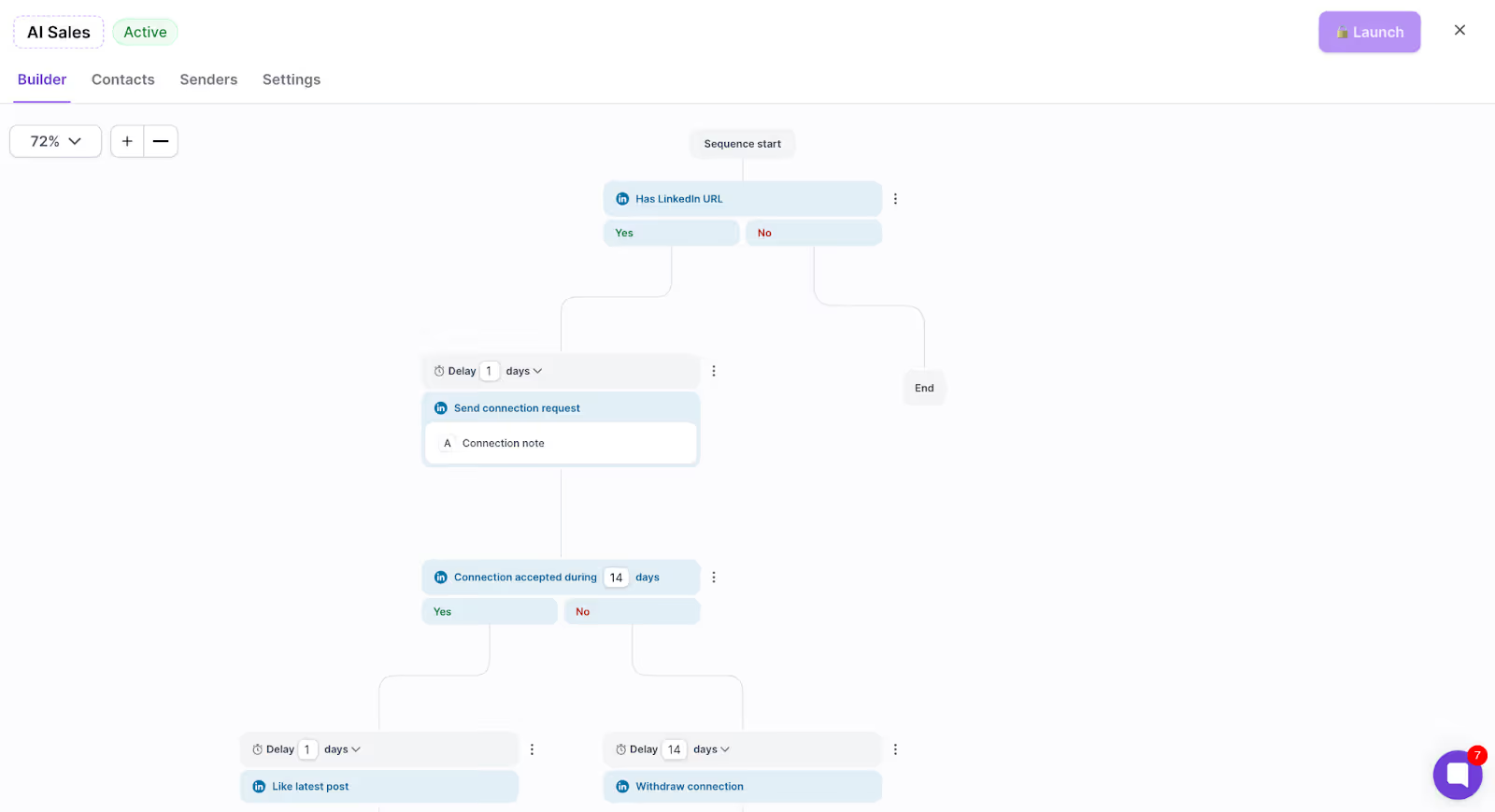
A simple multichannel sequence I use
This keeps pressure low.
It also improves recall.
Where this breaks is scale.
Running one inbox is easy.
Running ten inboxes creates work.
I noticed follow-ups slipping when I rotated senders manually.
Replies went unseen.
This is where I started using Salesforge as the execution layer.
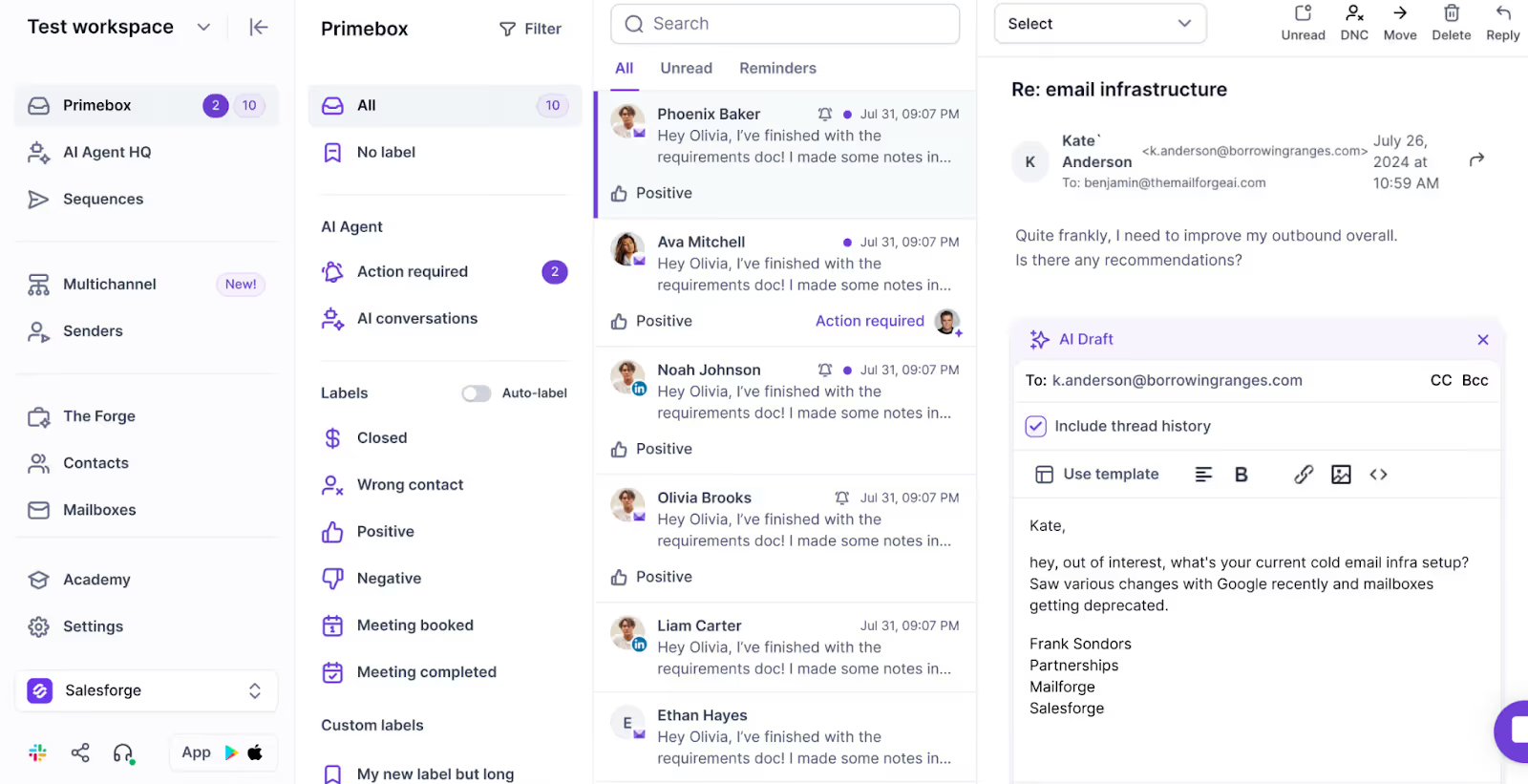
It lets me run email and LinkedIn sequences in one place and manage replies in Primebox.
I did not change the strategy.
I fixed the workflow.
Enter your email to get a custom plan & stack recommendation for your business
Please check your mailbox in 5 minutes
Outbound creates demand.
Content removes doubt.
Most prospects will check your site before replying.
If they find thin pages, trust drops.
I use content marketing to support outbound lead generation.
Not to replace it.
What I’ve noticed works
What I’ve seen not work
Once I moved content into follow-ups, conversations improved.
Prospects came to calls with more context.
Sales cycles felt shorter.
This is a simple way to improve multichannel outreach without adding more volume.
In 2026, timing matters more than volume.
I get better results when outreach is tied to signals.
Job changes.
Hiring activity.
Tech stack updates.
Funding rounds.
The same message performs better when the timing matches the need.
How I run intent-based outreach
The Dos and Don'ts of Sending Cold Emails and LinkedIn Messages
Where teams go wrong
This strategy works best when prospecting and outreach stay connected.
If leads sit in one tool and send lives in another, timing slows down.
I found it easier to act on signals when my sequences and inboxes lived in one system.
That is another place where Salesforge helped by reducing the back-and-forth between tools, so I could reach out while the signal was still fresh.
More channels do not mean better results.
I see teams send an email, a LinkedIn message, and make a call on the same day.
To the prospect, that feels like pressure.
Spacing touches works better.
A simple channel sequence
This approach feels more human.
It also reduces opt-outs.
What usually breaks this is tracking.
When email and LinkedIn live in different tools, timing drifts. Follow-ups lose order.
Running both channels inside Salesforge made it easier for me to keep sequences in sync without micromanaging every step.
This is where most multichannel lead generation strategies fail.
Email runs in one tool.
LinkedIn runs in another.
Warmup runs somewhere else.
Replies go to personal inboxes.
Execution falls apart.
Without this, scale breaks early.
I now treat Salesforge as the execution layer for multichannel outreach.
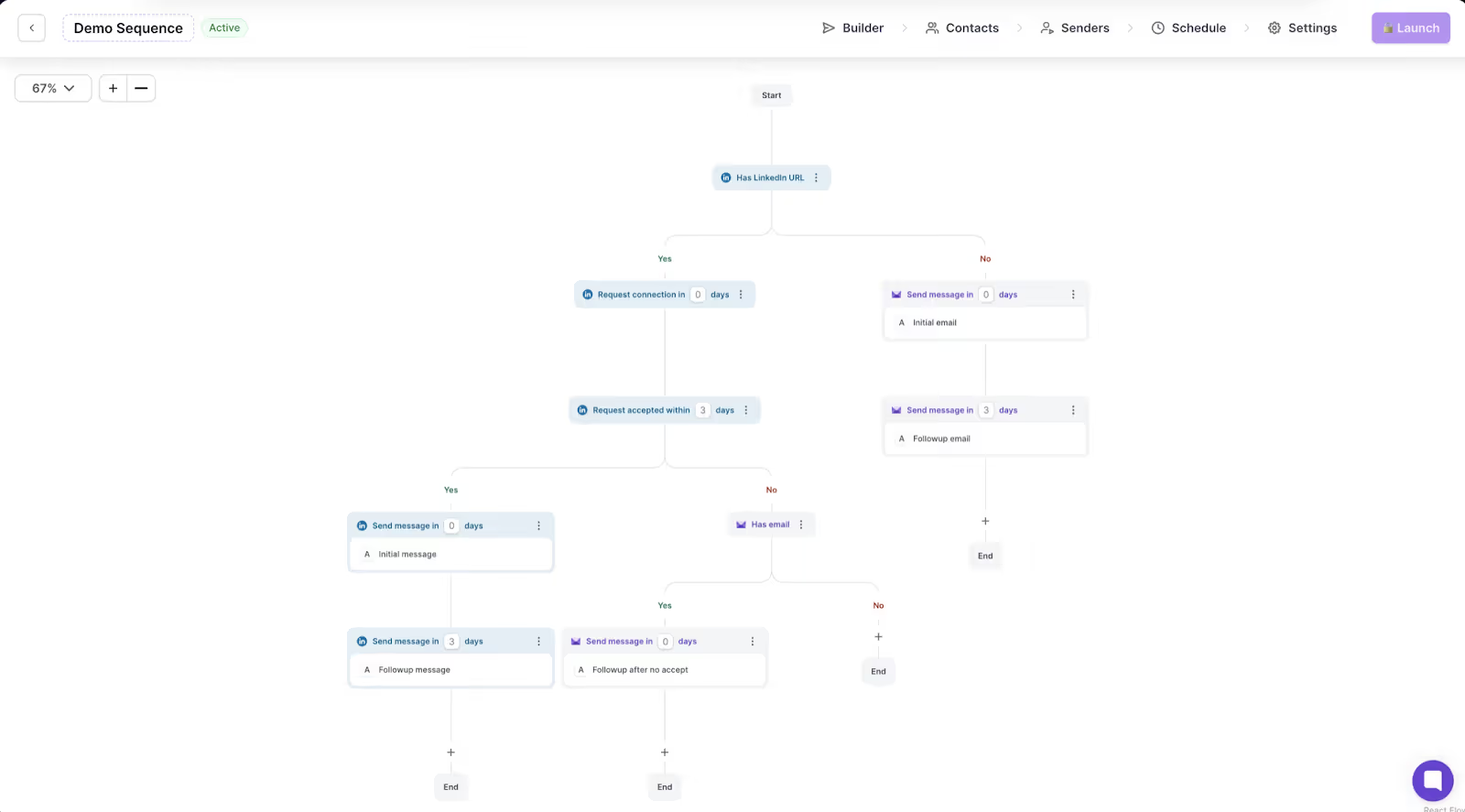
It is where email and LinkedIn sequences run.
It is where replies stay visible in Primebox.
It is where rotation and follow-ups stay consistent.
This did not change my strategy.
It made the same strategies easier to run at volume.
I start simple.
Cold email and LinkedIn first.
Then I fix the execution.
Then I add content or intent signals.
What I see work by team type
I avoid launching five channels at once and start with two channels and get them working first.
I track performance by channel.
Total leads hide weak channels.
Channel-level data shows what is actually working.
I see the same issues repeat.
Most failures come from execution gaps.
Not from the strategy itself.
5 Common Cold Outreach Mistakes and How to Avoid Them
Enter your email to get a custom plan & stack recommendation for your business
Please check your mailbox in 5 minutes
If you reach here, you now have a clear picture of how multichannel lead generation works in 2026.
You do not need many channels to start.
You need a simple plan.
You need to stay steady with it.
Start small. Try two channels. Watch what gets replies.
Fix small mistakes as you go.
Over time, you will see patterns.
Some messages work better.
Some timing works better. That is how you build a system that brings leads again and again.
If you want one place to run email and LinkedIn outreach, try Salesforge.
It keeps replies easy to manage.
Start a free trial and see if centralized execution works for your team.
.png)