
Personalized Outbound Strategy
Get The Right Outbound Strategy In Minutes
Enter your email to get a custom plan & stack recommendation for your business
It's being carefully crafted by AI
Please check your mailbox in 5 minutes


For a thorough understanding of what each option offers, a simplified comparison table isn't enough to grasp all intricacies that come with each tool, so let's dive deeper into what makes Prosp and Salesforge unique.
The pitch emphasizes unlimited LinkedIn senders and unlimited mailboxes, advanced hyper-personalization, robust integrations, deliverability-first infrastructure, and an integrated pipeline/whitelabel approach for agencies and teams.
Alternatively, you can let Salesforge's results speak for themselves:

That difference in positioning matters: Salesforge sells a one-stop stack that covers email infrastructure, deliverability and multi-channel sequences (email + LinkedIn), while Prosp sells personalized LinkedIn outreach at scale with a lead finder, Chrome extension, and voice notes baked into campaigns.
If your core play is LinkedIn-first outreach and you need a Chrome-based lead finder and AI personalization specifically for LinkedIn messages, Prosp’s product is tuned to that.
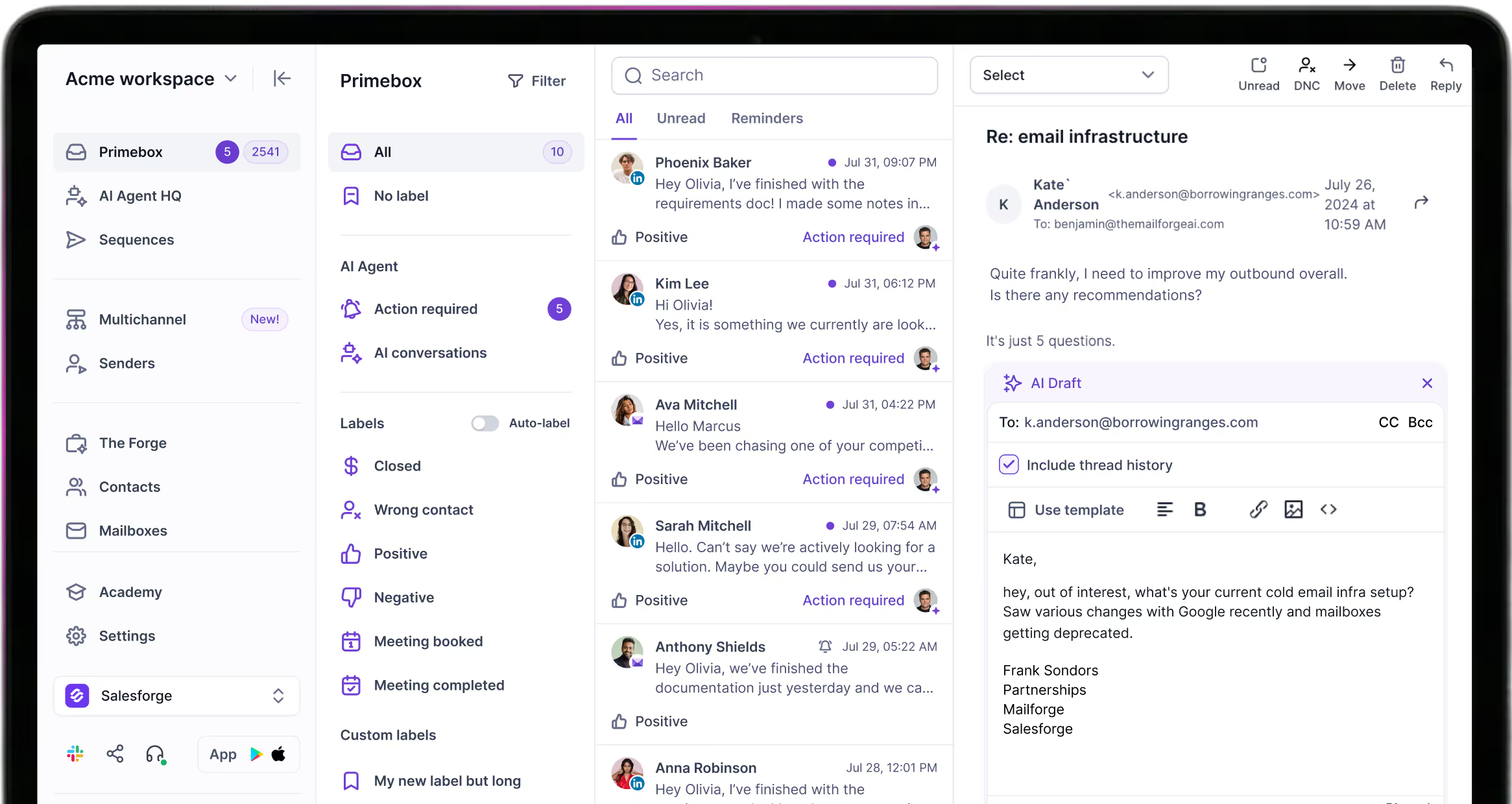
But if you need state-of-the-art email deliverability, multi-domain sending, AI hyper-personalization and a unified consolidated reply inbox (Primebox) that covers both email and LinkedIn replies together - Salesforge packages all of those features in a single place.
Prosp provides per-LinkedIn-account pricing with Monthly and Annual billing options and a “Try for free” entry point (the site also advertises “6 months free” on annual billing):
Salesforge provides 2 plans oriented around outreach scale and a 14-day free trial as well (with 2 free months granted when using annual billing):
If you run cold email at scale, deliverability isn’t an optional nice-to-have - it's the backbone of predictable pipeline.
Prosp doesn’t position itself as an email infrastructure and deliverability vendor. Its focus is LinkedIn outreach.
Salesforge places deliverability front and center: Warmforge (which comes bundled for free with every Salesforge subscription) and Mailforge/Infraforge/Primeforge are positioned as part of a single Forge Stack that helps teams set up domains, DKIM/SPF/DMARC, create mailboxes, warm them up, monitor reputation and keep inbox placement high. Salesforge highlights:
And more, with customer case studies citing high inbox placement and improved reply rates, and guidance on managing multiple mailboxes and domains to protect sender reputation.
Salesforge's integrated approach reduces the number of moving parts and the deliverability risk that often trips up agencies.
Both platforms invest in LinkedIn outreach, but their approaches differ.
What sets Salesforge apart are unlimited LinkedIn senders, unlimited seats, and the ability to send messages in many languages.
If you prefer a strategy that blends LinkedIn signals with robust email follow-up, along with advanced hyper-personalization and the possibility to connect unlimited senders, Salesforge’s multi-channel orchestration is the perfect tool for the job.
Managing replies is how outreach turns into pipeline.
That unified inbox approach is important for teams that run both email outreach and LinkedIn touchpoints and want a single working view for follow-ups.
If consolidating replies from many senders and mailboxes into one convenient place with AI-first helpers matters to your process, Salesforge’s Primebox is built for that exact problem.
Both products offer ways to find targets:
Prosp’s Chrome extension is tuned for LinkedIn discovery and quick enrichment of profiles for immediate LinkedIn sequences.
Leadsforge positions itself as a lead generator built to seamlessly feed multi-channel sequences and connect cleanly to other Forge Stack tools, which is useful if you want prospect data that’s already prepped to go into high-deliverability email and LinkedIn flows.
Personalization is table stakes, but the nuance is how personalization is generated and applied.
The practical advantage for Salesforge is that the same personalization logic can be applied to email templates that run through warmed mailboxes and multi-domain setup, meaning the personalized messages have a better chance to land and be read.
For teams focused on personalization purely in LinkedIn messages, Prosp’s tooling looks very attractive. For teams that want hyper-personalization to work across LinkedIn + email while preserving deliverability, Salesforge’s integrated approach is more robust.
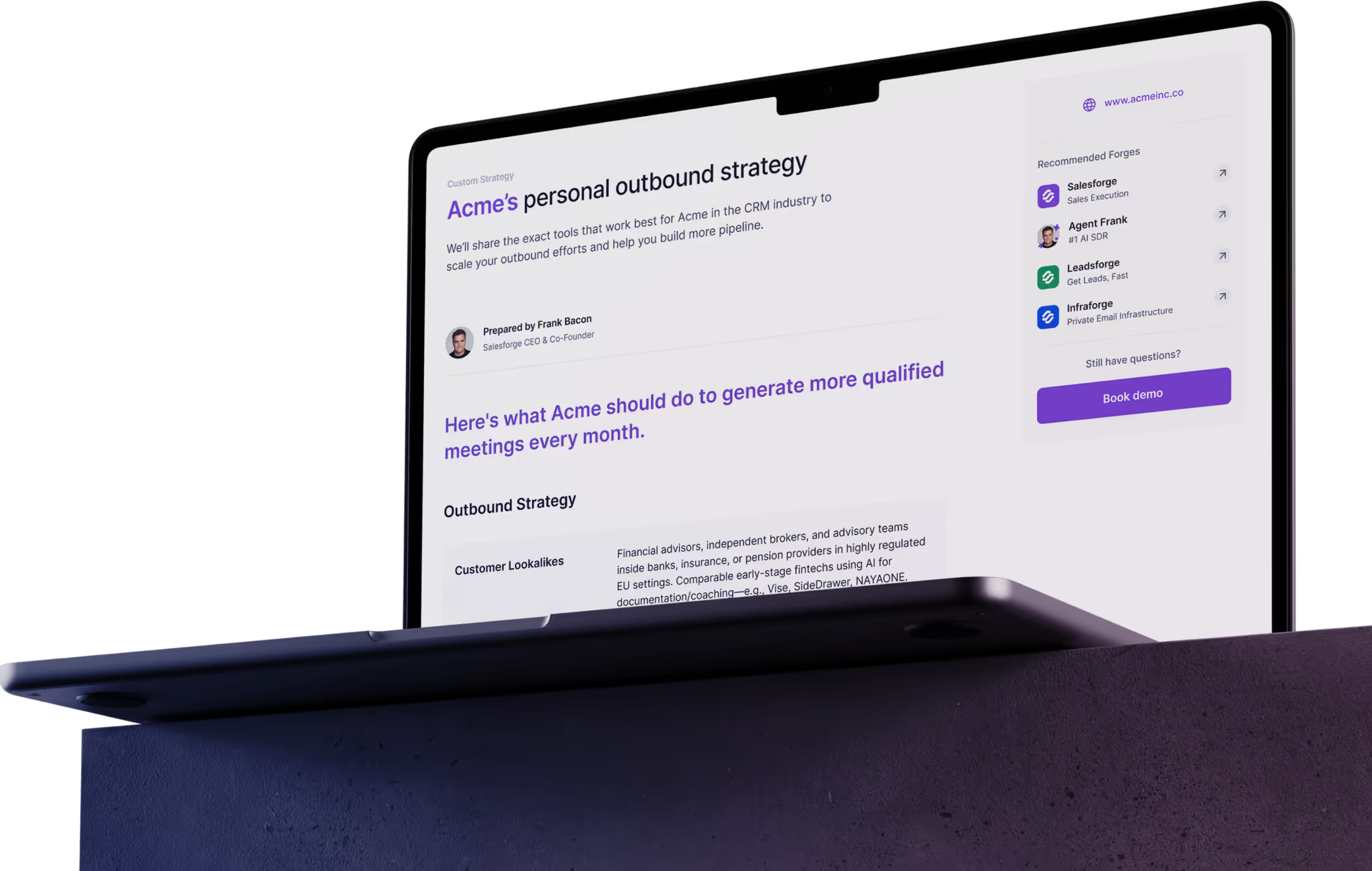
Enter your email to get a custom plan & stack recommendation for your business
Please check your mailbox in 5 minutes
Scaling outreach across sales teams or agencies brings different operational needs: seats vs senders, account-level security, and the admin surfaces for controls.
For agencies that run many accounts, want a single working stack for both email and LinkedIn, or even want whitelabel capabilities, Salesforge’s unlimited-sender positioning plus its Forge Stack of infrastructure products often reduces license complexity and operational friction.
Prosp’s Chrome extension and LinkedIn-native actions make prospect discovery and sequence creation fast for users who spend most of their time in the browser and on LinkedIn. Otherwise, Prosp also offers a knowledge base, as well as email and live chat support.
Salesforge’s intuitive interface, extensive documentation and Salesforge Academy aim to simplify the workflow. Salesforge also offers 24/7 email and live chat support, an active Slack community, and even weekly AMA sessions.
Prosp focuses on in-app campaign views, a unified inbox and reply/engagement tracking for LinkedIn plus extensive webhook/Zapier/Make support so teams can stream events (messages sent, replies, connections, voice notes, etc.) out to CRMs, though native integrations to CRMs are fairly limited.
It’s built for exporting and custom dashboards rather than rich built-in BI.
Salesforge, by contrast, offers a more opinionated analytics stack: Primebox centralizes conversations with AI-assisted reply analysis and priority sorting, and the platform highlights built-in campaign analytics, A/B testing and deliverability/placement tooling designed to let teams measure and optimize performance inside the product without stitching external tooling together.
Prosp focuses on integrating with LinkedIn workflows and exporting contacts - besides connectors such as Make, Zapier and webhooks, it doesn't offer much in the way of integrations.
Salesforge, on the other hand, supports many native integrations, but one important distinction is the proprietary Forge Stack, which keeps prospect data, campaign history, and inbox conversations aligned so that when a lead moves to opportunity stage the handover is seamless. Notable Salesforge integrations include:
And many more. If your priority is to keep the team aligned and ensure prospects are tracked consistently in your CRM, Salesforge covers the essentials while emphasizing consolidated data and comprehensive campaign tracking.
If your play is LinkedIn-only, Prosp is a strong Chrome-extension-powered choice with excellent personalization, free/residential proxies, and automated voice notes.
If your outreach strategy includes email sequences and you want a unified inbox that consolidates email + LinkedIn replies while minimizing deliverability risk, Salesforge’s integrated Forge Stack (Warmforge, Mailforge, Infraforge, Leadsforge, Primeforge) and Primebox unify those functions and remove friction.
Salesforge’s approach makes it easier for growing sales teams or agencies to run unlimited accounts, engage leads with AI hyper-personalization across multiple channels, and scale while protecting sender reputation and deliverability.
Salesforge includes Leadsforge (its own lead finder tool) and supports LinkedIn prospecting, but it’s a broader stack. Prosp is LinkedIn-first with a Chrome lead finder; Salesforge combines lead finding with email infrastructure, enrichment, and the ability to automate outreach across channels. Choose Prosp if you want pure LinkedIn discovery; choose Salesforge if you need a lead finder plus multi-channel orchestration.
Create campaigns in Salesforge with templates and multi-step sequences. If a lead form is submitted wrong, Salesforge validates and flags bad records, lets you correct or re-submit, and can pause sequences until data is clean - preventing faulty sends and improving reply/meeting rates.
Yes - Leadsforge enrichment and verification prep contacts (email, role, company signals) so leads are ready for meetings. Enrichment feeds into sequences and Primebox so replies received from LinkedIn or email are tracked and prioritized for SDRs to book meetings.
Salesforge will quarantine bad rows, run enrichment/validation, and stop or reroute automate outreach steps for affected contacts. You can correct records, re-submit the form, and resume sequences only for validated leads - reducing bounce, protecting deliverability, and improving meeting conversion.
Salesforge combines LinkedIn actions with warmed email (Warmforge/Mailforge), multi-channel sequences, and Primebox for replies. Use Leadsforge to find/enrich prospects, create sequences that include LinkedIn and email, and automate outreach so qualified replies received are routed to reps for meeting scheduling.