
Personalized Outbound Strategy
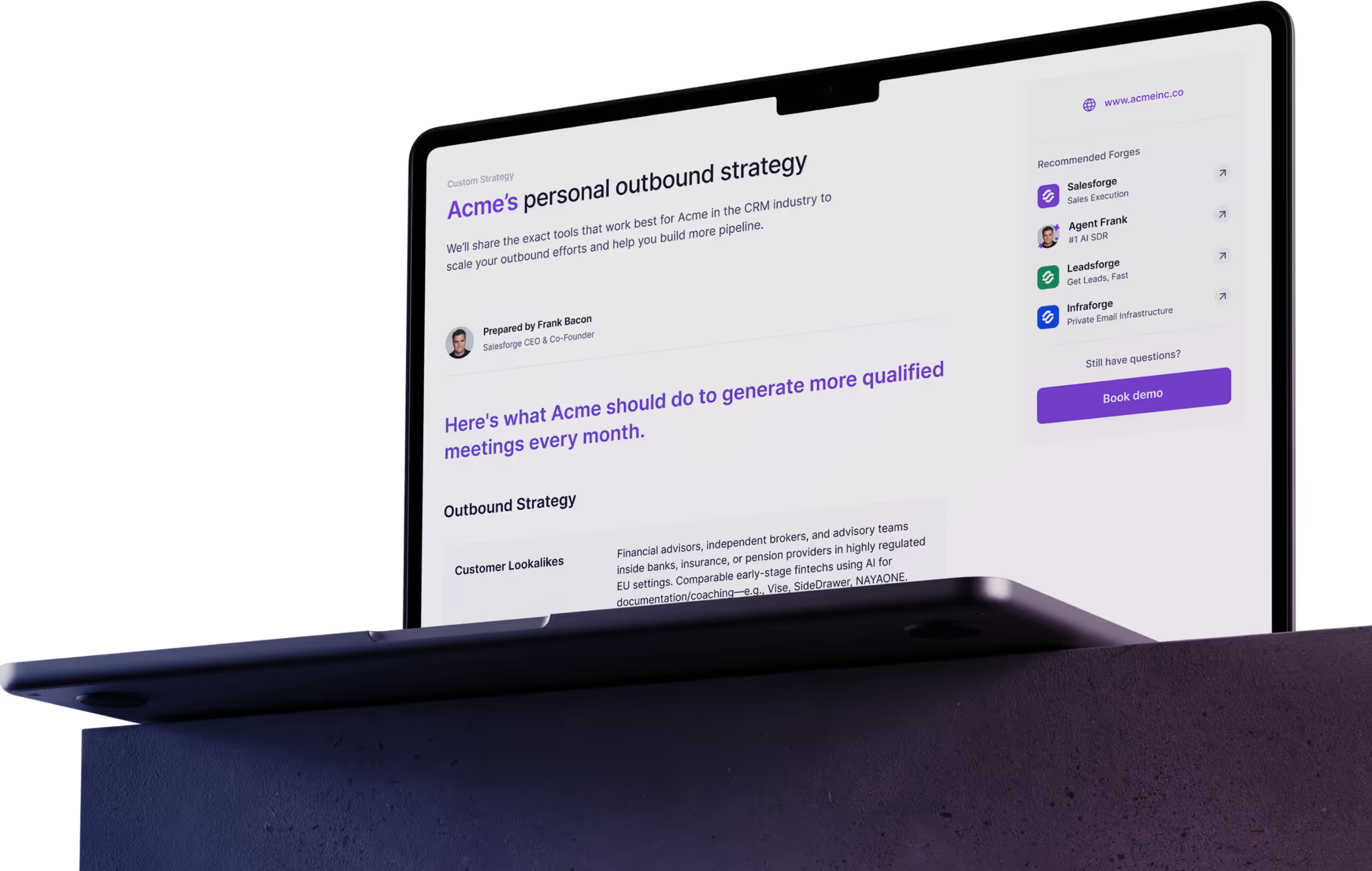
Get The Right Outbound Strategy In Minutes
Enter your email to get a custom plan & stack recommendation for your business
It's being carefully crafted by AI
Please check your mailbox in 5 minutes


For a thorough understanding of what each option offers, a simplified comparison table isn't enough to grasp all intricacies that come with each tool, so let's dive deeper into what makes Kanbox and Salesforge unique.
When you evaluate Salesforge and Kanbox from a positioning perspective, you’re comparing a lead engagement powerhouse - Salesforge - with a LinkedIn-centric automation tool - Kanbox.
Alternatively, you can just let Salesforge's results speak for themselves:

Both tools reduce repetitive tasks, but Salesforge’s solution layers in robust deliverability, advanced personalization and limitless scale to create the ultimate outreach machine.
Salesforge provides 2 plans oriented around outreach scale and a 14-day free trial (with 2 free months granted when using annual billing):
Kanbox provides 3 plans oriented around outreach scale and a 15-day free trial (discounts for annual billing):
One of the clearest differentiators when choosing between Salesforge and Kanbox is how each platform treats sending capacity and multi-channel outreach orchestration.
That makes Kanbox a decent option for teams that run only LinkedIn prospecting and want refined controls for various LinkedIn actions, but the notable lack of unlimited LinkedIn senders makes scaling very handicapped.
If your lead engagement playbook relies on broad multi-channel sequences, Salesforge’s end-to-end approach with unlimited senders (plus dedicated deliverability tooling) gives it a practical edge for large outreach campaigns.
LinkedIn prospecting is the battleground for many outreach teams, and both platforms tackle it from different philosophies.
This makes it straightforward to run sequences that mimic human activity and to track campaign performance inside a Kanban view that maps to recruitment processes or sales cadences.
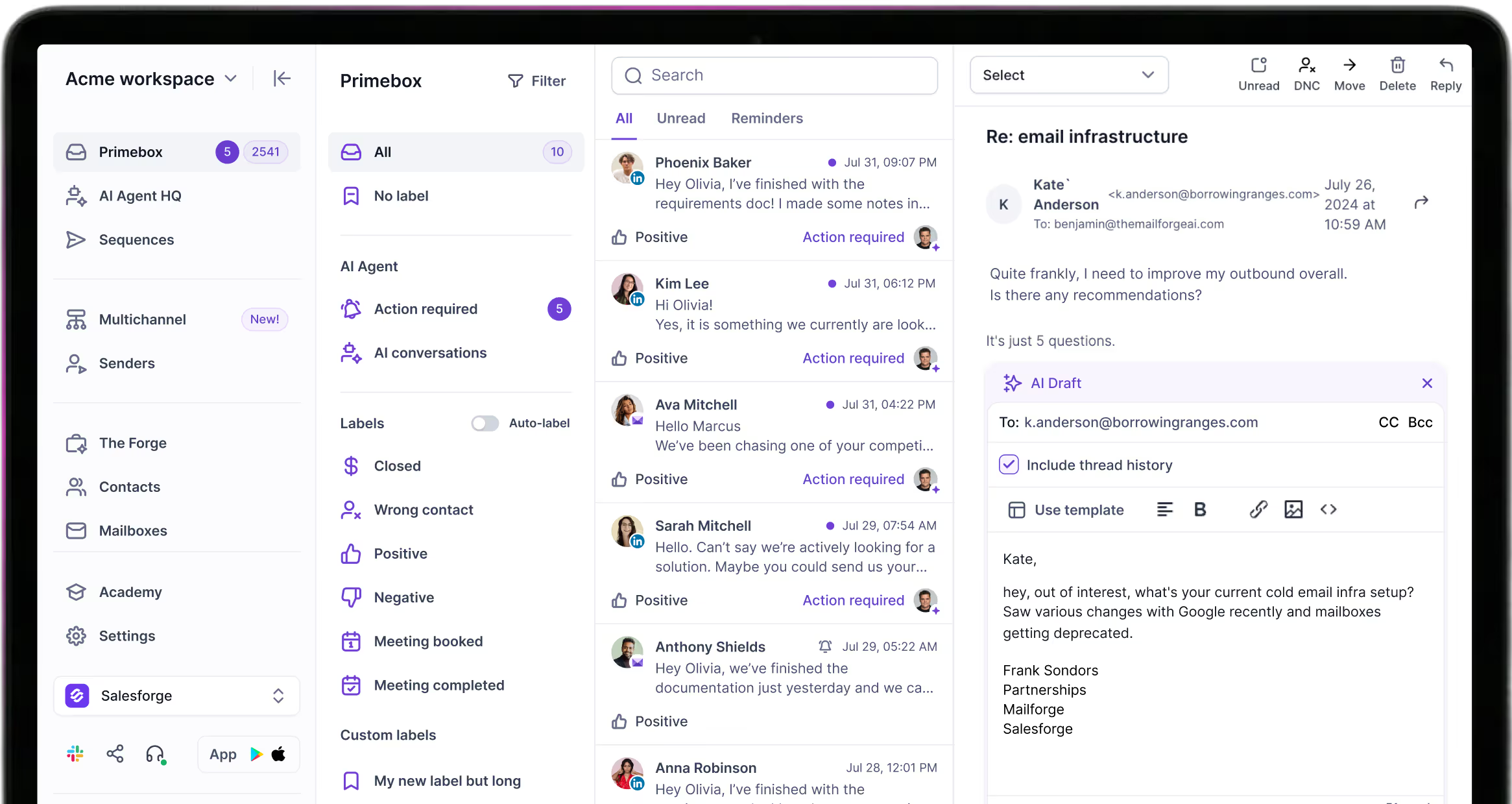
Inbox management is where daily productivity and response rates are won or lost.
That makes Kanbox a good option for teams who want the LinkedIn account inbox to feel like a lightweight CRM.
For teams running multi-channel outreach campaigns, landing replies in one consolidated system simplifies pipeline updates, CRM syncs, and handoffs to account teams - and makes campaign performance signal clearer because reply attribution (which message and which channel drove the response) is easier to measure.
Enter your email to get a custom plan & stack recommendation for your business
Please check your mailbox in 5 minutes
Campaign performance and conversion rates depend heavily on deliverability - especially for teams sending high volumes of cold email.
Kanbox does not offer any email sending or deliverability capabilities. Its strengths lie solely in LinkedIn automation.
Salesforge, on the other hand, emphasizes email deliverability extensively, with:
And more. Building sender reputation gradually while spreading volume across addresses and IPs to avoid single-mailbox throttles or sudden reputation hits is crucial for a scaling business. And that's paired with proprietary infrastructure options:
Those infrastructure features reduce the risk of landing in spam and make multi-channel outreach more reliable, especially when you have a leads database and want to integrate email at scale.
For teams scaling outreach campaigns that require many sending identities, Salesforge's level of deliverability and infrastructure support reduces the operational burden of setting up domains, warming mailboxes, monitoring inbox placement, and gambling on emails landing in the primary inbox.
Finding valid contact emails is a recurring bottleneck in lead generation efforts.
Kanbox follows a standard model - scrape leads from LinkedIn, enrich them, and push them into Automated Kanban Pipelines.
Duplicate free data and reliable email enrichment directly affect campaign performance: false or stale emails waste credits and damage sender reputation. Kanbox’s focus on lead cleaning and pooled credits is good for targeted LinkedIn campaigns, while Salesforge’s end-to-end verification and infrastructure orientation is better suited to teams that plan to scale email volume alongside LinkedIn outreach.
Kanbox, just like most LinkedIn outreach tools, supports multi-account LinkedIn management so you can stay connected to multiple LinkedIn accounts without logging in and out, but otherwise Kanbox's team features are fairly lackluster.
Salesforge, on the other hand, removes pricing-based friction by offering unlimited LinkedIn senders, unlimited mailboxes and even unlimited seats. Salesforge also allows creating unlimited shared workspaces to further streamline team workflows.
For teams that want to avoid consecutively ramping seat/sender costs, Salesforge’s unlimited model avoids billing surprises and the administrative strain of adding seats.
In addition, Salesforge’s Primebox and deliverability tools reduce the coordination burden when many users send in parallel because replies are consolidated and mailbox health is centrally monitored.
Both platforms understand that LinkedIn and Sales Navigator are central to modern prospecting.
Kanbox offers a Chrome extension, but fairly limited integrations (namely Make, Zapier and webhooks and an API).
Salesforge takes native integrations to the next level, with one important distinction being the proprietary Forge Stack, which keeps prospect data, campaign history, and inbox conversations aligned so that when a lead moves to opportunity stage the handover is seamless. Notable Salesforge integrations include:
And recently Salesforge even launched its own Chrome extension for teams that prefer working with it. If you desire enterprise-scale integrations at smaller-sized sales team pricing, Salesforge will be preferable.
Measuring campaign performance and conversion rates is essential for iterative improvement.
Because Salesforge consolidates replies across mailboxes and channels, attribution for campaign performance is clearer when outreach spans email and LinkedIn.
Both Kanbox and Salesforge are capable tools for modern outreach, but they serve slightly different capabilities.
If your motion is LinkedIn-centric, you want a Chrome extension for scraping, and a run-of-the-mill path to run automated campaigns and send customized connection requests - Kanbox is an efficient tool for that purpose.
If, however, your playbook requires scaled and hyper-personalized multi-channel outreach, predictable deliverability and guaranteed safety as you add many mailboxes and LinkedIn senders, centralized inbox management, and the ability to lean on infrastructure tools to protect conversion rates at scale, Salesforge is the superior choice.
Salesforge’s Forge Stack and Primebox make it easy to seamlessly streamline every single sales outreach step. For teams with ambition and expectations to expand outreach beyond a single LinkedIn account, Salesforge and the Forge Stack are the perfect tools to achieve that vision.
Salesforge is a multi-channel, lead generation powerhouse that automates outreach across email and LinkedIn. It connects to LinkedIn Sales Navigator, orchestrates sequences to send messages and follow ups, and uses deliverability tools and unlimited senders so teams can scale campaigns while expertly managing cadence and response handling.
Yes - Salesforge consolidates replies into Primebox (a unified inbox) and syncs with major CRMs, enabling pipeline updates when prospects convert. That centralization simplifies lead generation, handoffs, and tracking so teams can move new prospects through CRM pipelines without juggling LinkedIn and separate systems.
Salesforge offers a user friendly interface and onboarding for most teams, making basic sequencing intuitive. Advanced deliverability, mailbox rotation, and infra options add complexity, so there’s some learning for power users - but that complexity enables teams to expertly manage high-volume outreach safely.
Salesforge excels when you need multi-channel scale and deliverability (email + LinkedIn). LinkedIn-centric tools may scrape new prospects and run pipeline boards, but Salesforge combines LinkedIn Sales Navigator imports with email infrastructure, richer analytics, and tools to automate outreach campaigns at volume while expertly managing reply attribution.
Yes. Salesforge bundles warm-up, dynamic IPs, mailbox rotation and monitoring so you can scale without sacrificing inbox placement. Those infrastructure features help teams expertly manage sender reputation while automating sequences and keeping CRM pipelines and reply tracking accurate for ongoing lead generation.