
Personalized Outbound Strategy
Get The Right Outbound Strategy In Minutes
Enter your email to get a custom plan & stack recommendation for your business
It's being carefully crafted by AI
Please check your mailbox in 5 minutes



For a thorough understanding of what each option offers, a brief comparison table isn't enough to grasp all intricacies that come with each tool, so let's dive deeper into what makes Salesforge, Instantly and Apollo unique.
Before we compare product-by-product, start with the fundamentals: email deliverability, campaign management, and the ability to scale. A tool with an “extensive database” but poor deliverability gives you vanity metrics - opens and bounces - not meetings.
Salesforge's positioning is perfect for teams whose sales strategy depends on running prospect lists at scale with little operational friction. That combination directly addresses the four failure modes of cold outreach: poor inbox placement, unmanaged replies, weak multi-channel sequencing, and slow campaign optimization.
Salesforge seems too good to be true? Then just let the results speak for themselves:

Instantly's pricing model offers multiple product lines (Outreach, SuperSearch and CRM) with plans scaled for outreach volume and credits (+ a free trial and discounted annual billing), but for this comparison we'll focus on the Outreach pricing.
Apollo provides 4 plans oriented around outreach scale + a Free plan with limited credits (discounted annual billing):
Salesforge provides 2 plans oriented around outreach scale and a 14-day free trial (with 2 free months granted when billed annually):
How easy is it to build, test, and iterate campaigns?
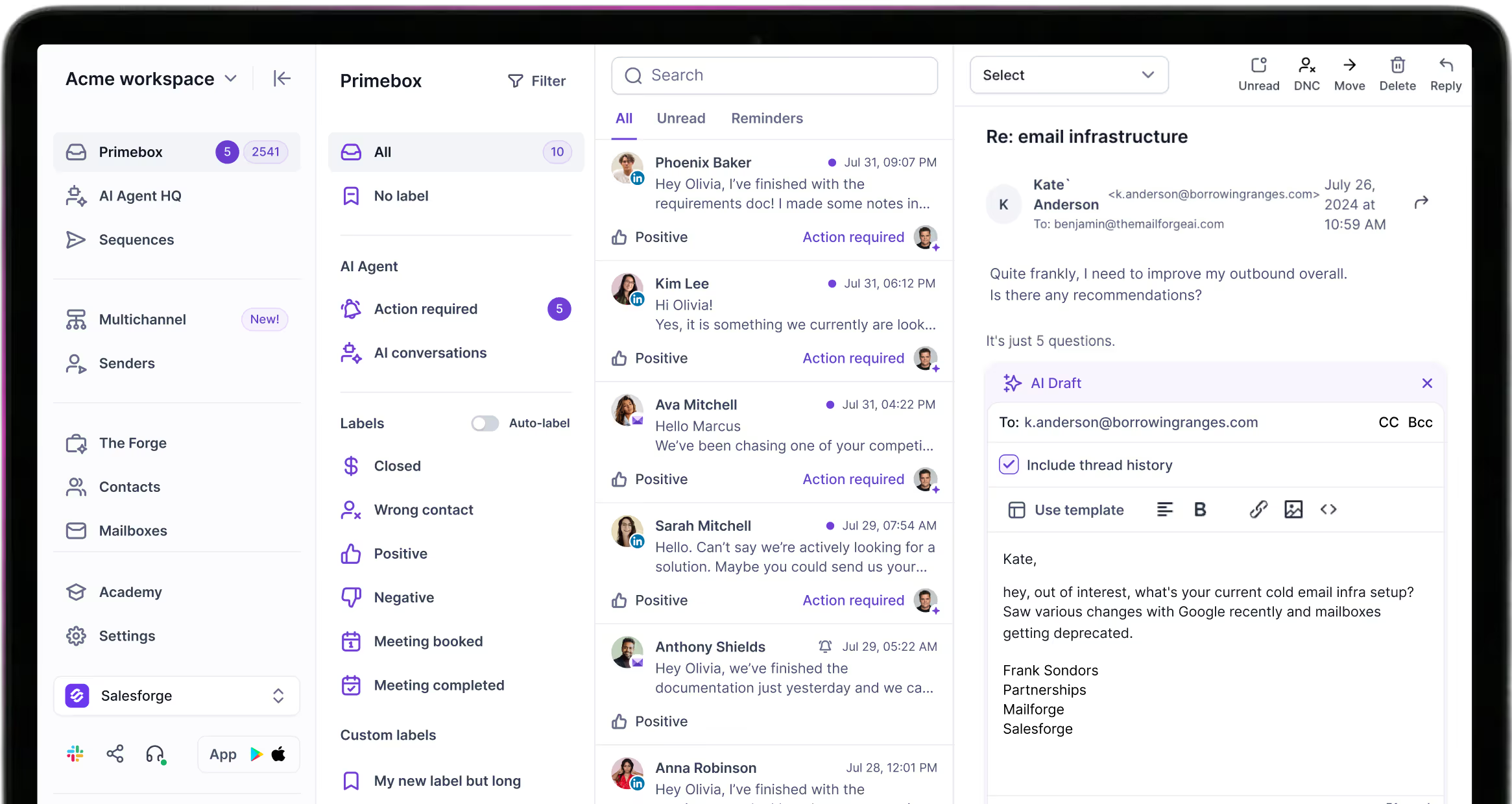
Managing replies across multiple campaigns and multiple channels is where outreach operations either scale elegantly or fall into chaos. Salesforge’s Primebox is a worthwhile highlight in this aspect - it isn’t just another “unified inbox", it’s a core part of the tool that actively ties replies back to campaigns while also layering deliverability-aware tooling and AI analysis on top.
Deliverability is the single biggest practical constraint on any cold email outreach effort: you can have the best subject lines and highly personalized sequences, but if mail goes to the spam folder, outbound sales and response rates collapse.
Instantly touts several deliverability functions, including:
Apollo’s outreach stack also includes some deliverability capabilities, namely:
But this is one area where the other options don't hold a candle to Salesforge.
And more. Building sender reputation gradually while spreading volume across addresses and IPs to avoid single-mailbox throttles or sudden reputation hits is crucial for a scaling business. And that's paired with proprietary infrastructure options too:
Those infrastructure features reduce the risk of landing in spam and make multi-channel outreach more reliable, especially when you have a leads database and want to integrate email at scale.
If your current sales process is seeing deliverability erosion, prioritizing a platform like Salesforge is a practical way to streamline sales processes and improve campaign ROI.
Enter your email to get a custom plan & stack recommendation for your business
Please check your mailbox in 5 minutes
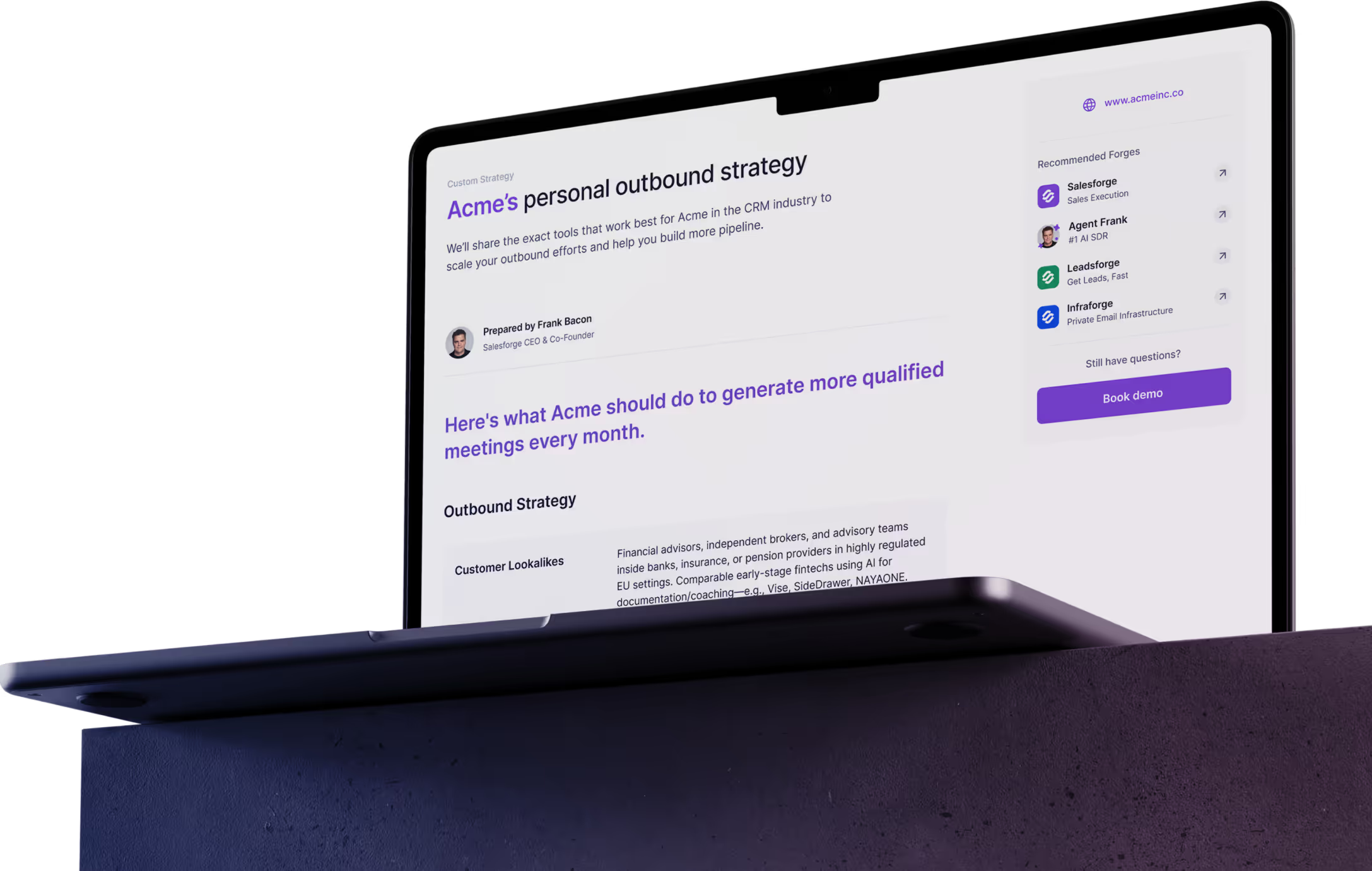
If your goal is to keep cross-channel conversations joined together, to make sure scale doesn't include any ceiling, and to make the messages hit the recipient on a deeper level - Salesforge is perfect for the job.
Integrations determine whether your outreach becomes repeatable revenue.
Scaling from a handful of reps to an enterprise sales organization changes the platform requirements. At that point, practical outreach depends on clean contact data and tight CRM integrations.
Salesforge highlights a broad and practical variety of integrations designed to let teams plug the platform directly into existing sales stacks. Notable Salesforge integrations include:
And many more. Salesforge is also available as a Chrome extension and can be downloaded as a mobile app to provide as much convenience as possible.
If your priority is to keep the team aligned and ensure prospects are tracked consistently in your CRM, all tools cover the essentials - but Salesforge’s emphasis on consolidated data and comprehensive campaign tracking makes it slightly better when you want uniform access to replies and campaign insights across both LinkedIn and email channels.
Customer support channels and resources are an underrated but mission-critical part of selecting the right sales engagement platform. They directly affect time-to-value for onboarding, how quickly you can streamline sales processes, and whether your sales teams can sustain outreach campaigns without frequent operational fire-drills.
Salesforge takes customer support & resources very seriously, while coupling product tooling with a people-first enablement stack that’s designed to reduce onboarding friction.
Besides that, Salesforge customers also get:
If you need a wide, research-grade lead database and advanced filtering for multi-touch plays, Apollo is a great pick. It’s built around sales intelligence and replacing multiple tools in a stack.
If your only outreach channel is email, Instantly can be an option too. It’s fast to deploy and has decent email deliverability tooling.
If, however, your operational priority is long-term, sustainable cold outreach at scale, including multi-channel outreach, enterprise-grade deliverability (with free unlimited warm-up), consolidated reply management (via the Primebox), and a stack that bundles everything from lead discovery to email infrastructure - Salesforge is the holy grail of choices.
Salesforge prioritizes deliverability and scaling outreach (inbox rotation, unlimited inboxes/multiple accounts and infrastructure options) over raw database size. In instantly vs Apollo comparisons, Instantly’s lead database and Instantly’s campaign builder suit email-only playbooks and unlimited email sending accounts, while Apollo offers an extensive research-grade lead database and intent signals. But if data accuracy, verified leads, and avoiding spam complaints are critical when scaling outreach, Salesforge’s stack (warm-up, rotation, verification and campaign controls) often makes all the difference for cold email and email campaigns.
Yes - Salesforge is built as a stack-first sales tool to reduce reliance on external tools. For agency owners managing client campaigns, unlimited accounts, unlimited inboxes and team management features mean you can run multiple client campaigns and more clients without juggling third party tools. Its multichannel outreach (email + LinkedIn outreach) and consolidated reply handling simplify campaign ops, letting teams focus on growth instead of stitching integrations - a big win compared to using many separate sales tools.
Salesforge emphasizes robust deliverability: free unlimited email warm-up, inbox rotation, dynamic IPs and mailbox health monitoring to lower spam complaints and improve outreach success. Instantly offers unlimited email warm-up and SISR at higher tiers, but Instantly falls short when you need multi-source infrastructure or enterprise-level rotation. Apollo offers standard warm-up and verification but ties into its CRM-led stack. If you need scaling outreach with fewer deliverability risks across multiple accounts, Salesforge’s infrastructure is designed for sustained high-volume email campaigns.
Salesforge combines AI personalization, custom variables and reporting to surface valuable insights from engagement and website visitors, helping reps prioritize leads by job title, company size and intent signals. That translates to smarter email templates, A/B testing of email campaigns, and data-backed sequence tweaks that improve response rates. Unlike tools that bundle big databases but leave enrichment to external providers, Salesforge integrates verification and analytics so technical expertise or extra external tools aren’t required for fast iteration and outreach success.
It depends. Instantly wins for lean teams or agencies wanting simple, low-friction email-first campaigns and unlimited accounts at predictable cost, while Apollo offers deep company data and extensive research for larger teams. Salesforge sits between: built for scaling outreach across company sizes with features for multiple accounts, verified leads, team management and reduced reliance on third party tools. For agencies or sales teams that want to onboard clients fast, avoid deliverability headaches and scale cold email plus multichannel outreach, Salesforge often delivers more long-term value.