AgentMail is useful when you want to create and manage email inboxes through APIs. But once your email workflow grows, inbox creation is only one part of the problem.
You also need to think about email delivery, reply handling, routing, domain setup, sending limits, and cost. Depending on your use case, you may need a platform built for transactional email, inbound email processing, large-scale sending, or email infrastructure management.
That's why many teams compare AgentMail with other email platforms before making a decision. In this guide, I'll compare the best AgentMail alternatives, including Infraforge, SendGrid, Mailgun, Postmark, and Amazon SES. I'll break down their features, pricing, pros, cons, and ideal use cases to help you find the right platform.
To compare these AgentMail alternatives, I focused on the factors that matter most when choosing an email platform:
The goal was to find platforms that solve different email needs, from inbox management and routing to transactional email delivery and email infrastructure.
Tool
Best For
Email Sending
Email Receiving
Inbox Access
AI Agent Workflows
API Access
Infraforge
Email infrastructure and mailbox provisioning
Yes
No
No
No
Yes
SendGrid
Transactional and marketing email delivery
Yes
No
No
No
Yes
Mailgun
Email sending, receiving, and routing
Yes
Yes
No
No
Yes
Postmark
Transactional email delivery for applications
Yes
Yes
No
No
Yes
Amazon SES
Low-cost email infrastructure on AWS
Yes
Yes
No
No
Yes
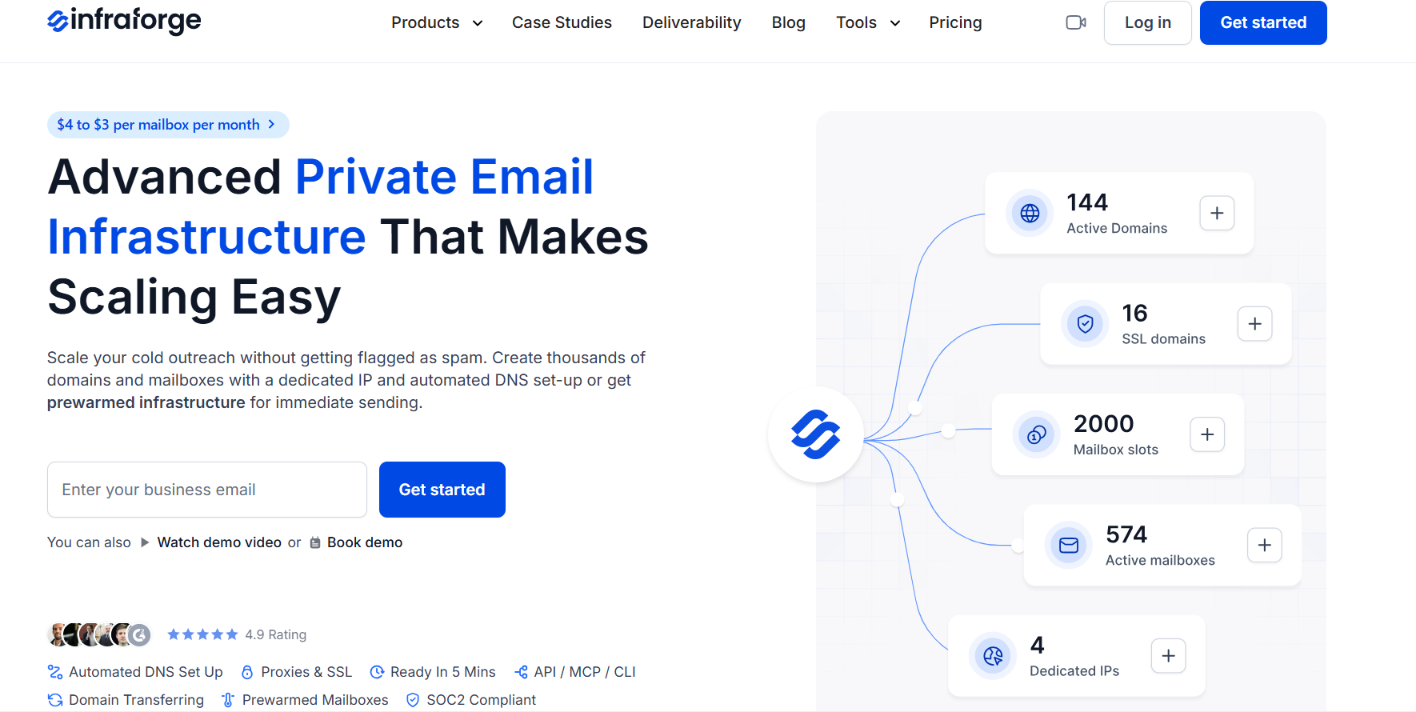
Alt text: Infraforge homepage
Infraforge is an email infrastructure software, that offers APIs which helps developers create and manage domains, mailboxes, DNS records, dedicated IPs, and email infrastructure via code.
Unlike AgentMail, which focuses on giving AI agents email inboxes, Infraforge focuses on the infrastructure required to send emails at scale.
Developers can use the Infraforge API to automate mailbox provisioning, domain management, DNS configuration, and email infrastructure setup without handling these tasks manually.
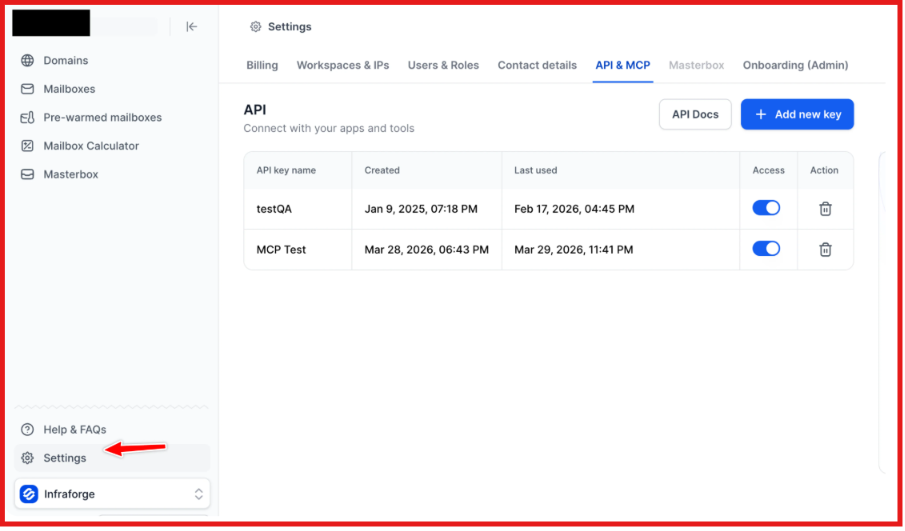
Alt text: Create API key on Infraforge
The platform automatically configures SPF, DKIM, and DMARC records, supports dedicated IPs, provides pre-warmed mailboxes, and allows teams to manage large email infrastructures through its API, MCP server, and CLI.
If you need API access to create inboxes for AI agents and manage conversations, AgentMail is the better choice. But if you need API access to provision and manage email infrastructure itself, Infraforge is the stronger option.
Feature
Infraforge
AgentMail
Primary Use Case
Private email infrastructure
Email inbox API for AI agents
Dedicated IPs
Yes
Enterprise plan only
DNS Management
Automated DNS setup
Custom domain support
API Access
Yes
Yes
MCP Support
Yes
Yes
CLI Support
Yes
Yes
Pre-Warmed Mailboxes
Yes
No
Multi-IP Provisioning
Yes
No
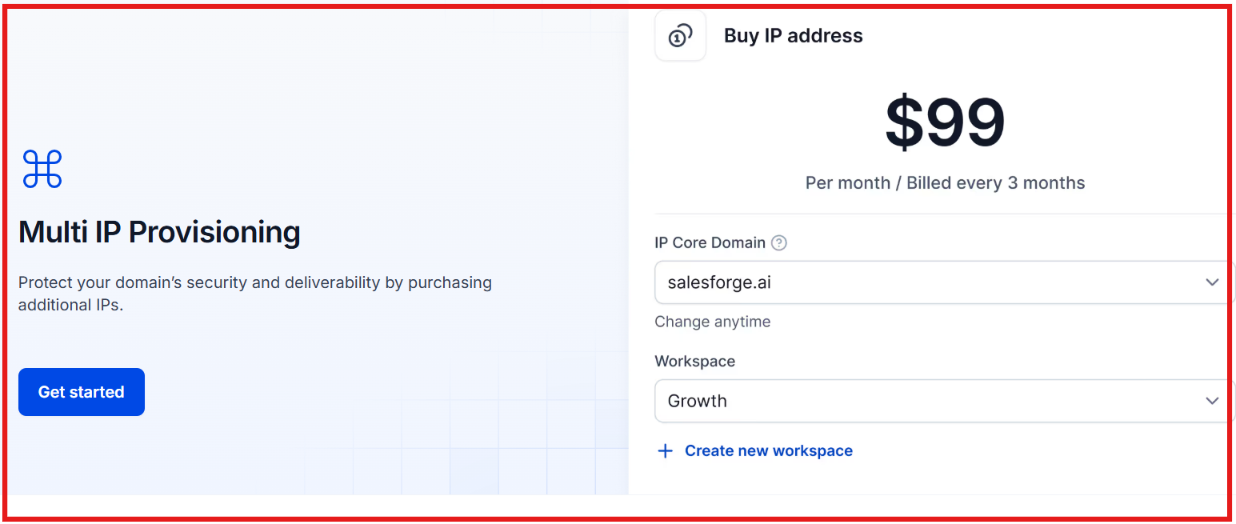
Alt text: Infraforge multi provisioning
Pros
Cons
Dedicated IPs for full infrastructure control
No free trial
Automated DNS setup included
Requires purchasing domains and mailboxes
API, MCP, and CLI support
More infrastructure-focused than inbox-focused
Built specifically for cold outreach
Additional IPs require separate pricing
Pre-warmed infrastructure available
Not designed for conversational email workflows
Supports large-scale mailbox management
Requires good deliverability practices
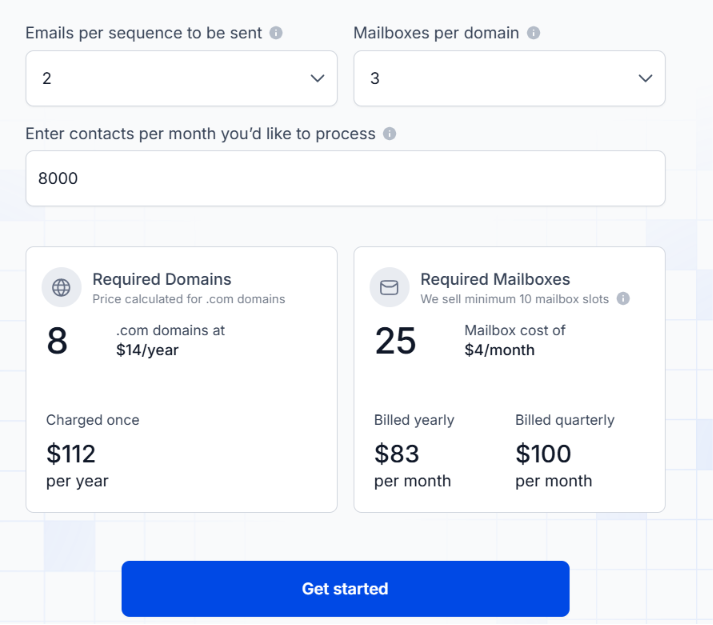
Alt text: Infraforge pricing
Infraforge charges separately for domains, mailbox slots, and infrastructure add-ons. Pricing depends on how many domains, mailboxes, and IPs you need.
Item
Pricing
Domains
Starting at $14 per domain/year
Mailboxes (Annual Billing)
$4 per mailbox/month
Mailboxes (Quarterly Billing Example)
$100/month for 25 mailbox slots
Dedicated IP Address
$99/month per IP
SSL & Domain Masking
$6 per domain/year
Masterbox
$7 per workspace/month (annual billing)
API Access
Included
For example, for 8,000 contacts per month, Infraforge's calculator recommends 8 domains and 25 mailbox slots. This would cost approximately $112/year for domains and around $83/month for mailbox hosting.
Best for: Teams that need private email infrastructure for cold outreach and high deliverability.
Not ideal for: Developers looking for conversational email inboxes for AI agents.
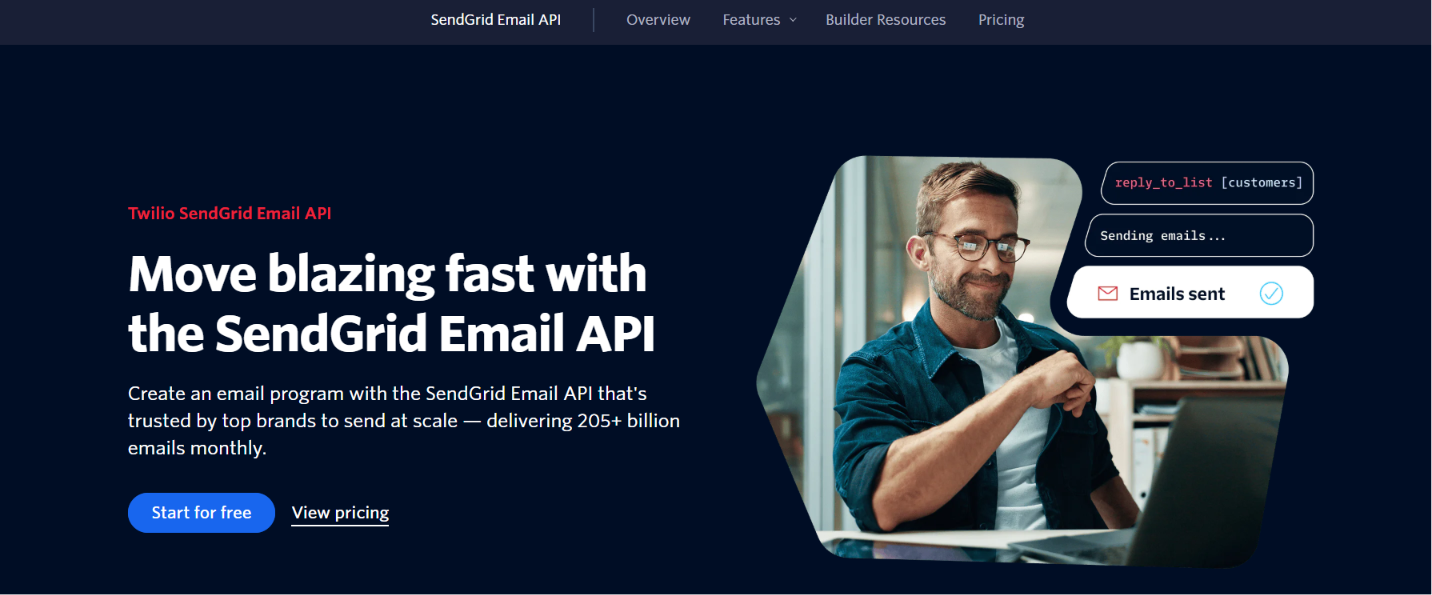
Alt text: Sendgrid homepage
SendGrid is one of the most widely used email APIs for application-generated emails. Developers use it to send password resets, account verification emails, payment receipts, shipping updates, alerts, notifications, and marketing emails directly from their applications.
The platform provides the email infrastructure needed to send large volumes of emails without managing mail servers yourself. Along with email delivery, SendGrid includes email validation, dynamic templates, analytics, deliverability monitoring, dedicated IPs, and authentication tools such as SPF, DKIM, and DMARC.
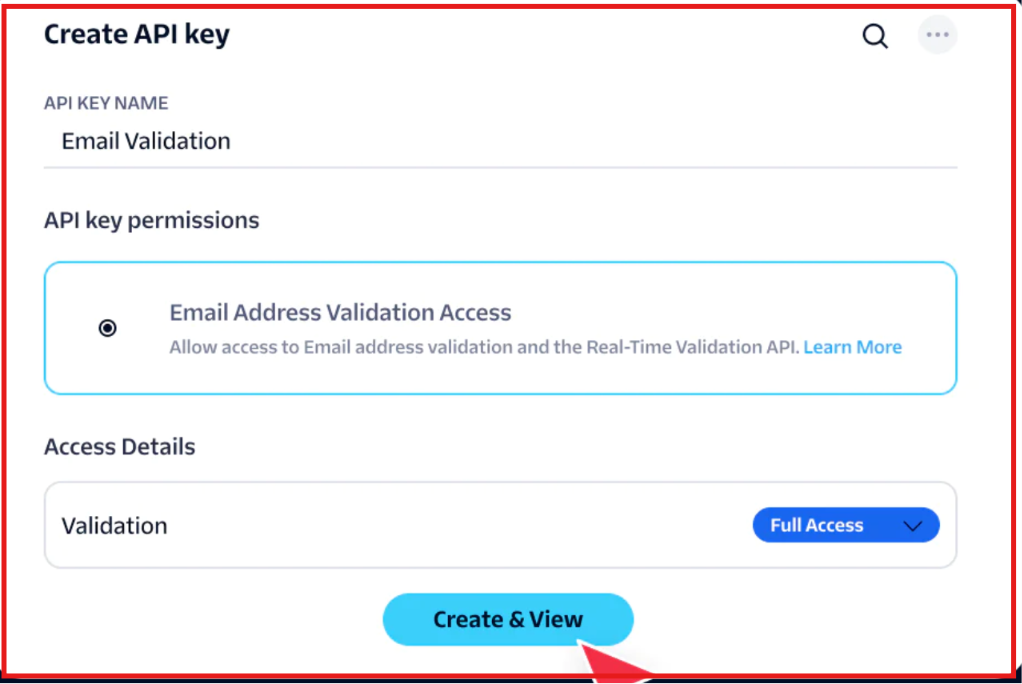
Alt text: Creating an API Key for email validation on SendGrid
Compared to AgentMail, SendGrid focuses on outbound email delivery rather than inbox management. There are no agent inboxes, conversation threads, or reply management features. Instead, the platform is designed for teams that need a reliable API for sending emails and tracking delivery performance at scale.
Feature
SendGrid
AgentMail
Primary Use Case
Email delivery API
Email inbox API for AI agents
Transactional Email Sending
Yes
Yes
Email Inbox Management
No
Yes
REST API
Yes
Yes
Custom Domains
Yes
Yes
Dedicated IPs
Pro plan and above
Enterprise plan
Email Validation
Yes
No
Pros
Cons
Built for high-volume email delivery
Not designed for conversational email workflows
REST API and SMTP support
No inbox management for AI agents
Strong deliverability infrastructure
No native thread management
Dedicated IPs available
Advanced features require higher plans
Email validation included
Can become expensive at large volumes
Extensive documentation and SDKs
Focused on sending, not managing conversations
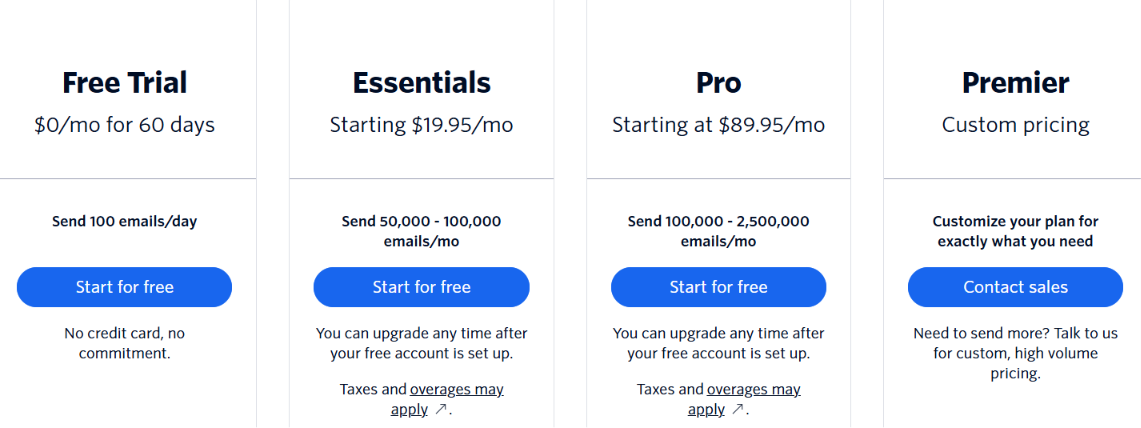
Alt text: SendGrid pricing
SendGrid pricing is based primarily on monthly email volume and feature requirements.
Plan
Pricing
Free Trial
Free for 60 days, 100 emails/day
Essentials
Starting at $19.95/month
Pro
Starting at $89.95/month
Premier
Custom pricing
For example, a business sending between 50,000 and 100,000 emails per month can start with the Essentials plan at $19.95/month. Teams sending higher volumes and requiring dedicated IPs typically move to the Pro plan.
Best for: Developers and businesses that need a reliable API for sending transactional or marketing emails at scale.
Not ideal for: Teams looking to create inboxes for AI agents, manage email conversations, or build autonomous email agents.
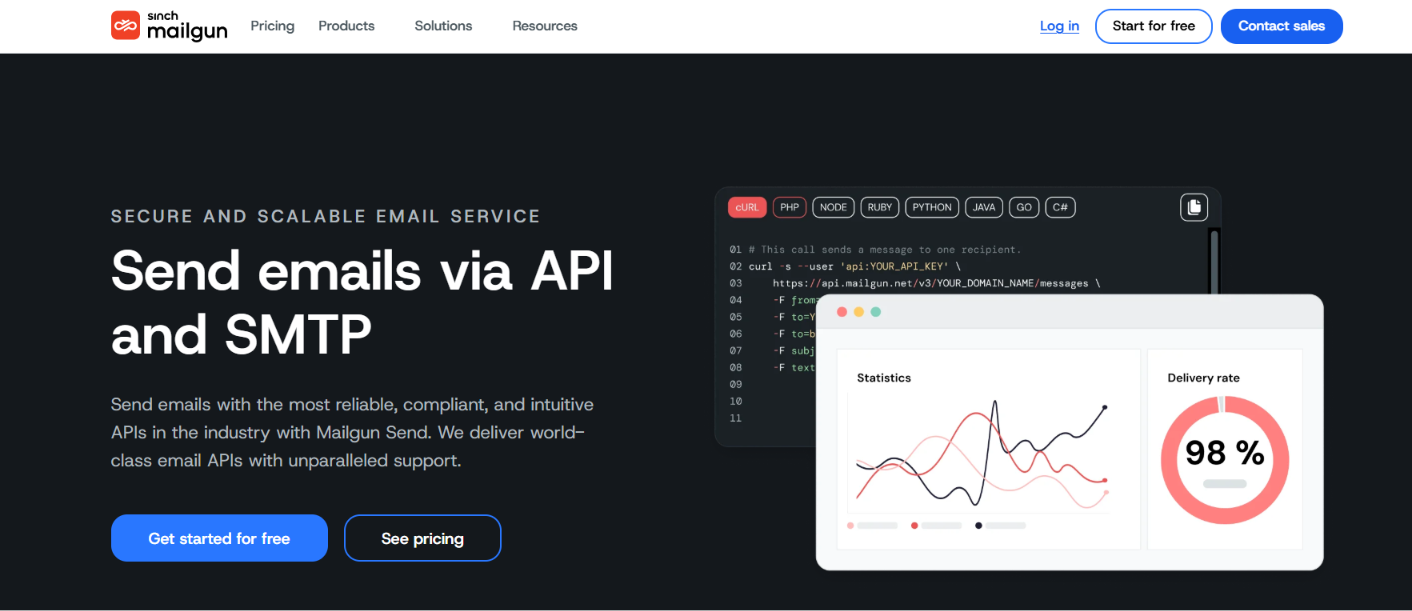
Alt text: Mailgun homepage
Mailgun is an email API platform that helps developers send, receive, validate, and track emails from their applications. It is commonly used for transactional emails such as password resets, account verification emails, invoices, alerts, notifications, and product updates.
Compared to AgentMail, Mailgun focuses on email delivery and email processing rather than inbox management. The strongest part of Mailgun is its developer control. You can send emails through REST API or SMTP, create inbound routes, parse incoming emails, manage domains, use webhooks, validate addresses, monitor logs, and work across US or EU regions.
That makes Mailgun a strong option for SaaS products, marketplaces, CRMs, support tools, and platforms that need both outbound sending and inbound email handling through APIs.
Alt text: Scale with the best email API for developers
Feature
Mailgun
AgentMail
Primary Use Case
Email sending, receiving, and routing API
Email inbox API for AI agents
Transactional Email Sending
Yes
Yes
Email Inbox Management
No
Yes
Thread Management
No
Yes
SMTP Support
Yes
Yes
REST API
Yes
Yes
Webhooks
Yes
Yes
Pros
Cons
Supports sending, receiving, routing, and validation
Not built for AI-agent inboxes
REST API and SMTP support
No native agent conversation layer
Strong inbound routing and parsing features
Advanced deliverability tools may require higher plans or add-ons
Webhooks, logs, and analytics included
Dedicated IPs are tied to higher-volume plans
Works well for developer-led email workflows
Can feel more technical for non-developers
Alt text: Mailgun pricing
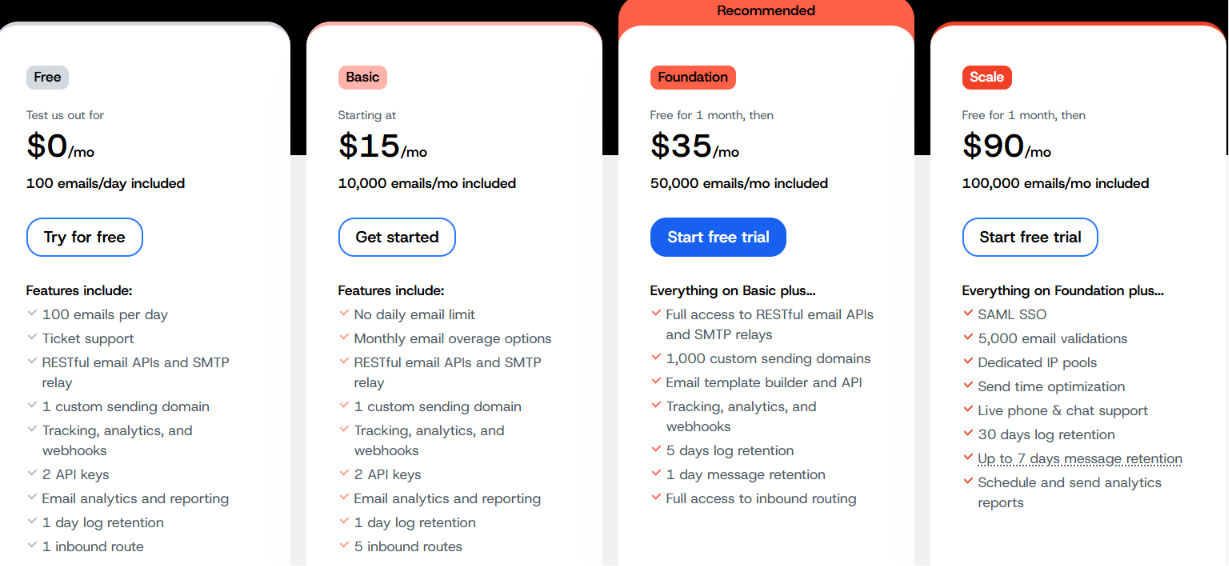
Mailgun Send pricing is based on monthly email volume and features.
Plan
Pricing
Free
$0/month, 100 emails/day
Basic
Starting at $15/month, 10,000 emails/month included
Foundation
$35/month after 1 free month, 50,000 emails/month included
Scale
$90/month after 1 free month, 100,000 emails/month included
Enterprise
Custom pricing
For example, a team sending around 50,000 emails per month can use the Foundation plan at $35/month after the first free month. Teams that need 100,000 emails per month, dedicated IP pools, send time optimization, phone support, and longer log retention can move to the Scale plan at $90/month.
Best for: Developers who need email sending, receiving, routing, validation, and tracking in one platform.
Not ideal for: Teams that need AI agents with their own inboxes, threaded conversations, and agent-focused email workflows.